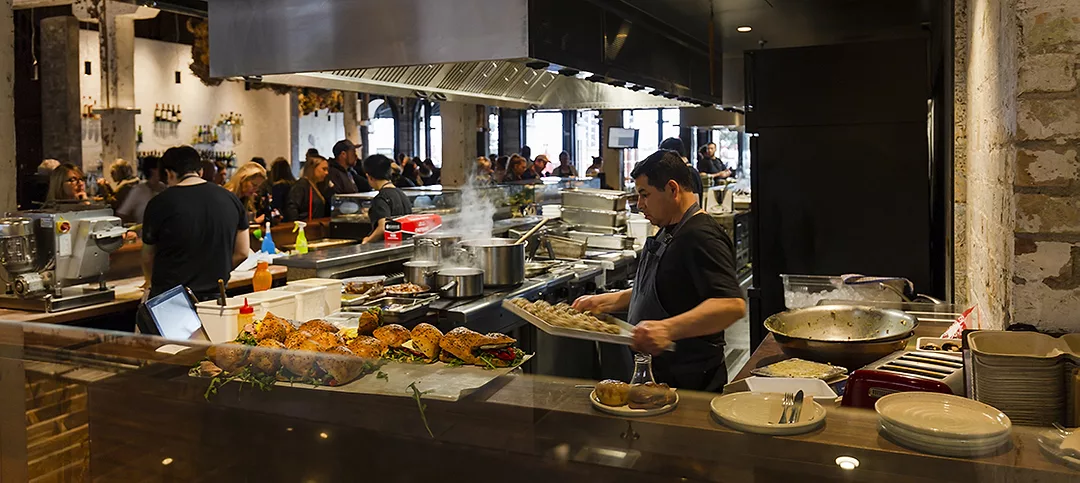
There’s an old saying we’ve all heard: Time is money. In the restaurant design world that quickly becomes space is mone Every square foot inside a restaurant has purpose, and nearly all of it is dedicated to revenue-generating functions such as kitchens, service lines and dining areas. Any shrinkage in these zones directly impacts the owner’s earning potential. As a result, mechanical and warewashing spaces often get squeezed to the absolute minimum.
Those of us in the plumbing engineering world are all too familiar with shrinking mechanical footprints. We routinely beg the architectural community for just a sliver of extra floor space so we can properly place pumps, heaters and equipment. When these priorities collide, we face design challenges that force plumbing designers to think creatively and collaboratively.
Incoming water: Every site is different
Restaurants consume domestic water at astonishing rates. While many discussions focus on water quality, this article zeroes in on two critical variables: incoming water pressure and domestic water service size.
Whether designing a ground-up prototype or an inline tenant fit-out, the water service conditions always vary. Pressures change dramatically from city to city — and sometimes even from one side of the street to the other. We frequently see building pressures in the 30–40 psi range, often too low for flush valve fixtures and commercial equipment.
Service sizes are equally unpredictable. Many landlords inherit older buildings as-is, and the 1-inch service supplying four to six tenants is considered “good luck and enjoy!”
Utility companies further complicate matters with new service tap fees that can reach eyebrow-raising levels. In some municipalities, a new 2-inch water service tap and meter can cost up to $250,000. Excavating parking lots and routing new piping often ranges from $50,000 to $100,000 — numbers that can make or break a franchisee’s project.
The search for pressure: Where do we put a booster pump?
When facing low domestic pressure, which requires the need for a booster pump, we historically relied on platform- or floor-mounted duplex systems. But what happens when every square inch of floor space is already claimed?
That’s when we remembered the words of the great American poets, Lil Jon & the East Side Boyz: “To the windooooows, to the walls!” Wall space is often more available than floor space, so we began exploring whether booster pumps could live on the wall, reclaiming valuable real estate.
At the 2022 American Society of Plumbing Engineers Convention Product Expo in Indianapolis, we passed the Towle Whitney booth and saw a stacked booster pump. The design intent — minimizing footprint — immediately caught our attention.
This sparked a conversation with Tyler Boutwell, research and development manager at Towle Whitney. We asked: “Why can’t we take this stacked system and mount it on a wall?” To their credit, Tyler and his team embraced the challenge. Through several collaborative calls, we worked together to shrink a duplex pump system into something barely larger than a poster.
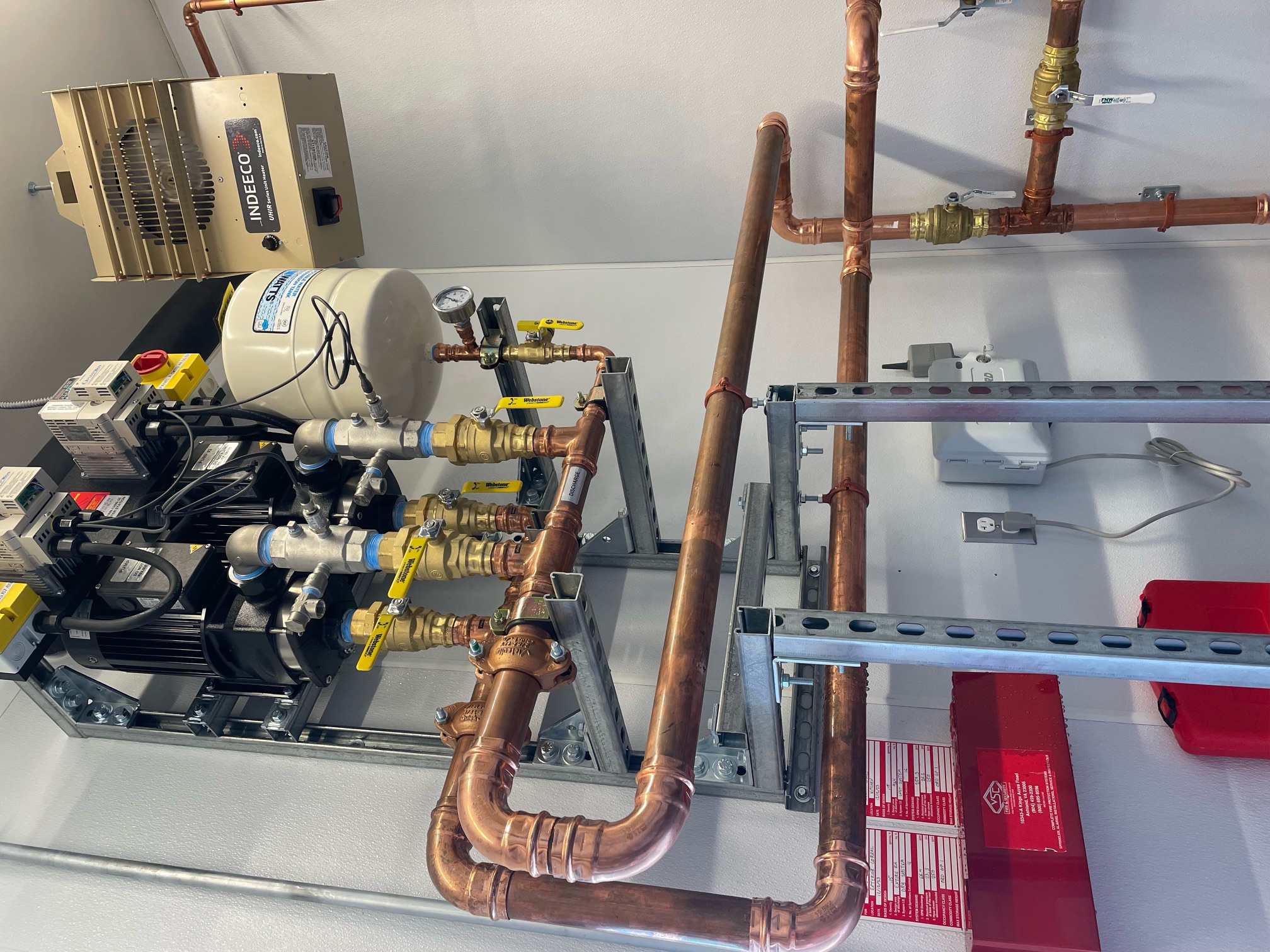
The result was the TW2018W series. This wall-mounted duplex booster pump can fit above mop sinks, adjacent to tankless heaters, or directly above a reduced pressure zone (RPZ) backflow preventer. These walls were already being used for plumbing infrastructure; now, they became prime real estate for boosting pressure.
Towle Whitney designed pump options capable of supporting restaurants from under 30 gallons per minute (gpm) up to 100 gpm, with 30–60 psi of boost. With this solution, clients with low pressure but adequate service size could get the performance they needed without giving up a single square foot of floor space.
 |
 |
Volume problems: When the service line is too small
Once the pressure issue was solved, another challenge emerged: What if the water service size itself was insufficient?
Many tenant-fit-out spaces come with as-is utilities, meaning a ¾-inch or 1-inch service, long runs to the street, shared building manifolds, and landlords unwilling to upgrade. Boosters can increase pressure, but they cannot create volume. Worse, they can pull excessively on undersized lines and cause velocity issues. Leaks have an uncanny habit of appearing just after the water meter.
If a restaurant needs a 2-inch service for flush valves but the building only provides a ¾-inch line, installing a booster at the service entrance is a recipe for trouble.
So, we returned to Towle Whitney with the question: “How do we get more volume using the existing service?”
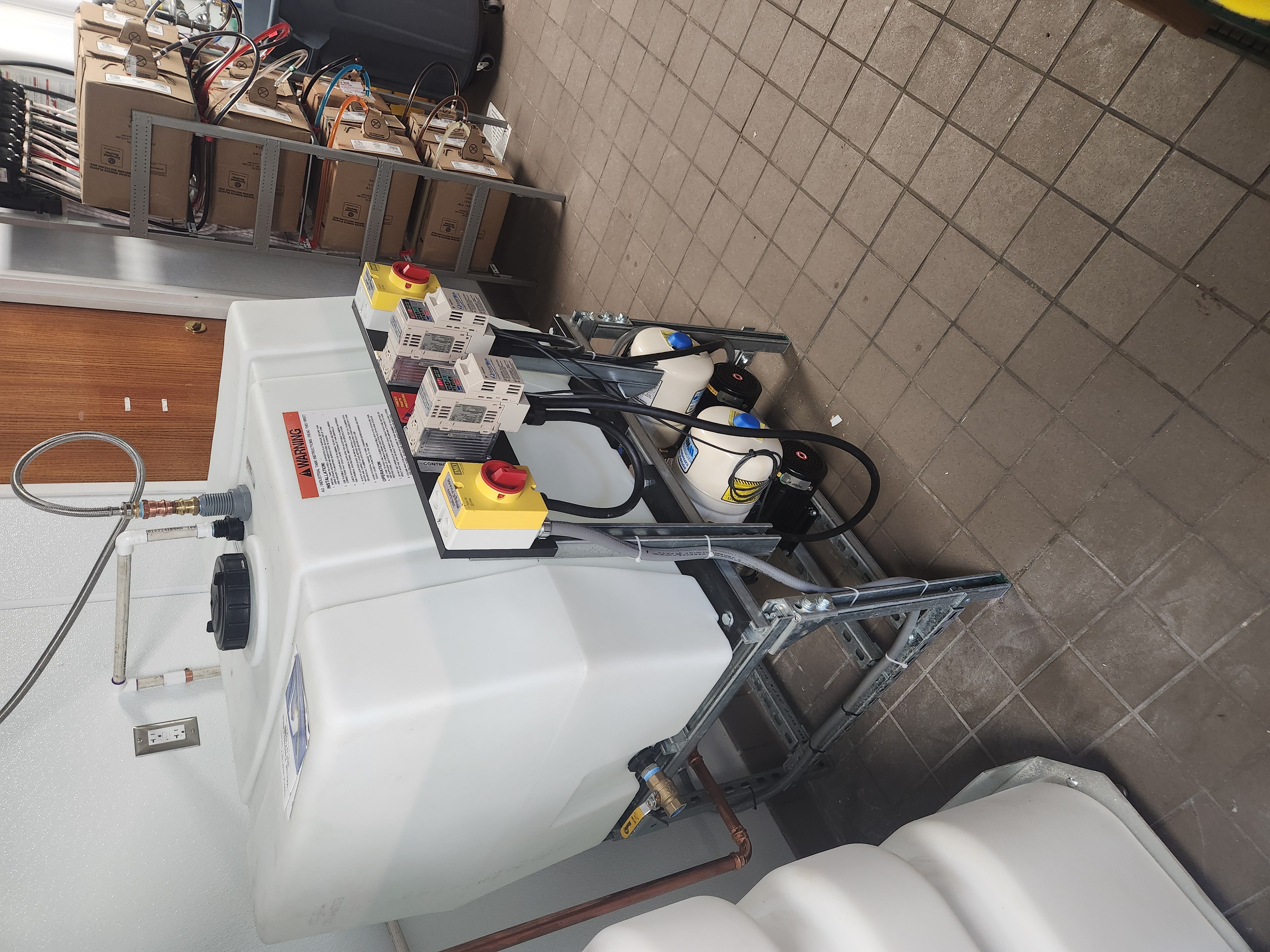
This time, the solution took the opposite direction of space saving: the TW2018C Duplex Variable-Speed Booster System with Storage Tank.
Although it occupies floor space, it avoids the enormous costs of new service taps and infrastructure upgrades. The concept is simple:
Bring the existing ¾-inch service into a food-grade rated storage tank.
Allow the tank to be the service volume.
Let booster pumps draw from the tank and supply 1½-inches or 2-inches to the space at proper pressure.
The result: Clients avoid costly utility upgrades while still receiving the pressure and volume their operations require.
The power of collaboration
Few things are more rewarding than collaborating with a manufacturer to create a product that solves real, recurring industry challenges. When your field experience contributes to the development of innovative solutions like the TW2018W and TW2018C, you become a hero to your clients.
If you face recurring challenges requiring creative thinking, don’t hesitate to reach out to your manufacturer partners. The next great idea may begin with a single question.
Good Ole Disclaimer: Every project presents unique conditions, and local plumbing codes, health department regulations and utility company requirements can vary widely from one jurisdiction to another.
Designers should always verify allowable pressures, required backflow protection, pipe velocity limits, anchorage and clearance requirements, potable-water storage rules, and service upgrade policies with the local Authority Having Jurisdiction and the serving water utility before selecting or installing any booster system. Storage-tank boosters must also be evaluated for potable rating, turnover and cross-connection control in accordance with local regulations.
The concepts discussed in this article reflect general industry practices, but final design decisions must be coordinated with the full project team — including structural, architectural and code officials — to ensure compliance and safe operation.
Nicholas Hipp, CPD, is a principal and manager of plumbing engineering at Case Engineering, Inc., with 18 years of experience in plumbing engineering and design. Projects range from new construction and renovations of commercial, industrial and residential buildings, including but not limited to hundreds of unique restaurant designs across the nation, as Case Engineering has licensed engineers in 49 states. He has an associate in applied science in architectural technology from Ranken Technical College in St. Louis, Missouri. In 2017, he was named Plumbing Engineer of the Year for Plumbing Engineer magazine.