
When someone says phrases or words like “daily values” or “macronutrients,” what are some images that come to mind? We may think of bodybuilders meticulously tracking every gram of their diet, or a diet influencer trying to convince people that a certain food is the cause or cure for all their problems. As we previously discussed, the topic of nutrition suffers in the crossfire of many social media trends — from companies trying to sell supplements to influencers trying to push their own lifestyle. It is easy to be swept up in the hyperbole-filled rhetoric thrown around.
Our goal in this article is to present a condensed and simplified list of information, going back to the basics that some may learn in a high school health class. But instead of making exaggerated claims, we are focusing solely on how adjusting to a healthier diet can also make you feel better mentally. After diving into the scientific side of nutrition in the last two articles, we want to use this last entry in our series to focus on practical advice for daily life.
Other Specific Substances
Just as we discussed macronutrients like protein, carbohydrates and fat, and micronutrients like vitamins and minerals, there are some other specific substances we want to highlight, such as caffeine, alcohol, food dyes and refined sugar.
Most people know that caffeine, alcohol and sugar can make people feel different. One can be energized by caffeine or crash from it; one can get tipsy or drunk and also hungover; one can get a sugar high. These obvious changes can mask more subtle impacts that contribute to us neglecting feelings in our bodies. Caffeine not only affects one’s brain, but also circadian rhythm and metabolism of carbohydrates and fats. When we consume caffeine, especially from sources where it does not taste like coffee such as energy drinks, we can forget just how much caffeine we are consuming. This disconnect between intake and its effect means we may ignore weird feelings in our guts or be unable to trace their source.
Similarly, refined sugar has been shown to increase gut inflammation. In our past article we discussed sugar as a carbohydrate. Taken in large quantities, it would reduce the overall ability of our gut to properly absorb nutrients — at which point, even if our diet is well balanced on the outside, it would not have the desired effects on the inside. In addition to these internal effects, many do not consider how consumption of sugar can distort sensory inputs — like caffeine and alcohol — and further disconnect our brain and our gut.
Artificial food coloring is also an example of a substance common in processed foods. Dyes like Red 40 can be hidden in ingredient lists, obscured with other chemical names. Despite blending in with other chemicals, it has been linked with disrupting brain electrical activity, increased allergic reaction or immune disorders and increased symptoms of Attention-Deficit / Hyperactivity Disorder (ADHD).
All of these are simply examples of substances with mind-altering effects that, without moderation, can harm our gut’s ability to function appropriately while stopping our brain from realizing it. It is important to note that there are cases where caffeine and alcohol can in fact improve digestion. The problem occurs when they are so ingrained in our daily lives that we lose awareness of how much we are consuming, or how they are personally impacting us daily. A simple rule of thumb could be to limit processed foods that are more likely to have food dyes or high sugar and caffeine content.
But the more helpful advice is to listen to our bodies and stay aware. Tracking and changing your consumption of caffeine, alcohol or refined sugar can help give us more insights. Pains and aches are not the only signs of problems in our gut — so are allergic reactions, feelings of irritability, difficulty concentrating and depression. 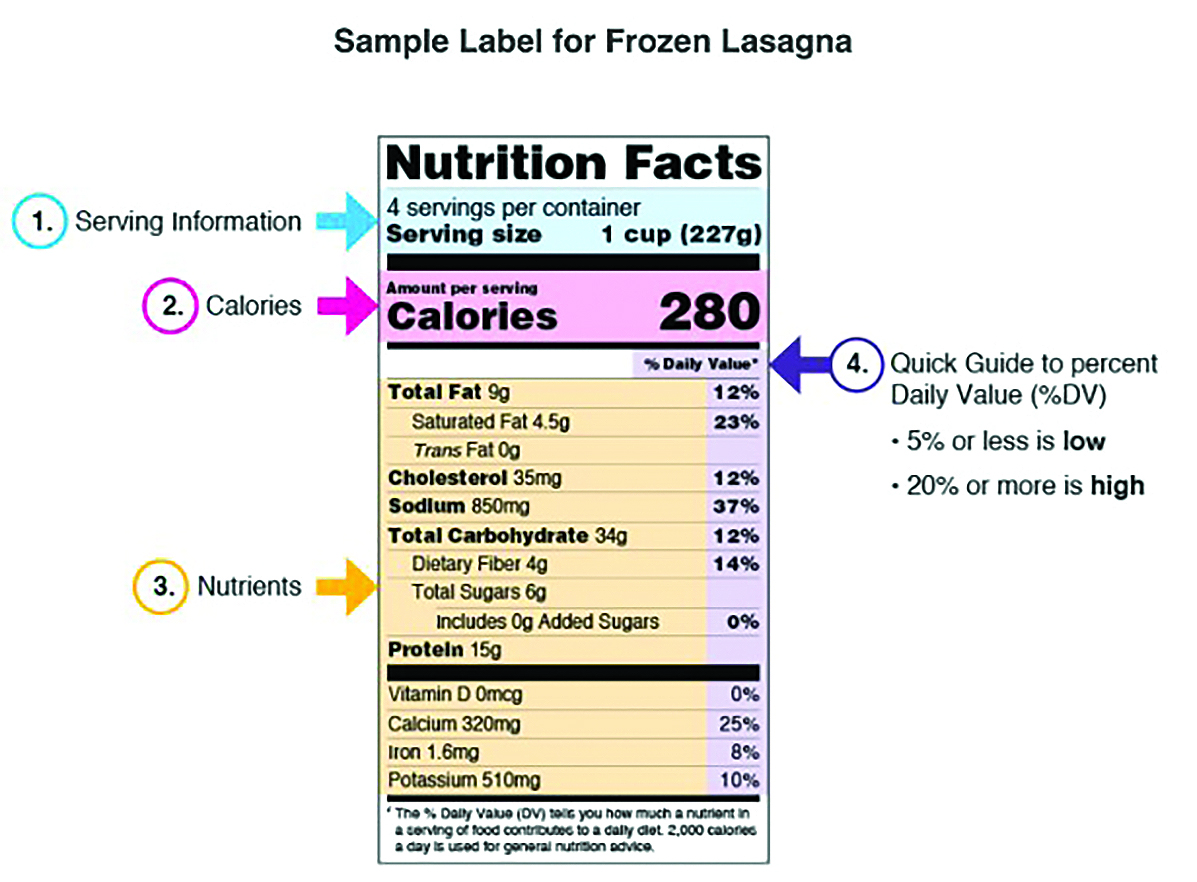
Reading Nutrition Labels
When you can find time to look closer at nutrition during your day, consider reading a nutrition label. This will be one of the best ways to find that balance we all strive for. Reading a food label is a lot easier said than done, though. When I first started looking at food labels, it felt like I was trying to read another language.
An important note when looking at labels is that serving size is not the recommended amount of food you need to eat. Typically, the numbers on the label reference one serving size. Sometimes it will include the nutrition facts for the whole item, too. We also want to pay attention to the percentage of your daily value, which is based on a 2,000-calorie-a-day diet. The general rule to percentage of daily value is anything that says 5% or less, you are going to be consuming lower levels of the substance, while anything that says 20% or more, you are consuming higher levels of the substance. We are striving to reduce our consumption of saturated fats, sodium and added sugars, and we want to increase the amount of micronutrients.
So, let’s look at this frozen lasagna label in Fig. 1. In every meal and snack, we want three things: carbohydrates, fat and protein. This lasagna has 12% of our daily fat, 12% of our daily carbs and 15g of protein. So, we have met the basic building blocks of a well-rounded meal. However, if we look further, the saturated fats and sodium levels are higher than 20%, and we typically want these to be lower than 5%.
So far, we have looked at the nutrient portion of a nutrition label. However, we also need to look at the ingredients list for the sneaky additives companies put in that we mentioned earlier. Anything ending in “-ose” is a type of sugar. Companies will also label Red Dye 40 in ways such as the following: “Allura Red,” “Allura Red AC,” “C. I. 16035,” “C. I. Food Red 17,” and “FD&C Red No. 40.”
This breakfast bar in Fig. 2 and Fig. 3 looks healthy, and it even says, “no high fructose corn syrup,” which is great. However, when we look at the ingredients list, we see that they have included multiple different types of other added sugar. They did, however, use natural ways to dye their filling. Nothing about nutrition is going to be perfect, and we as humans cannot be perfect, either.
Striving for Balance
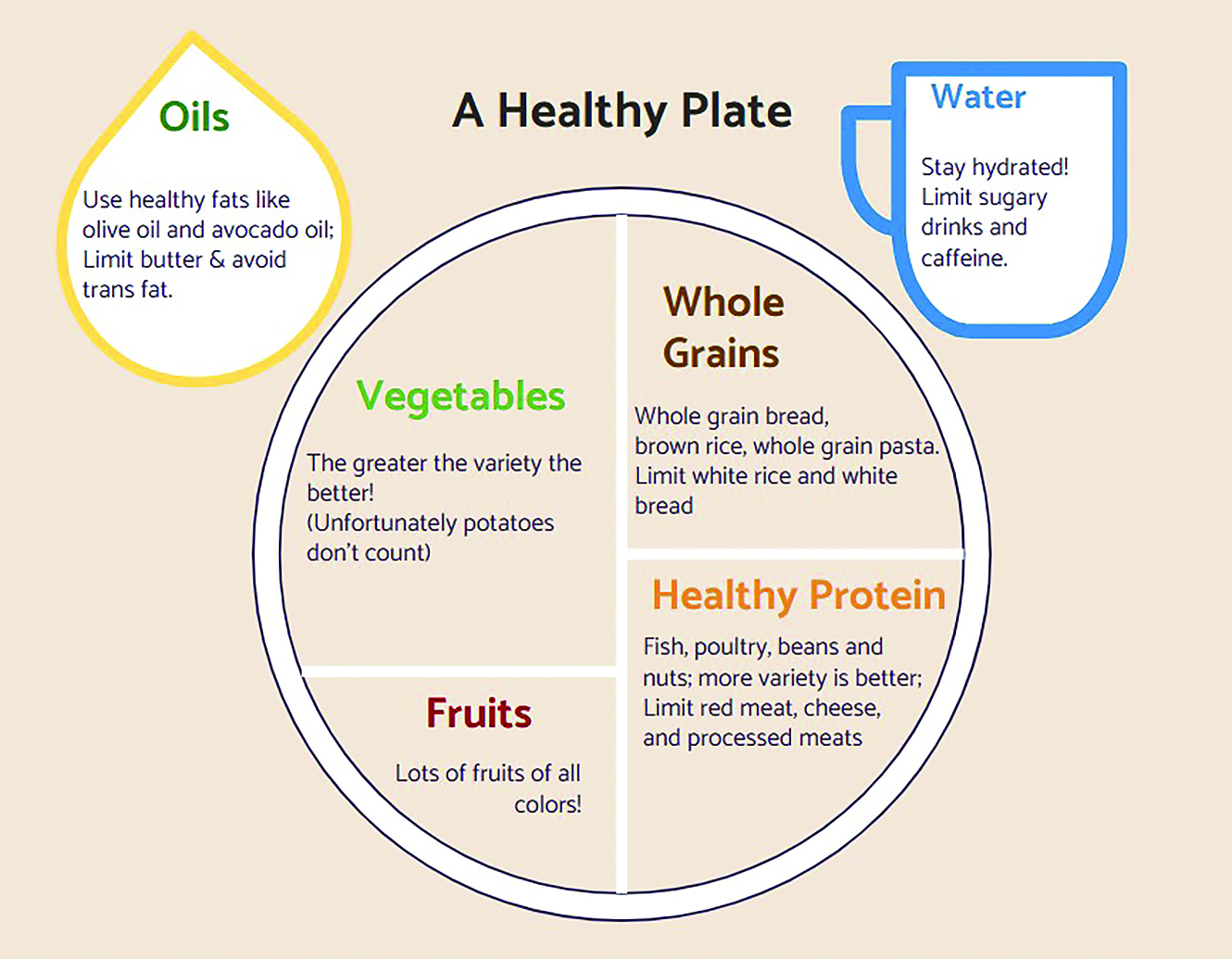
In recent years, nutritionists have moved away from using a food pyramid to demonstrate healthy balance in favor of using a plate as seen in Fig. 4. It can be easier to visualize how similar we are to the image as we load up our own plate each meal — and if we can make any changes to improve our nutritional balance. Sometimes it may mean adding an option to a meal, like pairing a side salad with a main dish; or sometimes it means finding a better balance between meals, like when we are too busy to eat a proper breakfast and take that into consideration when we plan our lunch and dinner.
There is, of course, a version of nutrition where we can measure all our food and count calories. However, in everyday life, that is not always possible. So, here are some simple guidelines:
Try to have a high-fiber carbohydrate (fruit, vegetables, whole grains, beans, nuts and seeds), healthy fat (nuts, dairy and fatty fish) and protein (dairy, meat, nuts and seeds) in your snacks and meals.
Try to eat five servings of fruit and vegetables a day. This is hard to do, and it helps if you start your morning with a fruit or vegetable. For example, if you have a bowl of cereal, cut up and add bananas and strawberries to it. With just breakfast, you will have already eaten 40% of the fruits and veggies you are striving to have in a day.
Try to add nutritious food into the everyday snacks and meals you already eat instead of replacing or taking away food you like. A person who enjoys snacking on pretzels may not stick to a diet where they are replaced by a healthier snack. But, by adding hummus and olive oil, we balance the carbohydrates and salt from the pretzels with protein and healthy fat to create a healthier balance.
Try to eat different types of meat (red meat, white meat and fish) throughout the week.
All food is OK to consume! We do not have to perfect every single day. In our busy lives, sometimes it is necessary to make sacrifices. Sometimes the only option is to go to a drive-thru for fast food. We hope that our series has made it easier to balance our busy lives with healthy lives, to pack a piece of fruit to eat with our drive-thru sandwich. In a sea of information telling people the “perfect way” to “be perfectly healthy” and “have the perfect body,” we want to help you strive for an average of healthy nutrition throughout life. Remember, we are not striving for perfection. We are all striving for balance.
Kalea Abernathy is a licensed professional counselor (LPC) trained in mental health and nutrition. She values incorporating nutrition into therapy to better support overall wellness through a holistic approach. Her clinical experience has included supporting individuals, couples, and families through multiple therapeutic orientations such as such as dialectical behavior therapy (DBT) and cognitive behavioral theory (CBT).
Peter Yibo Pan is a therapist-in-training currently completing his master’s degree in counseling at Northwestern University, specializing in counseling children and adolescents. Peter practices an integrative, evidence-based approach, combining relational, gestalt, and behavioral elements of traditional therapy. He also utilizes nontraditional interventions such as play therapy and art therapy techniques.