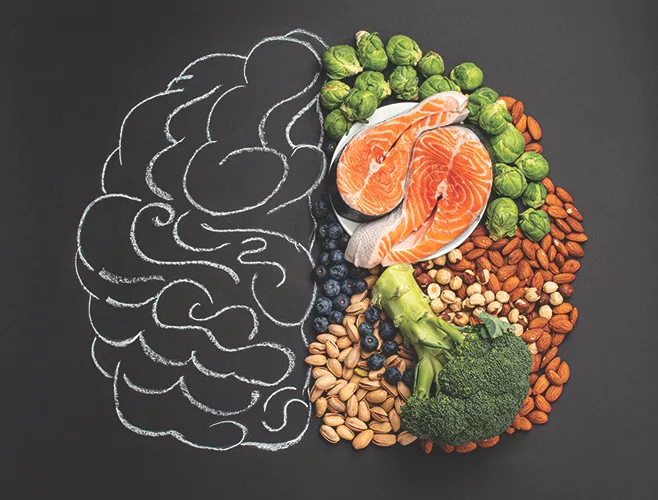
Different kinds of nutrients help us build our bodies, provide us with energy, and regulate our health. Although we usually consider how nutrition can regulate the physical functions of our bodies, what you eat can also affect your emotions. In our last article, we discussed the gut-brain axis and a few ways our diet can influence our mental health. Now, let’s walk through some specific nutrients to see how they affect us.
Macronutrients
Most of us learned that macronutrients are the building blocks of our bodies in biology class. Unfortunately, that’s usually where the consensus ends. There is endless misinformation surrounding how one should consume them, and many of these trends can be actively harmful to our bodies.
Carbs, Sugar, and Gut Inflammation
At the top of everyone’s mind when evaluating a diet is usually a calorie count. While people can be anxious or diligent about keeping their calories in check, with many avoiding carbohydrates as much as possible, this is often unnecessary. The majority of the energy we consume comes from carbohydrates, and it is crucial to ensure that we are eating enough calories each day. Unless on a specific exercise regimen, most people should maintain a healthy calorie balance depending on their metabolic rate and amount of physical activity. Insufficient calories can contribute to irritability, depression, and anxiety, whereas a surplus can overload the digestive system and lead to gut inflammation.
That said, not all carbohydrates are equal. Added sugars can have especially negative effects, along with artificial sweeteners. This is despite the fact that they are often used to advertise a product as “sugar free.” Artificial sugars not only contribute to cardiovascular diseases and diabetes but also add to gut inflammation. When we eat a piece of fruit, the sugar is digested more slowly because of the fiber the fruit contains as a whole. But when we ingest added sugar like those in sodas, the sugar enters the bloodstream much faster and changes our blood sugar more rapidly. It is always advisable to check your food labels for their added sugar content (look for corn syrup or fructose) and try to opt for alternatives with more natural sugars.
Gut Inflammation has many causes, from allergies to food sensitivities and particular food choices. We know that added sugars and too much sugar contribute to gut inflammation, which destroys the careful balance of microorganisms that live in our gut. We will talk about the gut microbiome more in our next article, but in short, a disruption to our gut microbiome would reduce our nutrition absorption. This can decrease production of important neurotransmitters and hormones, potentially leading to depression.
Protein and Fats
Similar to sugars, there are a lot of health trends surrounding protein and fats. The key to understanding these two categories is that our bodies need a healthy portion of both. While proteins can help us build muscles, excess proteins are difficult to digest and overload the kidneys. Instead of contributing to muscle growth, they would simply be broken down into carbohydrates. Eating more protein than we need is not actively harmful to us, but it is an inefficient way to get energy.
There are also different benefits to types of fats, with unsaturated fats being those that exist as liquid at room temperature (think olive oil and avocado oil). These fats, compared to lard or butter, are less likely to build up in arteries. Like proteins, we probably have predisposed attitudes toward fats, and many are especially wary of how much they can contribute toward cardiovascular diseases. While that certainly has truth to it, we also have to consider why we need fats in the first place. Our brain is mostly made up of fat, and fats are crucial in replenishing it, as it consumes a large portion of our daily energy. Even if our jobs require mostly physical force, our brains still need to help coordinate our movements and keep alert. Without enough energy from fats, we would feel physically and mentally exhausted, despite feeling full from eating a normally sized meal.
Micronutrients
A micronutrient is simply a fancy way to refer to vitamins and minerals. Our bodies need micronutrients to support development and overall well-being. It has been long established that micronutrients help keep our physical bodies healthy; however, more research has found that micronutrients support and maintain our mental health, and a lack of micronutrients can contribute to mental health disorders. The American Psychological Association (APA) has published that possible treatment plans for mental health include micronutrients along with therapy. In this section, we will go over which mental health disorders are connected to certain micronutrients, and what we can be eating to get the micronutrients that we need.
Folate
Also known as Vitamin B9, folate helps our bodies with cell growth and division. It aids in the production of red blood cells, which carry oxygen and carbon dioxide throughout our bodies. Without healthy red blood cells, bodies do not get enough oxygen, and we can feel fatigue and even develop chronic diseases such as cancer. Folate helps break down and utilize the protein we consume from our food and maintain the proper balance of brain neurotransmitters, such as epinephrine, norepinephrine, and serotonin. These neurotransmitters help regulate our mood and stress response. When these neurotransmitters are unbalanced, we can feel stressed, anxious, and irritable. Consequently, when individuals experience depression, bipolar disorder, and obsessive-compulsive disorder, we tend to see deficiencies in folate levels.
Magnesium
We like to consider magnesium as the “anti-stress mineral.” It plays a large role in managing our blood sugar, which affects our mood, as well as our body’s energy production and utilization of protein. Magnesium also plays a role in strengthening our bones and muscle contractions. Unfortunately, magnesium deficiency is fairly common. Diuretics, acid reflux pills, antibiotics, alcohol, caffeine, sugar, and highly processed foods all decrease our magnesium levels. Most individuals consume at least one of these a day, if not more. Our lower magnesium levels can contribute to feelings of anxiety, headaches, chronic fatigue, and irritability. Sometimes these symptoms and lifestyle choices reinforce our consumption of magnesium-depleting sources. Your job may be physically taxing, or you may leave early in the morning without time for breakfast. So, you drink some coffee, or, since you’re so tired, you decide not to cook and order out. We initially may be thinking we are combating our fatigue or irritability when in fact, we are rapidly consuming things that deplete our “anti-stress mineral.”
Zinc
Similar to folate, zinc also plays a role in regulating our brain’s neurotransmitters. More specifically, serotonin (mood regulation/ “feel good”) and dopamine (reward/pleasure). Furthermore, zinc supports our immune system and has antioxidant properties. Antioxidants help protect our cells from oxidized stress, which can lead to mental health disorders. Moreover, zinc supports our metabolic function and breaks down the carbohydrates we consume.
Vitamin B
There are eight types of Vitamin B. They all support a slightly different role in our body’s wellness, from metabolic function to neurotransmitter production. We are going to focus on Vitamin B6 and B12. Vitamin B6 helps our bodies regulate the production of gamma-aminobutyric acid (GABA, calm/regulate) and dopamine (reward/pleasure). Chronic stress, sugar and processed foods deplete Vitamin B6. Vitamin B12 is considered our “energy” vitamin. B12 is one of the few micronutrients that our bodies naturally produce in our intestines. However, as we get older, we produce less and less of it and will eventually need to take a supplement to maintain optimal levels. Since Vitamin B12 is our “energy” vitamin, we tend to feel both mental and physical fatigue when we are deficient in it.
Vitamin C
Vitamin C is essential for our bodies. It aids in healing our wounds and improving our immune system. Similar to zinc, Vitamin C also acts like an antioxidant, protecting our cells. Vitamin C is well known for its role in making collagen. Collagen provides structural support for our cells and helps hold and strengthen our tissue connections. Vitamin C deficiency is rare in the United States; however, it is more commonly seen in the elderly and those who consume large quantities of alcohol or smoke. Research has found that those with depression and anxiety symptoms tend to have lower levels of Vitamin C.
Vitamin D
We consider Vitamin D as the “sunshine” vitamin. Along with providing support in the utilization of other micronutrients such as magnesium, Vitamin D is essential for brain health and growth. Vitamin D protects our brain from stress and damage which allows for the proper production of neurotransmitters and helps us regulate our mood.
Supplements
Before you start taking any supplements, you should talk to your primary care physician and run basic lab tests to evaluate your micronutrient levels. The following are basic supplements for your brain health: B-Complex Vitamins, fish oil, magnesium, melatonin, probiotics, Vitamin D, phosphatidylserine (PS, protects your brain cells), and a multi-vitamin that should contain all the trace-minerals/micronutrients you need.
Not all supplements are of the same quality, and some have additives that deplete your micronutrient consumption. When looking for supplements, make sure to check the daily value percentage, as some vitamins contain over 100%. When you take too much of a vitamin, it can put strain on your liver because it has to break down the vitamins. What typically happens is that since your body cannot utilize a lot of the supplement, it gets expelled from your body through urination. Basically, you are buying yourself some very expensive urine if you don’t read the nutrition label.
Furthermore, some vitamins contain additives such as sugar and food coloring. The sugars and unnatural dyes take away from the overall efficacy of the vitamin. There are two additives in vitamins called silica and vegetable magnesium stearate. However, these are added so everything within the vitamin mixes evenly. Generally, it is OK for you to see these additives.
Finding Balance
A few quality name vitamin brands include Jarrow, Life Extension, Mary Ruth’s Organics, and Nordic Naturals. Please remember that you cannot supplement a poor diet. The natural source of good nutrition comes first.
Nutritional balance is hard to find in a busy working life, and we are bound to miss something here and there. We hope this article provides some helpful guidance on how to choose your foods and also quells some anxiety around the misinformation online about nutrition. Next time, we will take this information about “what” to eat and focus on “how” to eat, with a discussion around eating habits, practical advice, and those microorganisms that live in our guts.
Kalea Abernathy is a licensed professional counselor (LPC) trained in mental health and nutrition. She values incorporating nutrition into therapy to better support overall wellness through a holistic approach. Her clinical experience has included supporting individuals, couples, and families to address complex trauma, post-traumatic stress disorder (PTSD), anxiety, depression, obsessive-compulsive disorder (OCD), attention-deficit/hyperactivity disorder (ADHD), and oppositional defiant disorder (ODD). She integrates multiple therapeutic orientations throughout therapy such as a relational-cultural lens, dialectical behavior therapy (DBT), cognitive behavioral theory (CBT), person-centered, and psychodynamic to better help and understand clients.
Peter Yibo Pan is a therapist-in-training currently completing his master’s degree in counseling at Northwestern University, specializing in counseling children and adolescents. He works with children, adolescents, couples, and families. Peter practices an integrative, evidence-based approach, combining relational, gestalt, and behavioral elements of traditional therapy. He also utilizes nontraditional interventions such as play therapy and art therapy techniques, creating a safe and positive environment for building a trusting therapeutic relationship.




