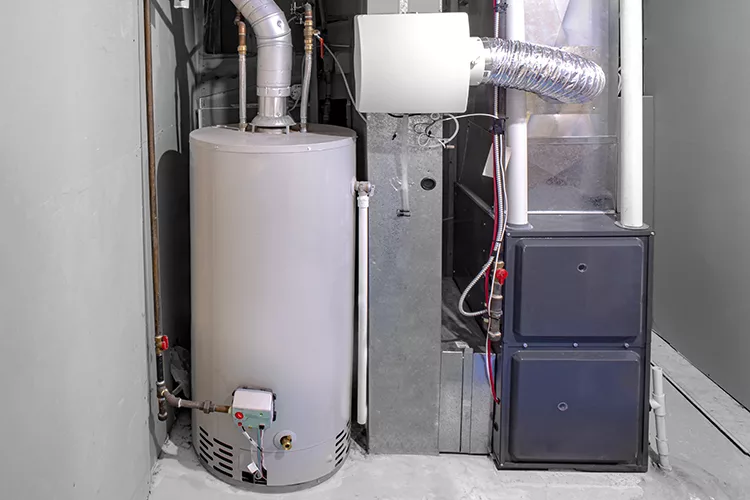
In April, we discussed specific scald incidents and prevention (https://bit.ly/42yNRYm). This month, we’ll discuss preventative maintenance on hot water systems and the hot water temperature limits outlined in the plumbing codes.
As I noted last month, after conducting hundreds of scald investigations, I can say that all scald burns are 100% preventable. Hot water systems can be safe with properly designed, installed, adjusted, maintained and monitored temperature controls.
Generally, the building owner is responsible for providing a preventative maintenance program, hiring qualified personnel or providing training for his current personnel to make sure the premises are safe and that proper controls and maintenance programs are in place that will protect the building occupants from scald injury.
Rarely does a building owner face criminal investigation after a scald incident. I observed a general lack of understanding of hot water system temperature controls and code requirements among investigative agencies.
When investigating a hot water system, a look at the design, installation, maintenance and operation of the hot water system should include the following considerations:
1. Selecting the appropriate fuel, type and size of a water heater for a given application.
2. Designing the piping with close attention to temperature controls and flow controls.
3. Specifying and showing temperature gauges, pressure gauges and flow control valves at appropriate locations.
4. Designing and specifying a (thermostatic) temperature-actuated mixing valve (TMV) conforming to ASSE 1017/CSA B125.3, with dual valves of slightly smaller size in critical applications, to ensure a constant temperature is delivered to the hot water distribution system at a temperature that will not promote bacterial growth.
TMVs should have isolation valves and check valves on both inlets to prevent crossover flow between the hot and cold water systems. Crossover flow has been the cause of many scald injuries and deaths, and many people do not realize it is happening as it occurs when there is a pressure disturbance in the system.
A temperature gauge should be installed on the outlet pipe of each TMV and on the hot water return line to monitor heat loss in the circulated system. The hot water return line should be split after the circulating pump and routed to the cold water inlet of the water heater, as well as to the cold water inlet or hot water return connection of the TMV.
5. Specifying a code-compliant shower valve or tub-shower valve that has a maximum temperature limit stop adjustment. The shower and tub-shower valves must be of the thermostatic, pressure-balancing or combination thermostatic and pressure-balancing type, with maximum temperature limit-stop adjustment.
6. Ensuring the maximum temperature limit-stop is adjusted when the water heater or shower valve is installed or when the water heater is lit or relit and adjusted to the intended system operating temperature. Each time the water heater temperature is adjusted or when the water heater is relit, the maximum temperature flowing from the fixtures should be checked, and the limit-stop adjusted to limit the maximum temperature flowing from the shower to not exceed 120 F.
7. Selecting a hot water temperature maintenance system. This generally is a circulating pump, piping, balancing valves and control valves in a circulated hot water distribution system. Piping should be sized to limit the hot water velocity to under 5 feet/second and, for temperatures over 140 F, the maximum flow velocity should be 2 to 3 feet/second.
The system hot water temperature will change each time a water heater is lit because it requires turning the thermostat dial down to the pilot setting to light the water heater burner. The dial is then turned back up to an operating temperature that is often different than the previous temperature setting.
Reducing Legionella growth and scald accidents
Changing or altering the hot water system in any way necessitates checking the temperature on all downstream shower and tub-shower valves, as well as other fixtures with limit-stops. The code requires adjusting the maximum temperature limit-stop to no more than 120 F.
Some facility owners or property managers make a policy of setting the maximum temperature to an even higher temperature to minimize or eliminate the chance of scalding. For example, the storage temperature may be in excess of 140 F to ensure an adequate supply of hot water and prevent the growth of Legionella and other bacteria in the distribution piping.
The lowest temperature in the distribution piping should be a couple of degrees above 122 F, which is the maximum temperature at which Legionella bacteria will grow and reproduce. Above 122 F, Legionella enters a cyst stage and survives but does not multiply. When building owners supply water to a fixture in excess of 122 F, they can reduce the temperature flowing from the shower or tub spout by setting the maximum temperature limit-stop.
With a maximum temperature set to 115 F, a typical 50-gallon residential water heater would typically run out of hot water before a serious scald burn injury could occur. For a second-degree burn in adult males, it would take about 30 minutes when hot water is 115 F, compared to only about 4.8 minutes when the hot water is at 120 F. With the limit-stops set to a maximum setting of 110 F, the hot water flowing from the fixture is still hotter than most showers.
Studies using temperature sensors in shower heads have shown most showers are set to a temperature between 102 F to 109 F, and a scald burn in adult males will take more than 3.6 hours (216 minutes) when the water temperature is at 110 F, according to the Moritz & Henriques burn studies. Most residential storage-type water heaters cannot produce hot water for very long, and the water temperature slowly starts to drop within about 10 to 15 minutes of flow, further reducing scald risk.
In colder climates, temperatures closer to 115 F may be necessary to compensate for the heat lost while warming up the bathtub or when ambient temperatures are cold in a bathroom.
In commercial buildings with central commercial-type water heaters, storage temperatures can be higher and recovery rates can be closer to instantaneous, allowing continuous hot water. Setting the maximum temperature and monitoring system temperatures at the fixtures is extremely important in these types of buildings.
Seasonal changes in the incoming cold water necessitate making adjustments to the maximum temperature limit-stop to ensure the hot water temperatures do not exceed 120 F when cold water temperatures rise in late summer, and also to make sure the mixed hot water temperature does not drop to a temperature that is too cool for bathing or showering when the cold water temperature is at its lowest temperature in late winter.
Hot water temperature limits in the plumbing codes
The model plumbing codes have limited information about hot water storage and distribution temperatures. However, there is one reference in the International Plumbing Code (IPC) under Chapter 5, Water Heaters, to restrict the water supplied to the potable hot water distribution system to a temperature of 140 F or less when a combination potable water heating and space heating system is installed:
“2024 International Plumbing Code
“Chapter 5 — Water Heaters
“501.2 Water heater as space heater
“Where a combination potable water heating and space heating system requires water for space heating at temperatures greater than [140 F], a [temperature-actuated] mixing valve complying with ASSE 1017 shall be provided to limit the water supplied to the potable hot water distribution system to a temperature of [140 F] or less. The potability of the water shall be maintained throughout the system. Requirements for combination potable water heating and space heating systems shall be in accordance with the International Mechanical Code.”
Chapter 4 of both IPC and Unified Plumbing Code covers fixtures, faucets and fixture fittings. Chapter 4 also covers temperature limits and standards required for control valves to meet at various fixtures:
“2024 International Plumbing Code
“Chapter 4 — Fixtures, Faucets, and Fixture Fittings
“Section 421.3 Individual Shower Valves.
“Individual shower and tub-shower valves shall be balanced-pressure, thermostatic or combination balanced-pressure/thermostatic valves that conform to the requirements of ASSE 1016/ASME A112.1016/CSA B125.16 or ASME A112.18.1/CSA B125.1. Such valves shall be installed at the point of use. Shower valves shall be rated for the flow rate of the installed shower head.
“Shower and tub-shower combination valves required by this section shall be equipped with a means to limit the maximum setting of the valve to [120 F]. In-line thermostatic valves shall not be used for compliance with this section.”
The model plumbing codes, specifically Chapter 4, address hot water temperature limits at certain fixtures. Chapter 5 does not address storage or distribution temperatures, except when a combined heating system with domestic hot water is used. Other than a combined heating system with domestic hot water, no temperature is specified for hot water distribution in the plumbing codes. The only temperatures listed are those measured by various fixtures.
Many people misinterpret the temperature limits at the fixtures to mean that these are the temperature limits for the entire system. That is a wrong assumption. Storage temperatures need to be higher for two reasons: to allow more hot water capacity and to prevent bacterial growth in the hot water tank.
The committees for ANSI/ASHRAE Standard 188-2021, Legionellosis: Risk Management for Building Water Systems and “ASHRAE Guideline 12, Managing the Risk of Legionellosis Associated with Building Water Systems” addressed this issue and recommended minimum storage temperatures of 140 F in uncirculated storage-type water heaters and a minimum of 130 F in circulated storage tanks. Those are minimums, not maximums.
Using a higher temperature with an ASSE 1017 TMV provides more usable hot water for the peak draw period and stabilizes the distribution temperature so the hot water return temperature can be a couple of degrees above 122 F, preventing Legionella bacteria growth in the circulated hot water distribution system. The larger the building, the more heat loss there will be in the circulated piping system.
If a hot water distribution main leaves the TMV in the mechanical room and the outlet pipe temperature gauge reads 140 F, and returns to the circulating pump where the hot water return temperature gauge shows 125 F, there is a 15-degree drop in the hot water distribution system from heat loss through the insulation on the piping. If the return temperature drops below 124 F, the outlet of the mixing valve can be adjusted to raise the return temperature above the Legionella growth range.
When using a TMV at the beginning of a circulated hot water distribution system, it requires a hot water storage temperature 10 to 20 degrees hotter than the mixed water temperature leaving the mixing valve, depending on the type of mixing valve selected. Digital mixing valves can mix return hot water when the return temperature is within a few degrees of the supply temperature, whereas a bi-metal coil-type mixing valve may require a temperature difference of up to 20 degrees.
- Accessories on a water heater include:
- Temperature and pressure relief valves;
- Drain valves;
- Anode rods;
- Flammable vapor ignition resistant — flame arrestor technology;
- Draft hood (fuel-fired atmospheric models);
- Flue;
- Flue baffle;
- Draft inducer fan (high-efficiency seal combustion models);
- Cold water inlet and dip tube with anti-siphon hole;
- Hot water outlet with heat trap;
- Combustion chamber;
- Burner;
- Combination gas control/immersion-type thermostat; and
- Electrical water heaters typically have tank surface-mounted thermostat controls.
Thermostatic controls are not temperature controls for scald prevention; they are designed to shut off the burner or energy to the water heater to prevent overheating and a steam explosion. Back in the days of wood, coal and oil-fired water heaters, it was not uncommon to have a water heater or boiler explosion where the sudden release of steam, which expands up to 1,700 times when changing from a liquid under pressure to a vapor phase, is like a bomb.
There is very little addressing storage temperatures and distribution temperature requirements in the plumbing codes because there are so many ways to design a domestic hot water system.




