.webp?t=1775422502&width=750)
Founded in 1926, Jay R. Smith Mfg. Co. has grown from a small, family-owned manufacturer into a cornerstone of a much larger enterprise without losing the handshake values and close‑knit culture that shaped its first century. As the company celebrates this milestone, the voices of longtime employees and leaders reveal a story of partnership, loyalty and quiet reinvention that continues to guide Smith.
From a brownstone basement to an international brand
Jay R. Smith Mfg. Co.’s journey began a century ago, when founder Jay L. Smith recognized a need for brass and bronze plumbing specialties. Jay L. named his company after his son, Jay R. Smith.
A basement, a phone and a promise
The company started in Jay L.’s New York brownstone basement, building his business one order at a time, listening carefully to what customers needed and then finding a way to deliver. It wasn’t long before he was successful enough to necessitate a move to a modest New Jersey shop. The work was close enough to the customer that if there was a problem with an order, Jay L. would pick up the phone and sort it out directly — a habit of accessibility that people still associate with Smith today.
Reliability and fair dealing were not slogans; they were how the company weathered economic ups and downs in its first decades. In those years, Smith earned a reputation among contractors and reps as a manufacturer that did not miss shipments and did not cut corners. This made Smith a natural fit for partners who wanted a dependable drainage line on their books. In the 1940s, the baton of leadership passed to Jay R. Smith, who guided the company through significant growth after World War II.

Enter Earl Morris and the West Coast
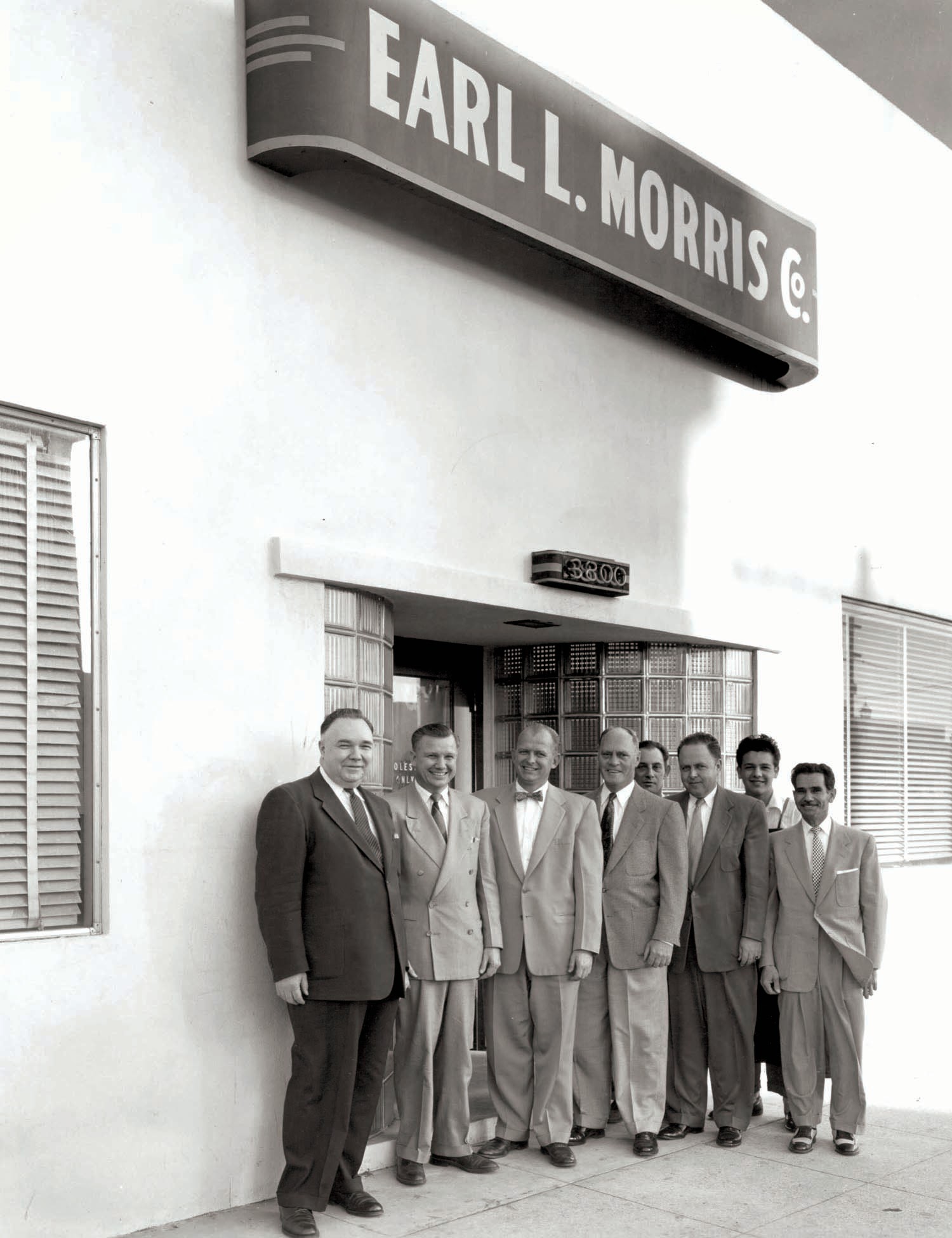
Meanwhile, another part of the Smith story was unfolding. A young man named Earl L. Morris was a vice president of sales at a major competitor of Smith on the East Coast, but desperately wanted to get his family back to California, where he had a representative business. He was impressed with Smith’s products, and armed with endless confidence, he walked into Jay R.’s office to make him an offer he couldn’t refuse — an offer that would see Earl moving back to California to introduce the West Coast to the Smith line of plumbing specialties through the Earl L. Morris Company, known today as Elmco.
Don Morris, Earl’s son and CEO of Morris Group Inc., recalls that the two men immediately hit it off, sealing a friendship and business relationship over cigars, whiskey and a shared sense of how deals should be done — despite both being “strong willed and occasionally butting heads.”
However, Morris’s entrepreneurial and creative spirit wouldn’t be satisfied with simply selling products. His drive led him to begin an additional endeavor, Acorn Engineering Company. This new company would design and manufacture products complementary to the Smith line. Over time, the relationship between Smith, Acorn and Elmco grew from a line-card connection into a true partnership.
Handshakes, blank checks and trust
Don Morris describes that partnership as a yin-yang match. The close personal and business relationship allowed both companies to compete with much larger players by combining Smith’s consistency with Acorn’s innovation. It was a collaboration held together by handshakes, short contracts, a shared belief in family ownership and keeping your word.
Both companies thrived as privately held, family‑owned enterprises but it was more than just a business connection. Their families became close as the next generation grew up together. Don remembers riding a mule alongside Jay R’s son and daughter, Jay L. and Geraldine, during a Morris-Smith family trip to the Grand Canyon — a trip that started yet another long friendship. Both Don and Jay L. joined their respective family businesses in the 1960s.
That bond is exemplified in a recollection from Steve Chromey, executive vice president of Smith and a long-term employee from back in the New Jersey days. He recounts the story Jay R. shared with him about just how deep the trust ran between the Smith and Morris families.
Years earlier, when Jay R. needed cash for the business, word got back to Earl Morris, who responded by sending him a signed blank check with a note to “use this for any amount up to $100,000.” Jay R. never cashed it, but he told Steve he was “flabbergasted” by the gesture. Steve says he has never forgotten that example of quiet generosity and faith between the two partners.

From line card to shared future
For decades, they collaborated as independent partners, each guided by the belief that being privately owned and family led allowed them to take a longer view than many public competitors.
Over the next couple of decades, Smith continued to build a reputation for precise, methodical manufacturing and dependable delivery. By the 1970s, Smith was ready for more big changes. Two of those were a move to Montgomery, Alabama, and the young and vibrant Jay L. Smith taking full control of the family company with his father’s blessing.
At the same time in California, the growing Acorn family of companies, which eventually evolved into Morris Group International under Don Morris’s leadership, continued to focus on innovation and entrepreneurial experimentation.
In 2010, Morris Group International first became an investor in Smith, then ultimately acquired the company, bringing the longtime partners formally under the Morris Group International family of brands while preserving the Smith name and legacy.
Even as technology, geography and company structure have changed, this balance of reliability and innovation continues to guide decisions within the broader Morris Group International family.
A true family company in every sense
Smith isn’t just family-owned in the legal sense; the family culture comes to life through the daily experiences and relationships built across generations.
Careers that span generations
When Beth Willis, senior sales engineer, started working for Smith in the 1970s, looks at an old company photo, she points out her infant daughter Audrey, sitting on her lap. Audrey, today a customer service supervisor working in the same office as her mom Beth, “has literally been a part of Jay R. Smith her entire life.” In Beth’s words, this photo isn’t only a workplace snapshot; it’s “a true family photo that is a snapshot of generations coming together in one place.” It’s a reminder that for many, Smith has been the backdrop for entire lives, not just careers.
That sense of family extends far beyond bloodlines. Beth also remembers arriving as part of a young team in Montgomery, a mix of “Yankees and Southerners” who quickly bonded over shared work and after-hours friendships. Leaders like Steve Chromey and Rich Krauter, who relocated from New Jersey, set an approachable tone, making it clear that new hires were meant to belong, not just clock in.
Multigenerational stories like Beth and Audrey’s are common. Parents, siblings and children have often worked under the same roof, passing along not only technical knowledge but also an understanding of “how things are done” at Smith. Chris Rylant, who joined in 1979, recalls an office full of people who started young and stayed together until retirement, building a tight-knit group. Over time, those working relationships turned into lifelong friendships that continued well beyond the plant gates.
Shared tables, shared opportunities
Company traditions anchor that closeness. Employees talk about potluck lunches, birthday treats and holiday meals at Thanksgiving and Christmas as a cherished source of good memories — times when the break room felt more like a family dining room. Picnics, recognition events and the Quarter Century Club further reinforced the idea that long service was something to celebrate together, not just tally on a résumé.
Smith has evolved with the times. Beth remembers the strict dress codes and “no food at your desk” rules of the early years, a highly structured environment that has since relaxed into something more casual. What didn’t change, however, was the sense that people were looking out for one another. Everyone helps new hires find their footing, encourages co-workers to bid on open positions, and celebrates promotions that often take someone from an entry-level role into management over the course of a career.
Celebrating together, grieving together
However, as Steve Chromey explains, “One of the hard things about being family is yes, you celebrate together, but you also grieve together.” Losses hit especially hard when they involve actual relatives who worked side by side, or longtime colleagues who feel like kin. But the same closeness that made those moments painful also ensured no one had to endure them alone. Through good times and the more difficult times, employees describe Smith as a place that still feels like “coming home,” even as the company has grown and changed.
Jay L. Smith and the power of being seen
At the heart of Smith’s culture stands the example set by the young Jay L., who combined a deep knowledge of the business with an equally deep interest in the people doing the work. He had learned the operation from the ground up and, in fact, you can still see his name on old draftsman drawings found in the office. He carried that hands-on understanding into his years as a leader, spending much of his time out on the floor rather than behind a closed office door.
Humor, warmth and everyday moments
Employees remember him first and foremost as a genuine people person. Beth Willis recalls that when someone earned a promotion, he’d put an arm around their shoulder and tell them how proud he was. He’d even take note when an employee arrived in a new car and celebrated that purchase with them. Those gestures made recognition feel personal, not ceremonial.
Others saw the same consistency on the shop floor. Bo Perry, lead developer and assistant IT manager, remembered that Jay would come around and wish you a happy birthday with a handshake, no matter what you were doing, “elbow deep in grease or not,” making each person feel seen.
Jeff Cannon, vice president of manufacturing, adds that those birthday visits were about more than politeness; they were a few minutes of honest conversation that left employees feeling known by the person at the top.
Many employees mention Jay L.’s birthday book, which he carried in his pocket at all times to ensure no one was forgotten on their birthday — whether they were longtime employees or those recently hired. Chris Rylant, senior sales engineer with nearly 46 years of continuous service, remembers helping create the infamous birthday book. “Jay L. found I could draw a little bit — cartoons and stuff — so he had me hand draw his little booklet. Then he put the birthdays in by hand.”
Jay’s warmth came with a playful streak that kept things human. Beth tells the story of working through her lunch one day, walking past the tall cubicle partitions, when Jay suddenly jumped out to startle her, laughing the whole time. That mix of sincerity and humor, she says, captured who he really was: kind, genuine and full of life, with an easygoing nature that set the tone for everyone else.
Spotting potential and building careers
The way Jay L. hired and promoted people also shaped the company. Stories circulate of him striking up casual conversations outside the plant and turning them into careers — like the time he offered a job to the clerk at the local car rental counter, a move that eventually led to her then-husband, John Gatson, joining Smith as well. John has now been with Smith for more than 30 years, thanks to Jay’s friendly spirit and belief in family ties.
Beth Willis has watched many people start in entry‑level roles, such as plating, then work their way into engineering, sales or management by steadily learning more and taking on new responsibilities, a path Jay actively encouraged.
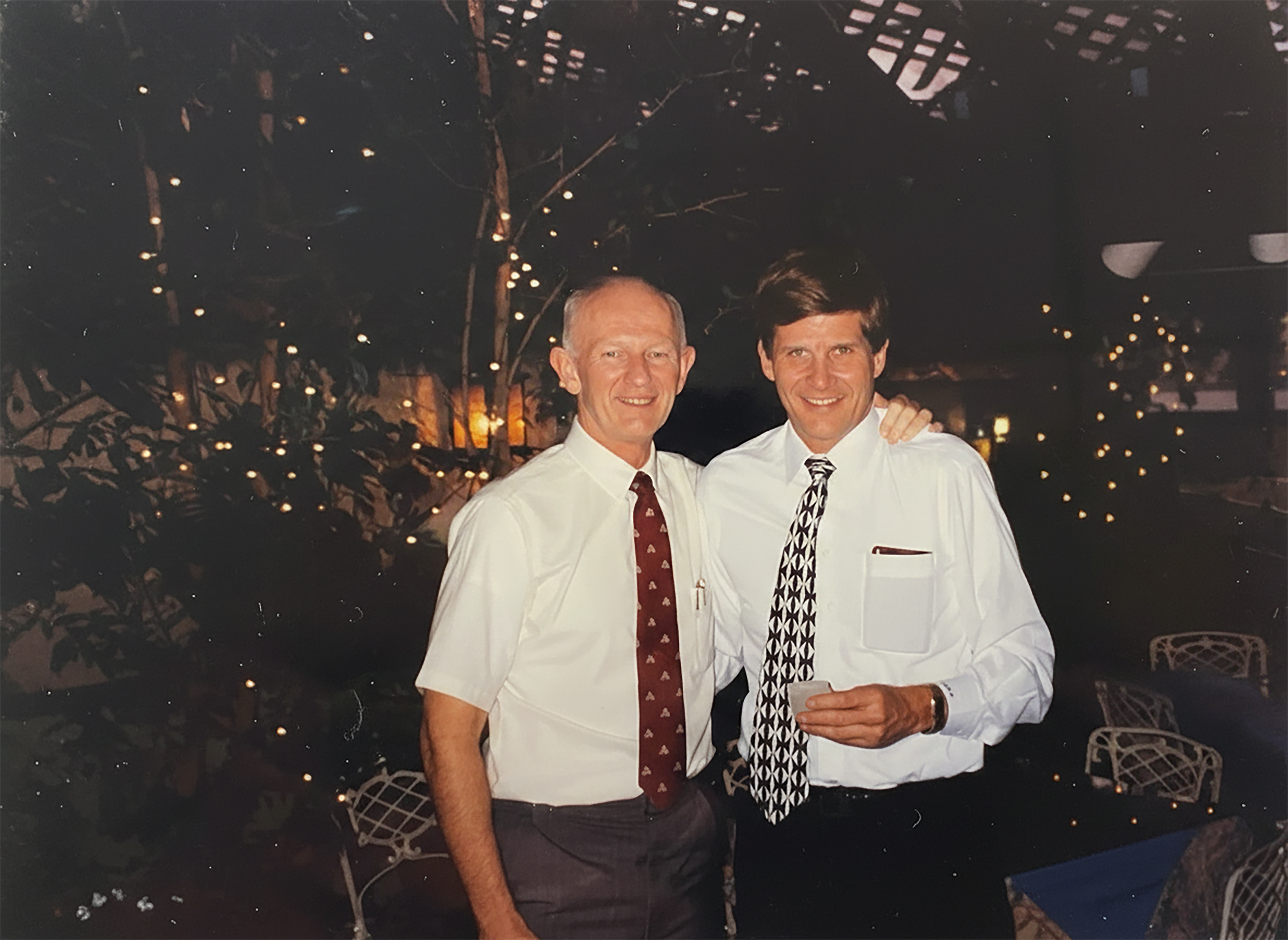
Chris Rylant recounted an example of that culture of opportunity and professional development. A career highlight for him was being chosen to spearhead the introduction of siphonic roof drainage systems in the United States. “That’s something I never thought I would have been able to do, traveling nationwide to present seminars and develop expertise in a novel technology.”
For longtime leaders like Steve Chromey, Jay L.’s approach distilled into a simple principle: “You need to be approachable, listen and let people know they’re not just a number.” Jay lived that out by talking with employees about the machines they ran and why their work mattered, helping them see how their piece fit into the larger whole.
That style fostered a culture in which success was understood as a team effort and, as Jeff Cannon tells new generations, “Hard work and persistence can still build a lifetime career at Smith.”
Growing through change
Growth at Smith has always meant change; new buildings, new technology and new faces. But longtime employees describe that change as something they moved through together, not something that happened to them. When the company shifted from handwritten work orders and typewriters to computers, and later to CNC machines and robots on the shop floor, people had to learn new skills on the fly. For many, mastering those tools brought real satisfaction, turning what could have been a threat into a chance to do more interesting work.
Change has also reshaped who works where. Robert Skinner, maintenance foreman, remembers when the back of the shop was all men. Now it includes women in roles like robot operator, TIG welder and safety coordinator, each bringing new perspectives and raising the bar on how the work gets done.
Despite all the changes, Chromey points out that the company may be larger and the pace faster, but the core expectation remains the same; show up, learn, help each other, and keep finding better ways to do the job together.

A path to the future
As Smith looks toward its second century, current Smith President Barrett Morris, Don Morris’s son, offers a vision firmly rooted in both tradition and an openness to change. Barrett’s perspective is shaped by a winding path through the business rather than a straight climb to the corner office.
Put to work before put in charge
Barrett started in marketing after college and helped launch product lines. He hauled traveling product trailers around the country to present alongside reps, then moved into roles at Whitehall and at Elmco (still a significant rep for Smith), where he saw firsthand what it takes to sell and support the products day to day. Those years “in the bowels of the company,” as he puts it, gave him a ground‑level view of manufacturing, integration and rep life that now informs how he leads Smith into its second century.
For Barrett, the future is about “refining an already successful script, not rewriting it” and trusting that small, thoughtful changes can compound into big improvements over time.
Data-driven and people-centered
His leadership style draws on the past while leaning into new tools and expectations. “I’m a data freak,” he admits, describing his goal of building a real-time view of key indicators across sales, leads, inventory and employee information to inform decisions as the company grows. Even so, he emphasizes that “what still powers our business is the people,” and that data is there to support, not replace, the human relationships at the center of the company.
Barrett’s challenge is to adapt the family model to a younger, more mobile workforce and a consolidating industry without losing Smith’s defining culture. “The more we foster connection, the better everything becomes,” he says. “People work for pay, but they want to feel they belong. Our strength is our team’s interconnectedness.” To enhance this across the organization, he revived the Pipeline newsletter so employees from all Morris Group locations could see and share their stories.
That same philosophy extends beyond the factory walls to Smith’s representatives in the field. Because Barrett spent years working with and for rep agencies, he gained a visceral understanding of how central Smith is to their warehouses and daily contractor pickups, and how much their success depends on having the right Smith inventory and components on hand.
Owning the product and owning the future
As part of Morris Group International, Barrett also thinks about how Smith’s manufacturing strength shows up on the jobsite. He grew up with, and later adopted, his grandfather’s philosophy that “there’s no substitute for quality.” When selling a product someone else makes, his father Don believes the seller inherits the manufacturer’s problems, but when you make your own stuff, you control your own destiny. “We make our own stuff” has been, and always will be, a key philosophy driving all Morris Group International brands.
Barrett’s strategy of investing in local inventory and maintaining close, long-term rep relationships flows directly from that belief, keeping quality in the company’s own hands while giving rep agencies the flexibility to respond quickly in their territories.

Barrett believes Smith is well-positioned for what comes next. It’s part of an organization willing to invest in itself, attentive to data, and anchored by people who still see themselves as part of a shared family story. In that sense, the future of Smith as a brand of Morris Group International looks a lot like its past. There remains the same insistence on making things well, the same reliance on trusted reps and local relationships, and the same emphasis on belonging scaled to meet a new century’s challenges and opportunities. l
Traci Browne is a freelance writer specializing in manufacturing, engineering, robotics, Industrial XaaS, and emerging technology.




