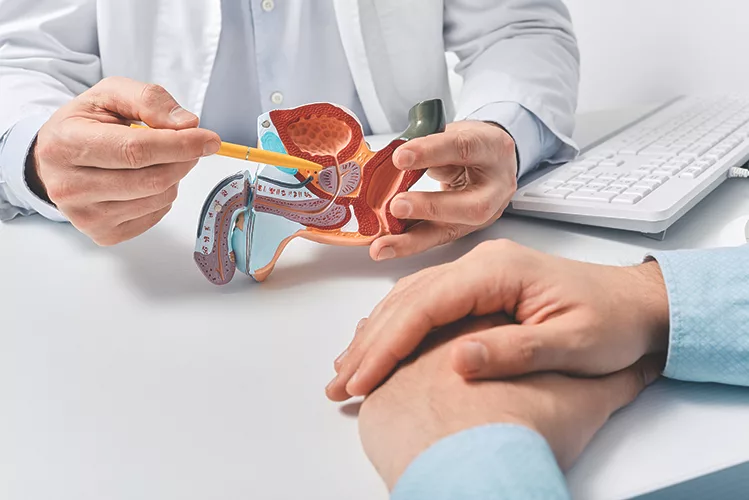
Let’s be honest: men are not known for rushing to the doctor when something doesn’t feel right. Often, men do not go to the doctor unless something’s broken, bleeding or about to fall off — or just hurts too much to ignore. But here’s the truth: waiting until it hurts can be a deadly mistake.
Making the topic even more pressing to those in the skilled trades, a 2019 research article published in the American Journal of Industrial Medicine states that in addition to high rates of work injury, construction workers have higher rates of mortality and morbidity from chronic diseases than workers from other occupations as well.
There are a variety of health issues that we confront as we get older. Men over 50 face an increased risk of heart disease, diabetes and sexual health challenges, as well as a variety of cancers, including skin, bladder, colorectal and prostate. Prostate cancer is one of the biggest health threats men confront, and it often shows no symptoms until it’s advanced.
While most men are comfortable talking about heart disease, diabetes and some forms of cancer, prostate cancer is one topic that makes many uncomfortable. That discomfort makes some men reluctant to discuss their prostate condition, which means they miss out on the knowledge borne of the lived experience of other men with the same or similar conditions.
Movember is an initiative established in 2003 by a group of friends who decided to grow mustaches in November to spark conversations around men’s health topics. On the heels of the annual event, let’s take a further look at prostate cancer statistics, symptoms and treatment plans.
Catching Prostate Cancer Early
According to the Prostate Cancer Research Foundation:
Each year, about 300,000 new cases of prostate cancer are expected to be diagnosed.
1 in 8 men will be diagnosed in their lifetime; that number rises to 1 in 5 for military veterans.
Prostate cancer is the second leading cause of death after lung cancer for men.
More than 3 million men have survived a prostate cancer diagnosis.
If caught early, the five-year survival rate is over 99%.
When caught early, there is a 99% survival rate — let that sink in! Especially the part about being caught early! Prostate cancer is sneaky. It typically begins without pain or noticeable symptoms. Many men go years without knowing there’s a problem — and that’s exactly why regular screening is so important.
When symptoms do show up, they might look like the following:
Urinating often, especially at night
Weak or interrupted urine flow
Blood in your urine or semen
Painful urination or ejaculation
Pressure or pain in the lower back, hips, pelvis, or thighs
If any of this sounds familiar, don’t pretend that it is nothing; talk to your doctor. A simple and powerful tool for detecting prostate cancer is the PSA (Prostate-Specific Antigen) blood test. This test measures a protein made by your prostate. Higher-than-normal levels can be a red flag — but they’re not always a cancer diagnosis. Your doctor will monitor your PSA levels over time and determine if more testing is needed.
Treatment
Men who are diagnosed with prostate cancer have a variety of treatment options. The treatment plan will depend on the stage of the cancer, the patient’s age, overall health, and preference. The aggressiveness of prostate cancer is expressed using a Gleason Score. The Gleason Score is determined by identifying the two most common patterns of cancer cells found in a biopsy and summing the numbers associated with those patterns. A score of 6 or less indicates a low-grade and less aggressive concern, while a score of 7 represents an intermediate-grade and therefore a moderate risk. A score between 8 and 10 reflects a more aggressive cancer and, therefore, a greater risk of growth and spread.
There are several treatments for prostate cancer. The three most common treatments are Active Surveillance, surgical removal of the prostate, and radiation therapy.
“Active Surveillance,” also known as “Watchful Waiting,” is a treatment strategy most common in older patients with early-stage cancer and a low Gleason Score, where the side effects of other treatment interventions are significant and may outweigh the benefits.
The surgical removal of the prostate gland and the surrounding tissues has become increasingly sophisticated and may be done laparoscopically and robotically. This approach is suitable for men who are generally healthy and prefer a more aggressive approach, as the concept of “watchful waiting” can be difficult to tolerate. The risks of this intervention include those associated with any major surgical procedure, as well as incontinence and erectile dysfunction.
Radiation therapy seeks to destroy prostate cancer cells by using radiation. Radiation therapy can be accomplished by implanting radioactive “seeds” in the prostate or by directing radiation at the prostate from outside the body. This works best for localized cancer and may be combined with hormone therapy for those with higher-risk disease.
Other treatment options to explore, if necessary, include hormone therapy, chemotherapy, immunotherapy or targeted therapies for patients with specific genetic mutations.
Taking Action
Early detection is crucial for achieving optimal treatment and outcomes. Men over 40 should undergo an annual physical, which should include a PSA test. If you’re 50 or older and haven’t had one yet, now is the time.
Action steps to consider include the following:
Schedule your annual physical and be sure it includes a PSA test.
Pay attention to your body. If something doesn’t feel right, don’t ignore it or pretend it is nothing.
Talk openly about your physical and mental health. Your health is your responsibility. Don’t let stigma or embarrassment get in the way.
Take advantage of the many support groups for prostate cancer patients and survivors — the experience, knowledge and wisdom of those who are or have experienced a similar health challenge.
Get support when you need it! Contact your Employee or Member Assistance Program and speak with a counselor.
Available resources include the Prostate Cancer Foundation, ZERO Prostate Cancer, American Cancer Society and Prostate Cancer Research Institute (PCRI) — all offering a mixture of patient guides, educational materials, webinars and support groups.
Prostate cancer doesn’t wait. Neither should you. The earlier it’s found, the better your odds, the greater your options and the higher the likelihood that you can enjoy long-term survival!
Bill Heffernan, LCPC, CEAP, is the co-founder of ScreenSafe. Backed by an experienced team, ScreenSafe’s comprehensive drug-free workplace consulting and policy management serves as a gateway to a safer workplace. For over two decades, the drug testing consulting and administration firm has offered customized Drug-Free Workplace Program (DFWP) services, helping clients develop comprehensive programs that suit each organization’s needs.