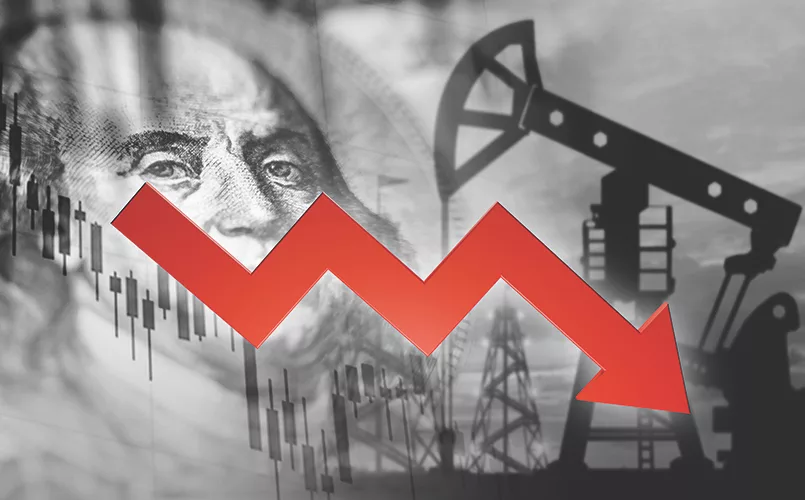
As we enter the midpoint of Q2 2025, oil prices have dropped significantly following the news of an Iran-Israel ceasefire. However, negotiations remain difficult, as both parties have much at stake. The ceasefire is precarious, with unresolved issues surrounding Iran’s nuclear enrichment and ballistic missile programs. Without a major diplomatic breakthrough, the threat of renewed conflict remains.
Additional downward pressure on oil prices stems from OPEC+’s decision to raise output by 548,000 barrels/day (bbd) in August. Goldman Sachs anticipates a further 550,000 bbd increase in September, likely to be announced at the next OPEC+ meeting on Aug. 13, 2025.
Oil is also experiencing pressure as U.S. officials flagged a delay on when tariffs would begin but failed to provide details regarding changes to the rates that will be imposed. Investors are concerned that higher tariffs could slow economic activity and oil demand.
As of this writing, WTI is $66.50 a barrel and Brent is $68.29 a barrel.
“For now, the oil market remains tight, suggesting it can absorb additional barrels,” notes UBS analyst Giovanni Staunovo.
Priyanka Sachdeva, senior analyst at Phillip Nova, says: “Concerns over Trump’s tariffs continue to be the broad theme in the second half of 2025, with dollar weakness the only support for oil now.”
The Trump administration’s tax legislation, signed into law on July 4, 2025, offers the oil and gas industry expanded opportunities for development on federal lands and in federal waters, additional tax benefits and streamlined permitting.
The bill requires 30 offshore oil and gas lease sales in the U.S. Gulf waters and six in the Cook Inlet area of Alaska by 2040. Onshore, it requires four lease sales in Alaska’s Arctic National Wildlife Reserve by 2032 and five in the National Petroleum Reserve-Alaska by 2035.
PVF sector construction news
Entergy Mississippi plans on constructing a combined-cycle, natural gas-fired power plant and electrical substation on a 75-acre site in Ridgeland, Mississippi. The total investment value of $1 billion includes the construction of building space, equipment foundations and spill containment systems, installation of combustion turbine and generator sets, heat recovery steam generators and steam turbine and generators, and the purchase and installation of water treatment and storage systems.
Site preparation for the estimated 760 MW plant is scheduled to begin this quarter, with construction scheduled to commence early 2026.
Eli Lilly and Co. is planning the construction of a $5.9 billion active pharmaceutical ingredients manufacturing campus on a 236-acre site at the Generation Park in Houston.
The project includes the construction of multiple buildings, offices, a tank farm, wastewater treatment facilities, the installation of stainless-steel tanks and piping systems, and chemical storage tanks. Construction is scheduled to commence in early 2026.
The small communities of Dickeyville and Kieler, in the southwest corner of Wisconsin, are the destinations for a $400 million set of projects that will see a new brass foundry and accompanying warehouse expansion. In Dickeyville, A.Y. McDonald Manufacturing Co. broke ground in late 2023 for the brass foundry in the Southwest Wisconsin Industrial Park.
When the 360,000-square-foot foundry is complete, the company’s Dubuque, Iowa, foundry, located on the other side of the Mississippi River border between Iowa and Wisconsin, will be decommissioned and repurposed, although the company will maintain its headquarters in the city.
To accommodate the increased production at the new Dickeyville location, A.Y. McDonald is expanding an existing warehouse in Kieler, about four miles south. The company’s long-term vision for the Kieler site is to convert it into a manufacturing facility as well, although this may take several years to achieve. The new foundry is expected to begin operating in 2026.
Pricing and availability of carbon steel fittings and forged steel flanges
Concerns over President Donald Trump’s tariffs regarding the PVF sector continue to weigh on the pricing of butt welding carbon steel fittings and forged steel flanges. The pricing and the availability need to be monitored regularly, as prices are expected to increase.
The degree of escalation has yet to be determined, as the allocation of the tariffs remains unclear. Some manufacturers and suppliers have made adjustments, while some have taken a wait-and-see posture before making an adjustment.
Additionally, Northern European ports, particularly Antwerp-Bruges, will continue to face congestion and disruption for several more months due to full container yards, late vessel arrivals, strikes, inland transportation delays and alliance reshuffling.
Port use remains high, with Antwerp-Bruges at full capacity. Other major ports, such as Bremerhaven (Germany) and Rotterdam (Netherlands), are also heavily impacted.
Strong Asian-Europe trade volumes and early seasonal stocking are adding pressure, while labor strikes in Belgium and Sweden further disrupt operations. Despite some improvement in global scheduling reliability, limited visibility and coordination across the supply chain continue to create bottlenecks.
The surge in container bookings in response to the temporary rollback on China tariffs continues to strain global ports, including the ports of Los Angela and Long Beach.
Additionally, the recent sinking of a Greek-owned ship in the Red Sea by the Houthi rebels, the first ship to sink this year, has caused rerouting of critical shipping to longer, more expensive shipping lanes.
Continuing supply chain labor issues
Construction added 15,000 jobs in June, marking the construction industry’s second-strongest monthly jobs report from the Bureau of Labor Statistics this year. Only one sector — specialty trade contractors — showed overall job growth, adding 18,400 positions. Building contractors, on the other hand, reported a decline of 900 jobs; the heavy and civil engineering sector showed a decline of 2,800 positions.
Anirban Basu, chief economist with Associated Builders and Contractors, stated that, while abiding fears of recession are comforting, this data effectively slams the door shut on a Federal Reserve interest rate reduction. A growing number of contractors are experiencing weakness in backlog as projects are postponed in an uncertain economic environment, coupled with elevated borrowing costs.
With that said, the U.S. supply chain industry is still dealing with a persistent labor shortage that threatens to destabilize all aspects of the business sector.
As companies struggle to maintain adequate staffing levels, the effects are becoming more visible across the industry. A smaller labor pool means increased costs as supply chains must raise wages and offer additional incentives to attract and retain workers.
Slower immigration processing times, mass deportation and visa backlog have significantly reduced the number of foreign workers available for an industry that has relied on a reliable foreign labor pool.
To replace skilled workers effectively, employers must invest in training programs, certifications and internal promotion pathways.
The PVF Roundtable recognizes the need and passionately promotes funding for trade schools and education programs to address the shrinking skilled labor pool in the supply chain, construction and fabrication sectors of our industry.
The funding for these programs is provided through the PVF Roundtable (PVFRT) Charitable Foundation. The primary funding for the foundation is derived from the funds generated from the PVFRT Annual Golf Tournament and TroutBlast.
The Weldbend Corp., Ferguson Industrial and MRC Global are key sponsors of these events.
Networking at the PVF Roundtable
The PVF Roundtable TroutBlast is scheduled for Oct.9-10, 2025. Please refer to the PVFRT website (www.pvf.org) for details and registration.
The next networking meeting of the RVF Roundtable will be held on Oct. 14, 2025, opening at 4:30 p.m. The meeting will be held at Houston’s Bayou City Event Center. This venue will provide additional space and convenience for exchanging information and meeting new colleagues. The meeting is a great opportunity to network with manufacturers, suppliers, and end-users.
Networking meetings are now, more than ever, essential for you, your associates and clients to discuss the issues, share information, meet new contacts, develop new long-lasting friendships and pursue new opportunities in the industry.
As a member of the board of directors, and I speak for all members, we thank you for your participation in these events and urge PVF industry leaders to join us in our efforts to advance our industry through education and information sharing.