Indoor air quality is a frontline issue in Canada’s HVAC sector. Canadians spend nearly 90% of their time indoors, often in temperatures or weather conditions that limit natural ventilation. The demand for a higher quality of indoor air has risen within Canada, linking clean, higher-quality air to better health and comfort. This demand is reshaping how HVAC contractors approach system design, maintenance and retrofit work.
Canadian HVAC professionals meet this demand by integrating IAQ improvements across residential, commercial and institutional projects. It is becoming increasingly more common to introduce high-efficiency filtration, fresh air ventilation systems and dedicated outdoor air systems, especially in newer buildings and high-occupancy spaces such as schools and healthcare facilities.
Sheet Metal and Air Conditioning Contractors’ National Association members lead the way by ensuring that installations meet code and the expectations for occupant comfort and system performance.
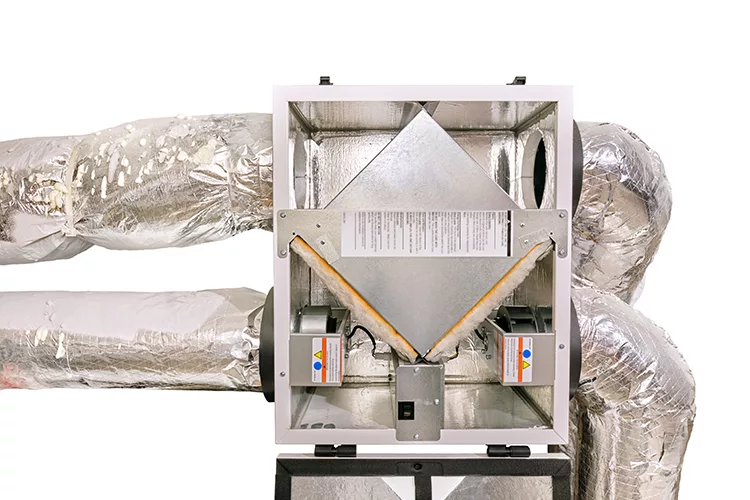
A unique challenge to the Canadian market is the climate. The cold winters have allowed technologies such as heat recovery ventilators and energy recovery ventilators to be used for proper ventilation and humidity control. HRVs and ERVs are widely used to bring in fresh air while maintaining energy efficiency. The balance between high performance and energy efficiency to produce high efficiency is increasingly expected by building owners and operators.
Across Canada, training centers are implementing IAQ-focused curriculum into both new apprentice instruction and journeyperson upskilling to meet this field’s current demands and expectations. From commissioning procedures that validate airflow and filtration performance to understanding sensor-based IAQ monitoring systems, today’s workforce is being equipped to deliver smarter, healthier HVAC systems.
IAQ has become more than a comfort issue; it’s a defining factor for contractors looking to distinguish themselves. Whether it’s upgrading filtration in older ducted systems or designing fully integrated ventilation for a high-performance building, Canadian HVAC firms demonstrate that clean air is not a temporary focus; it’s an integral part of how we define quality in our built environments.
Focus on health and comfort
The Canadian regulatory landscape has also played a significant role in elevating IAQ standards. Provinces such as British Columbia and Ontario have revised their building codes and guidelines to incorporate stricter ventilation requirements, largely in response to public health concerns brought into focus by the COVID-19 pandemic.
Guidelines introduced by public health agencies and organizations like the American Society of Heating, Refrigerating and Air-Conditioning Engineers stress the importance of improving outdoor air exchange and upgrading filters to MERV 13 or above in many cases. These guidelines are being progressively reflected in specifications for public sector buildings, accelerating the adoption of IAQ technologies.
When looking at products and technologies, the Canadian market has seen growth in demand for advanced filtration systems, UV-C light disinfection, bipolar ionization and real-time air quality monitoring. Tools like these allow building operators and facility managers to track particulate levels, humidity, carbon dioxide and volatile organic compounds, providing actionable data that supports proactive maintenance and system optimization.
Contractors who understand these tools and how to install, commission and explain their value to clients are gaining a clear competitive edge.
Within IAQ, retrofit applications have been an area gaining more focus, especially in urban cores or rural institutional settings. In these areas, older buildings often lack proper mechanical ventilation or have systems that are not up to current expectations. This area of demand requires contractors to design tailored IAQ solutions, which might include adding ERVs to heritage buildings, upgrading rooftop units or incorporating decentralized air purification solutions in multifamily buildings
The IAQ conversation has impacted procurement practices. Clients such as school boards, municipalities and healthcare organizations have begun to factor in IAQ performance within their proposal request scoring systems.
This transition encourages HVAC contractors to go beyond traditional standards such as capacity and efficiency, and focus on solutions based on air quality outcomes and occupant comfort and health.
IAQ as a core design pillar
Ultimately, the shift in mindset in how Canadians view the constructed environment, not only as spaces to heat and cool, but as environments that impact health, productivity and quality of life, has led to a greater focus on IAQ. For HVAC professionals, this shift represents both responsibility and opportunity. By prioritizing IAQ in design, installation and service, contractors can elevate their role in delivering not only comfort but care in the spaces Canadians live, learn and work.
HVAC professionals, architects and building operators are collaborating more closely during the planning and design stages of new construction as awareness of IAQ continues to develop. IAQ is becoming a core design pillar alongside energy efficiency and occupant comfort, and is no longer viewed as a line item to address at the end of a project.
This new perspective on IAQ paves the pathway for HVAC contractors to have a larger impact within collaborations and projects — and a chance to shape how buildings perform from within. At the same time, IAQ is becoming an important part in wellness certifications such as WELL, Fitwel and LEED v4.1, which do not include air quality as part of occupant health metrics.
Contractors with an understanding of how their HVAC solutions contribute to meeting these certification requirements are in a strong position to be successful within competitive commercial project bids.
Pushing for IAQ will also drive innovation in how systems are controlled and monitored. Smart building platforms that integrate HVAC performance with real-time air quality data are gaining ground, especially in larger and more well-funded facilities. This means that HVAC teams not only need to install quality systems, but also to understand the data being generated and how to use it for fine-tuning performance over time.
Tenant and employee expectations have drastically changed in recent years. In office environments, facility managers are increasingly being asked to provide data on air quality as part of tenant engagement. This puts pressure on building operators to partner with HVAC professionals who can help them deliver and document IAQ results.
Education is also part of the equation. As Canadians become more familiar with IAQ terminology, such as “air changes per hour” and “filtration efficiency,” they’re asking more detailed questions and expecting more transparent answers. HVAC firms that can communicate clearly and confidently about the systems they’re installing will stand out as trusted partners.
In short, the future of HVAC in Canada is inseparable from the future of indoor air quality. And as expectations rise, so, too, does the bar for the industry. It’s no longer enough to provide heating and cooling; it’s about ensuring that every breath taken inside a building supports the health, comfort and productivity of the people within it. For contractors willing to lead in this space, the opportunities are as vast as the Canadian landscape itself.
Travis Voss is SMACNA’s director of innovative technology and fabrication. In this role, he aids member contractors in identifying the critical technological trends within the industry and assists them in remaining at the forefront of these developments.