
In multistory buildings, the distribution of hot water presents challenges due to heat loss and varying distances between fixtures. In theory, recirculating (pumping) hot water continuously ensures delivery to all fixtures in the building and reduces water waste. However, it doesn’t guarantee uniform hot water throughout a building because water follows the path of least resistance.
Balancing ensures that flow is properly distributed across all branches of a hot water system and is accomplished with the use of balancing valves (Figure 1). These valves regulate flow to compensate for heat loss, with closer branches requiring less flow and farther branches needing more, providing consistent performance throughout the system.
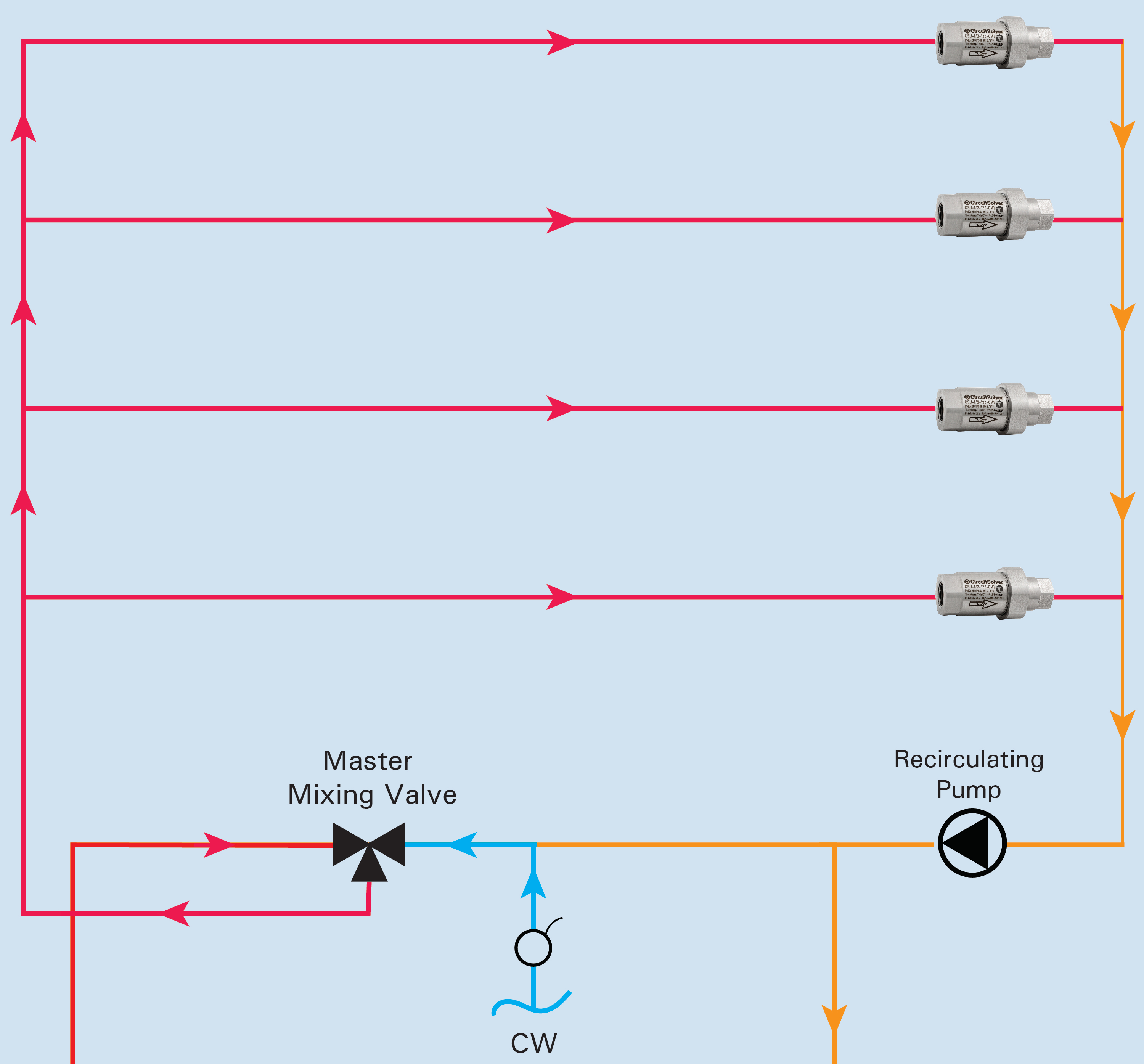
Initially, domestic hot water (DHW) circulation relied on gravity-fed systems without pumps, depending solely on natural convection. Hot water rose due to its lower density, while cooler water returned to the heater.
Manual balancing valves were introduced in the mid-20th century as HVAC and hydronic systems became more common in large commercial buildings. These valves allowed technicians to manually adjust and balance water flow, improving efficiency and comfort in buildings with complex piping networks.
Pressure-independent balancing valves (PIBVs), also known as automatic or fixed flow valves, emerged in the late 1990s to early 2000s. They were developed to address challenges in maintaining efficient water flow in HVAC systems, particularly in variable-flow systems where traditional valves would struggle to adapt to fluctuating pressures. PIBVs automatically adjust to changing pressure conditions, providing a more efficient and balanced distribution of heating or cooling without requiring manual adjustments.
Thermostatic balancing valves (TBVs) were introduced in 2012. TBVs utilize thermal actuators to provide precise temperature control in DHW systems, offering a way to balance water flow based on temperature without manual intervention. CircuitSolver, developed by ThermOmegaTech, is often cited as one of the first thermostatic balancing valves specifically designed for DHW recirculation systems in the U.S. market.
Electronic balancing valves represent the latest evolution in DHW system balancing, incorporating digital sensors and control systems to dynamically regulate water temperature and flow in real-time. Although their adoption has been limited, they offer BMS integration capabilities for modern smart buildings.
Each type of balancing valve has its pros and cons.
1. Manual Balancing Valves are an adjustable ball valve type, with pressure ports to determine flow.
• Advantages: Cost-effective, simple and reliable. They work well in small, relatively stable systems.
• Disadvantages: They require iterative adjustment by a qualified technician, which can take a significant amount of time. They are prone to tampering and do not dynamically adapt to system changes. They are flow devices, indirectly trying to address a temperature problem.
2. PIBVs (“automatic” valves) utilize a replaceable cartridge to set flow. PIBVs feature two control elements: a flow control that maintains constant flow and a pressure-regulating diaphragm/spring that adjusts valve opening based on pressure — restricting flow at higher pressure and allowing more flow at lower pressure.
• Advantages: Provides a constant flow rate independent of pressure drop and reduces labor-intensive balancing efforts, are useful in systems that are not “dynamic” where a constant flow will suffice, and flow cartridges are easily changed in the field.
• Disadvantages: They are prone to scaling, have limited flow rate granularity, and do not dynamically respond to temperature variations. They are flow control devices indirectly addressing the problem of overcoming heat loss.
3. Electronic Balancing Valves consist of a temperature measurement device, motor-driven proportional valves and controls. To date, the use of these valves in a DHW system has been extremely limited.
• Advantages: Enables precise temperature control, integrates with building management systems (BMS), and is flexible as the temperature control point is easily changed via the BMS. They are dynamic; flow changes with changing building conditions.
• Disadvantages: High material and installation costs, complexity and potential cybersecurity vulnerabilities. Due to increased components and potential wiring issues, there is also a higher risk of failures.
4. TBVs use a phase change (solid <-> liquid) paraffin wax actuator to modulate flow based on fluid temperature going through the valve.
• Advantages: Self-actuated, dynamically adjusts flow based on temperature, enhances energy efficiency and eliminates balancing labor. It is a temperature device directly addressing a temperature problem.
• Disadvantages: Higher initial cost compared to manual balancing valves and PIBVs, though often more cost-effective in the long run.
How TBVs work
At the heart of thermostatic valves is a thermal actuator, commonly using a paraffin wax which will phase change to produce motion (Figure 2). As the temperature rises, the wax melts, expanding in volume and pushing a diaphragm that extends the actuator’s piston, adjusting the valve position. When the temperature decreases, the wax solidifies, reversing the process.
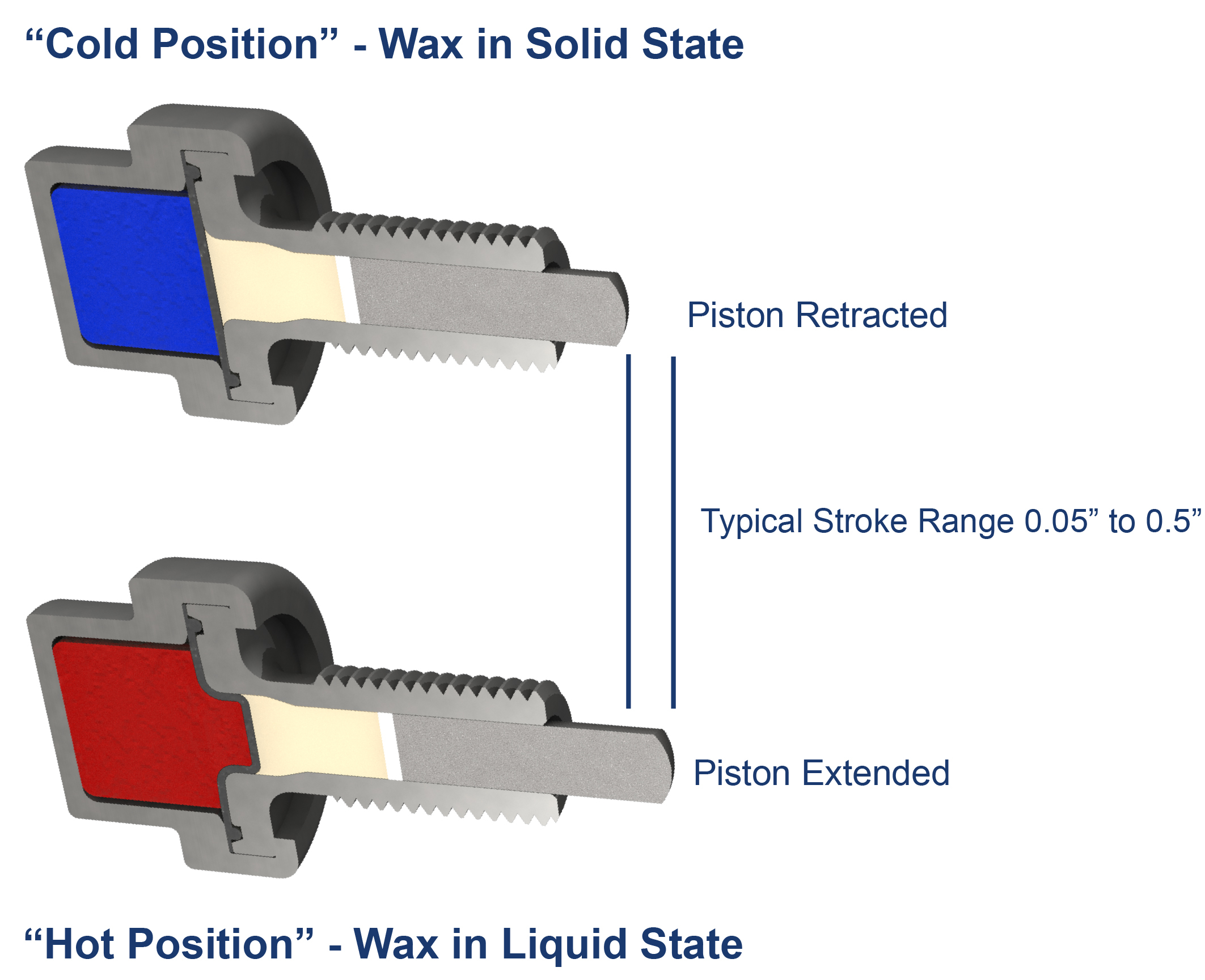
This temperature-driven mechanism allows the valve to open and close automatically, creating a poor man’s closed-loop system. This technology dates back to the early 1900s when it was first used in automobile radiator thermostats. Today, it is used in many applications, such as freeze protection, scald prevention, thermal relief, mixing, balancing and more.
TBVs for DHW system balancing have been on the market since 2012 and are widely used in multifamily, healthcare, education, hospitality and commercial buildings with recirculating hot water.
“Thermostatic balancing valves have proven to be a game-changer in domestic hot water distribution across all commercial settings,” says Eddie Voyzey of Little Diversified Architectural Consulting. “Unlike manual balancing valves, which require costly test and balance teams and often lead to frustrating call-backs after occupancy, thermostatic balancing valves automatically regulate flow and temperature in real-time. This ensures a properly balanced system from day one, eliminating the need for ongoing adjustments and costly troubleshooting.”
He adds: “By maintaining consistent hot water temperatures and reducing wasted energy, these valves have saved contractors and building owners significant time and money, making them the clear choice for efficient, reliable domestic hot water management.”
TBVs simplify system balancing by eliminating branch-by-branch flow calculations. Instead, determining system heat loss and delta T is sufficient to set the pump flow requirement.
These self-actuating valves require no external power and continuously adjust flow to maintain set temperatures — increasing flow when the water cools below the setpoint and reducing it as the temperature approaches the setpoint. This prevents overheating and ensures balanced distribution. They are ideal for retrofits, as they automatically and continuously solve existing hot water issues in older buildings — without the need for callbacks.
The valves never fully close, maintaining a minimum bypass (approximately 0.2 coefficient of variation (Cv)) to prevent deadheading the recirculation pump. As system parameters change, TBVs dynamically and automatically adjust the flow to maintain the proper temperature, ensuring a well-balanced and efficient domestic hot water system from day one.
At present, there are two types of TBVs in the market:
Fixed TBVs are factory-calibrated to a single return temperature and tamper-proof. They have a larger design Cv (5 F below-set point), resulting in lower pressure drop due to a narrower open-to-close temperature range (10 F).
Adjustable TBVs allow field-adjustable temperature settings but require proper calibration to prevent system imbalances. They are typically adjustable over a 50 F span, resulting in a lower design Cv and higher pressure drop (>4:1 versus fixed in some cases), and are contractor-dependent for correct setup. Any startup issues often lead to revalidating temperature settings across the DHW system. Field adjustments can be made by unqualified personnel, posing a risk to system performance.

Integration with variable speed pumps
TBVs and electronically commutated motor (ECM) pumps complement each other to provide maximum energy efficiency. Setting the ECM pump to constant pressure mode allows TBVs to regulate flow dynamically — closing as they reach the setpoint, increasing pressure drop and signaling the pump to slow down. This maintains constant pressure, optimizes flow, reduces energy use and prevents oversizing issues by adjusting to actual heat loss needs.
A “dynamic” balancing valve is needed in recirculating DHW systems because they are constantly changing; therefore, the flow requirements to offset heat loss are continuously changing. Fixed flow devices like manual balancing valves or PIBVs cannot adjust to varying conditions, making TBVs the best choice for sustainability.
Factors impacting system balance with non-dynamic valves include:
- Ambient temperature;
- Building occupancy and utilization;
- Expansion or modifications;
- Hot water demand and distribution temperature changes;
- Pressure fluctuations;
- Pipe interior changes (corrosion, biofilm buildup, etc.).
Adoption and regulatory trends
Over the past decade, TBVs have gained traction among engineers and contractors across the United States and Canada. Major hotel chains, hospital networks and leading engineering and contracting firms have adopted TBVs as their standard solution.
Their widespread acceptance is reflected in regulatory updates:
1.Washington State Energy Code (2021) requires self-actuating TBVs in multiple riser domestic hot water systems under certain conditions.
“C404.7.1.2 Multiple riser systems. Where the circulation system serves multiple domestic hot water risers or piping zones, the following controls shall be provided:
“1. Controls shall be configured to automatically turn off the circulation pump during extended periods when hot water is not required.
“2. System shall include means for balancing the flow rate through each individual hot water supply riser or piping zone.
“3. For circulation systems that use a variable flow circulation pump, each riser and piping zone shall have a self-actuating thermostatic balancing valve.”
2. California Energy Code (2025). This proposal would add a new compliance option for projects that include TBVs, signaling a broader industry shift toward temperature-based balancing solutions.
“5. Thermostatic Balancing Valves
“5.1.1 Proposed Code Change. This proposal would add a new compliance option for projects that include thermostatic balancing valves (TBV) to balance multi-riser central DHW systems in multifamily buildings; …”
“To receive the compliance credit the project must include:
“1. Have more than one DHW supply riser
“2. Each DHW supply riser shall have an accessible TBV
“a. Located after the last supply branch from the supply riser, in the direction of flow.
“b. Set to a maximum temperature of 120 F.”
TBVs have emerged as the preferred solution for balancing domestic hot water recirculation systems. Their ability to dynamically adjust flow based on temperature ensures efficiency, sustainability and ease of maintenance.
For companies such as A&H Plumbing, the use of these balancing valves has been a game changer. “The use of thermostatic self-actuating balancing valves with assembled strainer, isolation valves and check valve has been a tremendous time saver for our company, virtually eliminating the need for TABB within the Washington D.C., Maryland and Virginia area),” says Corey Grace from A&H Plumbing.
As regulatory codes continue to evolve, TBVs are poised to become a standard component in DHW system design, benefiting engineers, facility managers and end-users alike.
Tom Ruggierio is the director of commercial plumbing at ThermOmegaTech. He holds a bachelor’s in electrical engineering and a master’s in engineering management from Drexel University. With over 35 years in the plumbing and HVAC industries, Tom is an active member of ASPE, ASSE, IAPMO and AFSA. He also chairs ASPE Working Group 99 and is a certified Legionella Water Safety & Management Professional (ASSE 12080).