The plumbing manufacturing industry faces considerable challenges. What’s at stake? Decades of proven water-efficiency standards that work. Enough plumbers to install products in a timely fashion. Confidence that plumbing product purchases meet health and safety standards rather than being counterfeit or contraband.
Every one of those critical issues is tied to policy and decided by people who need to hear from our industry. If we don’t speak up, lawmakers make decisions without the benefit of our expertise — and often without a full understanding of how those decisions can detrimentally impact sustainability improvements, public health and safety, and the availability of affordable housing.
Plumbing Manufacturers International (PMI) and its members share their knowledge and business hurdles with policymakers, giving our industry a seat at the table and helping lawmakers and regulators see how their policies affect plumbing manufacturers and the customers who depend on safe, reliable plumbing every day.
Challenging amendments to water-efficiency standards
The rollback of water-efficiency standards remains on the Trump administration’s agenda in 2026. PMI has shared with lawmakers and the Department of Energy (DOE) the adverse impact these changes would have on manufacturers, customers and the marketplace.
PMI’s latest efforts involved submitting comments on the DOE’s proposal to amend water-efficiency standards for faucets and commercial pre-rinse spray valves. Our comments challenged the proposal, arguing that it would harm PMI members and American manufacturers by undermining 30 years of investment in water-efficient products and by giving foreign manufacturers a competitive advantage. PMI noted that many states would continue to require their current, lower flow rates.
Our comments also stated that the DOE’s actions were unlawful, citing the anti-backsliding provision of the Energy Policy and Conservation Act and the lack of evidence and authority.
The U.S. House of Representatives passed the Saving Homeowners from Overregulation with Exceptional Rinsing (SHOWER) bill (H.R. 4593) and introduced the Don’t Mess with My Home Appliances legislation (H.R. 4626). The first bill sets the definition and flow rate of a showerhead at 2.5 gallons per minute, even if more than one nozzle is included in a showering unit.
The second bill provides a roadmap for the DOE to revoke or amend an energy conservation standard. PMI has recommended amending the bill language to clarify that only standards in place less than five years can be petitioned for amendment or revocation, and only if manufacturers are given three to five years to adapt products to the marketplace and the flood of imports.
PMI and our members are committed to water efficiency. Given the popularity of high-performing showerheads, faucets and pre-rinse spray valves that save water, PMI members will continue to innovate by following the lead set by customer experience. And right now, most customers are not asking for products that waste water or energy.
Easing plumber and other skilled trade shortages requires collaboration
The plumbing, construction and manufacturing sectors are experiencing workforce shortages, delaying the installation of products and the building of homes and commercial facilities. PMI and our members regularly educate lawmakers on the economic consequences of these shortages.
A study commissioned by PMI member LIXIL reported that a shortage of more than 500,000 plumbers in the United States is costing the economy more than $38 billion annually and increasing expenses for builders. The study, “Blocked Pipes: The Economic Consequence of Skilled Worker Shortages” (tinyurl.com/bdhx66kc) by John Dunham & Associates, quantifies how the plumber shortage is driving up costs and straining industries across the economy.
PMI and our members support filling this gap by rekindling vocational education programs, expanding apprenticeships and finding ways to boost collaboration among the plumbing industry, policymakers and educators.
To ease critical labor shortages in the construction and manufacturing sectors, PMI has recommended that Congress pass the Creating Opportunities for New Skills Training at Rural and Underserved Colleges and Trade Schools (CONSTRUCTS) bill (H.R. 1055/S. 189).
This bipartisan legislation would expand access to well-paying, high-demand jobs for students; address the shortage of skilled construction workers and other essential trades; and allow developers to build more homes and buildings. It would also rebuild vocational education in high schools and trade schools and expand apprenticeships.
PMI has been discussing with policymakers the importance of strengthening the plumbing trade. In 2025, Matthew Windrum, PMI director of state government affairs, policy and advocacy, met with Oklahoma Gov. Kevin Stitt and Maryland Gov. Wes Moore’s team at a National Governors Association (NGA) meeting.
Stitt and Moore have introduced “Reigniting the American Dream” as the 2025-26 NGA chair’s initiative, which invites every governor to invest in infrastructure that supports growth and connects people to in-demand careers.
Testing counterfeit plumbing products to encourage stronger federal oversight
Our association’s efforts also focus on raising awareness among legislators, policymakers, and regulatory officials about the health and performance risks posed by uncertified contraband plumbing fixtures being sold. These contraband plumbing fixtures and fittings often do not meet U.S. plumbing codes and standards, typically perform poorly, and present health and safety risks to Americans and their families.
PMI has recruited IAPMO, a PMI member, to conduct independent testing on counterfeit and contraband bathroom and kitchen faucets and showerheads to show the extent of the problem to federal agencies. Once testing confirms safety hazards, regulatory noncompliance and false or misleading product information, PMI plans to ask federal agencies to strengthen enforcement of applicable statutes and other safety standards.
These efforts will build on the work IAPMO completed in 2025, assisting PMI member Moen in testing what were suspected to be cheap, knock-off faucets. Testing found that 17 of 19 faucets did not meet drinking water health and safety standards, which Moen shared during its testimony to Congress about this critical issue. Moen’s testimony included an estimate that as many as 35 million “cheap, foreign-made, off-brand” faucets were sold in the United States in the last five years.
Larry Rosenberg, partner at Jones Day, the firm guiding PMI in its response to uncertified contraband plumbing products in the marketplace, gave an update on PMI’s approach to attendees of the PMI25 Manufacturing Success Conference. He explained that the threat of fake products will likely worsen as imposter brands use advanced artificial intelligence to create more deceptive advertising and faster replication of intellectual property from authentic manufacturers.
PMI also advocated for the passage of the Integrity, Notification and Fairness in Online Retail Marketplaces (INFORM) Consumers Act of 2022, which created a system of accountability and transparency for online third-party sellers to prevent the sale of counterfeit products.
Enlightening lawmakers on the impact of shifting tariff policy
New tariffs and constantly shifting tariff policies have led to higher material costs, delayed project timelines and increased uncertainty in supply chains for the construction and plumbing manufacturing sectors. PMI has been discussing these consequences, along with policy recommendations including tariff relief for building products, in meetings with lawmakers and their staff.
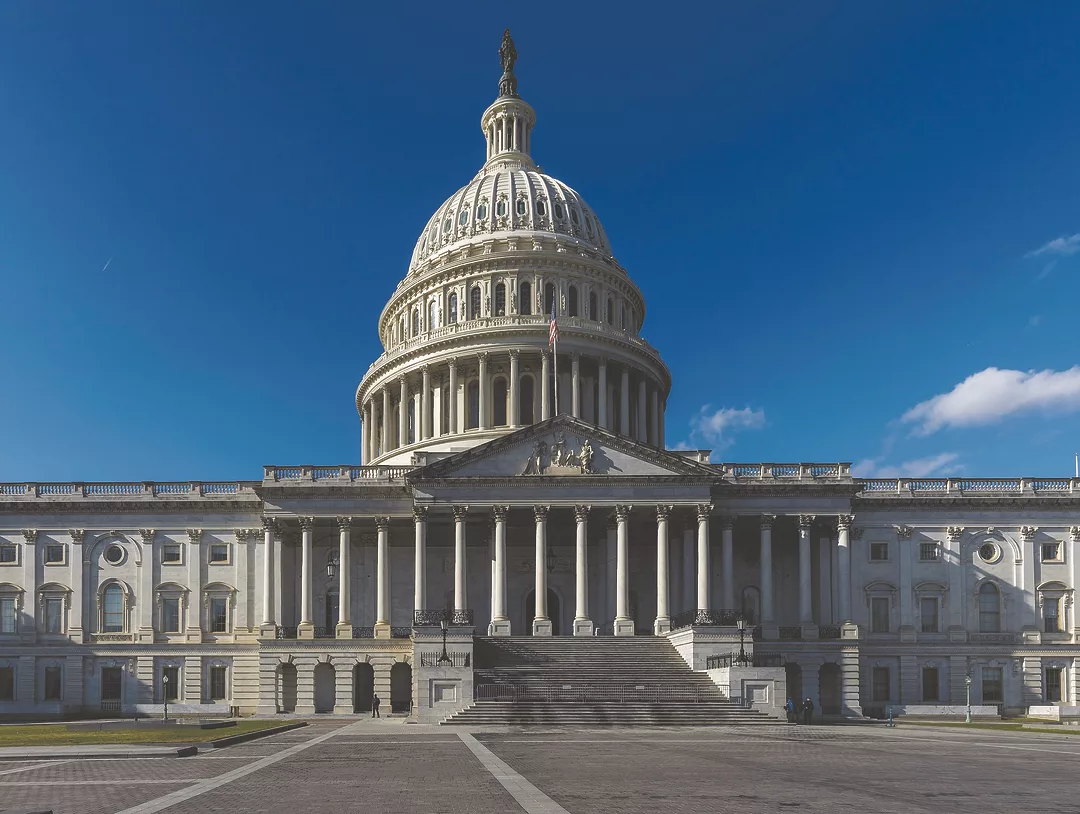
During the 2025 PMI Washington, D.C., Legislative Forum and Fly-in, PMI members were briefed on how to communicate concerns about critical housing-related issues and tariffs before meeting with their lawmakers on Capitol Hill.
Ahead of those meetings, PMI welcomed Alex Strong, senior federal legislative director for the National Association of Home Builders (NAHB), to share insights from an NAHB survey, such as how builder sentiment had fallen due to tariff and housing cost concerns. He explained that builders were worried about the cost and availability of labor, noting that open construction positions totaled 246,000 in June 2025 and rising building material prices had increased 7% from 2024 to 2025, remaining at an all-time high.
PMI members informed lawmakers that the Trump administration’s proposed tariffs on building materials, appliances and other products would disrupt supply chains and add an average of $10,900 to the cost of each new home (per the NAHB). The forum also allowed plumbing manufacturers to discuss critical industry issues related to appliance-efficiency standards, water infrastructure and workforce gaps.
Ultimately, advocacy is not only about stopping bad ideas but about shaping the future. When we push for investments in water infrastructure, or support training programs for skilled trades, or argue for balanced regulations that encourage innovation, we are building the conditions for long-term growth. We’re not only protecting the plumbing manufacturing industry, but we’re also strengthening the economy, the environment and the well-being of every American family.