When visitors walk through the historic galleries of the National Museum of Women in the Arts, admire aviation and space artifacts at the Smithsonian’s National Air and Space Museum, or view masterpieces from the National Gallery of Art’s collection, they rarely think about the complex infrastructure working silently overhead and beneath their feet, or even the systems designed to protect these special collections in dedicated offsite facilities.
To safeguard these priceless artifacts, plumbing designs must be meticulously crafted to contain the one element that poses their greatest danger: water.
Mueller Associates is a mechanical, electrical, plumbing and fire protection engineering firm with 60 years of experience serving cultural institutions and designing systems for museums and other institutional facilities. Our expertise in these specialized building types demonstrates a fundamentally different approach than conventional projects.
When you’re protecting artifacts — whether it’s a Frida Kahlo painting, the 1903 Wright Flyer or a paleontological specimen — you’re not only designing to meet standing building codes. You’re implementing multiple layers of protection, redundancy and monitoring to prevent water damage to these irreplaceable objects.
This philosophy and approach are evident in three recent Mueller projects that showcase the evolution of smart plumbing design for cultural facilities: the renovation of the National Museum of Women in the Arts (NMWA), the new Smithsonian Dulles Collections Center and the Mission Support Center Pod 6 at the Smithsonian’s Suitland Collections Center.
Each presented unique challenges — from upgrading aging infrastructure in a historic 1908 building to constructing purpose-built special collections facilities — demonstrating how strategic plumbing design serves as the invisible guardian of cultural heritage.
NMWA: Modernizing protection in a historic building
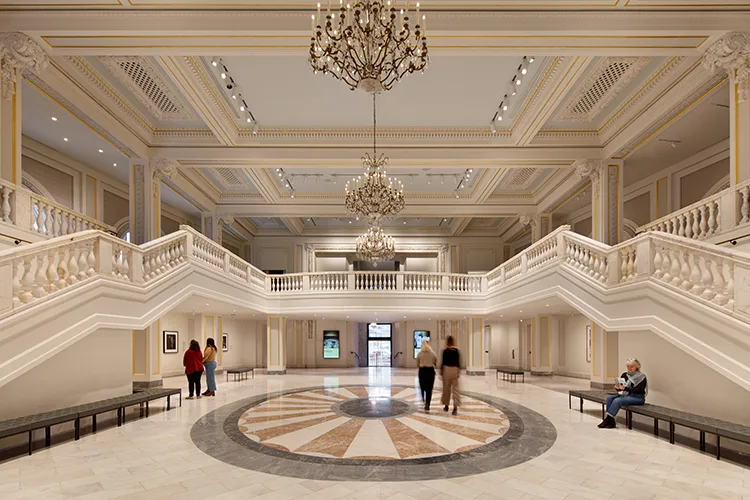
NMWA occupies a distinguished place in Washington, D.C.’s cultural landscape. Housed in a former Masonic Temple built in 1908, the building was converted into a museum and opened to the public in 1987. Mueller Associates’ first involvement with the building came during this initial renovation.
Decades later, in 2016, the firm returned to develop a comprehensive facilities preservation plan and execute a major restoration, which was completed in 2023. For the latter two commissions, Mueller served as the mechanical, electrical and plumbing engineer, and Sandra Vicchio & Associates served as the architect.
The 96,000-square-foot museum facility represented the classic challenge inherent in any historic renovation: integrating 21st-century building systems into early 20th-century infrastructure. From the beginning, the priority was clear for Mueller’s engineers: protect the art while modernizing systems at the end of their service life.
 Leak detection through strategic design
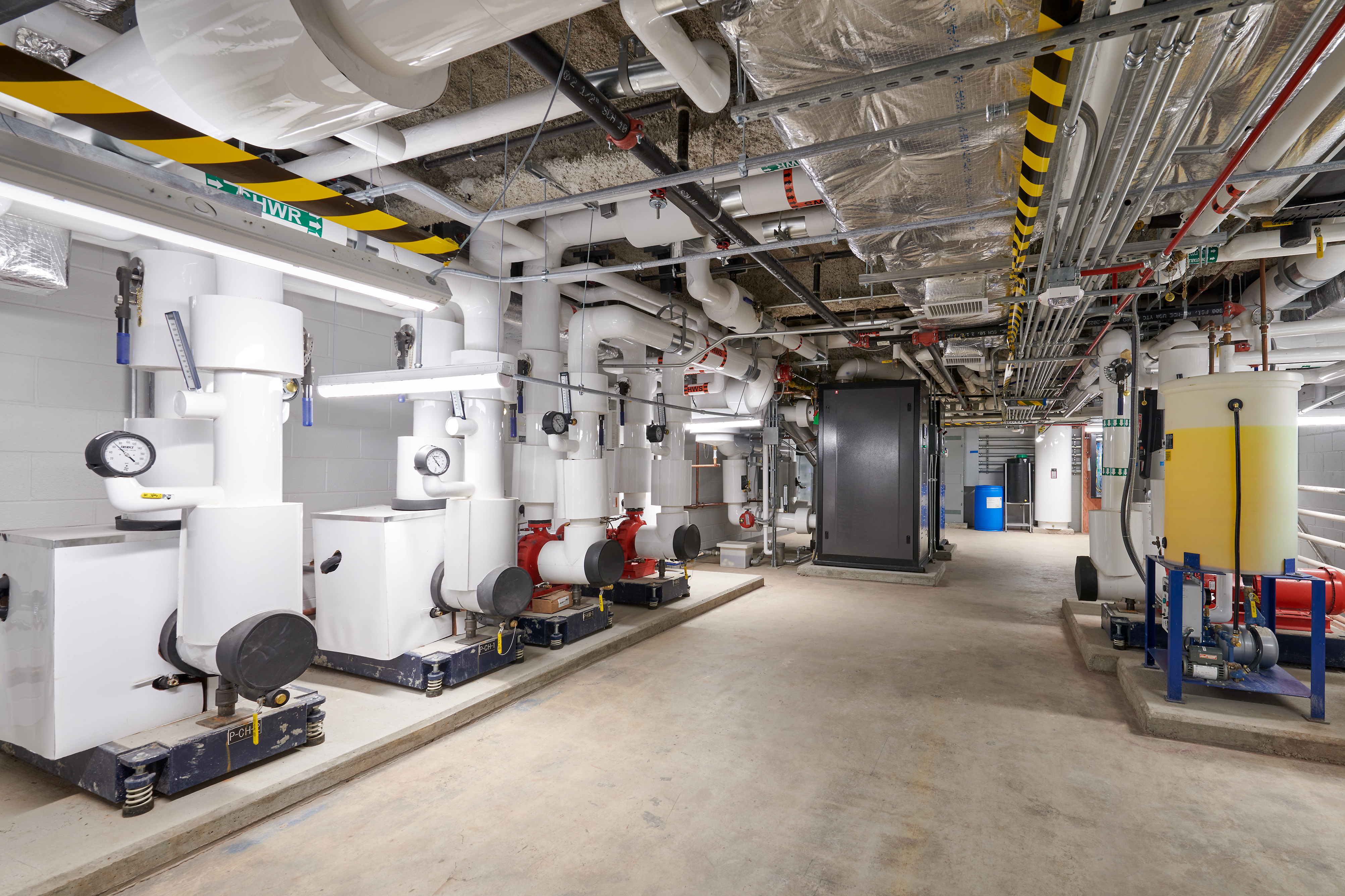
NMWA’s restoration began with a fundamental principle: minimize the use of piping above collection spaces wherever possible. Every effort was made to relocate plumbing systems away from the critical artifacts and exhibits by routing piping through back-of-house spaces.
However, some applications required different design approaches, such as drain piping for sinks in the new studio or in renovated green rooms behind the fifth-floor performance hall. Routing piping below these areas was unavoidable.
While these piping systems are expected to remain reliable well into the future, discovering a leak in the historic galleries after the damage has been done is unacceptable.
Therefore, drain pans with leak detectors tied to the building automation system (BAS) were added to these sensitive areas. Sanitary mains and rain leaders passing above acoustically sensitive spaces were insulated and provided with mass-loaded vinyl jackets to attenuate flow noise, ensuring the building’s plumbing infrastructure wouldn’t interfere with the visitor experience or disturb the contemplation of art.
Isolation valves at every branch and riser take-off also allow NMWA’s facilities staff to quickly isolate any section of the plumbing system without affecting the entire building. This strategic valve placement enables maintenance or emergency repairs to be performed with minimal impact on the museum’s operations, a critical consideration for an institution that relies on public access and special events for revenue.
Mueller’s engineers also designed the plumbing system to limit dead legs — sections where water can stagnate, creating conditions favorable to bacterial growth.
Dulles Collections Center: Purpose-built protection for aerospace heritage
While the NMWA project demonstrates how to retrofit plumbing to protect existing infrastructure, the Smithsonian Institution’s Dulles Collections Center represents purpose-built plumbing design from the ground up. Located adjacent to the National Air and Space Museum’s Steven F. Udvar-Hazy Center in northern Virginia, this 124,000-square-foot, three-story facility provides climate-controlled storage for the museum’s artifacts and long-term storage for its collections.
Designed by Ayers Saint Gross, with Mueller Associates providing mechanical, electrical and plumbing engineering services, the Dulles Collections Center features three expansive open collection areas, each approximately 28,000 square feet across three stories, that house large-scale artifacts, including historic aircraft, spacecraft and propulsion systems.
The scale of these spaces, combined with the irreplaceable nature of the collections and the specialized environmental requirements, demanded plumbing systems engineered with exceptional precision — akin to the exacting science required to launch the very aircraft and spacecraft housed within the facility.
Integrated design from the roof down
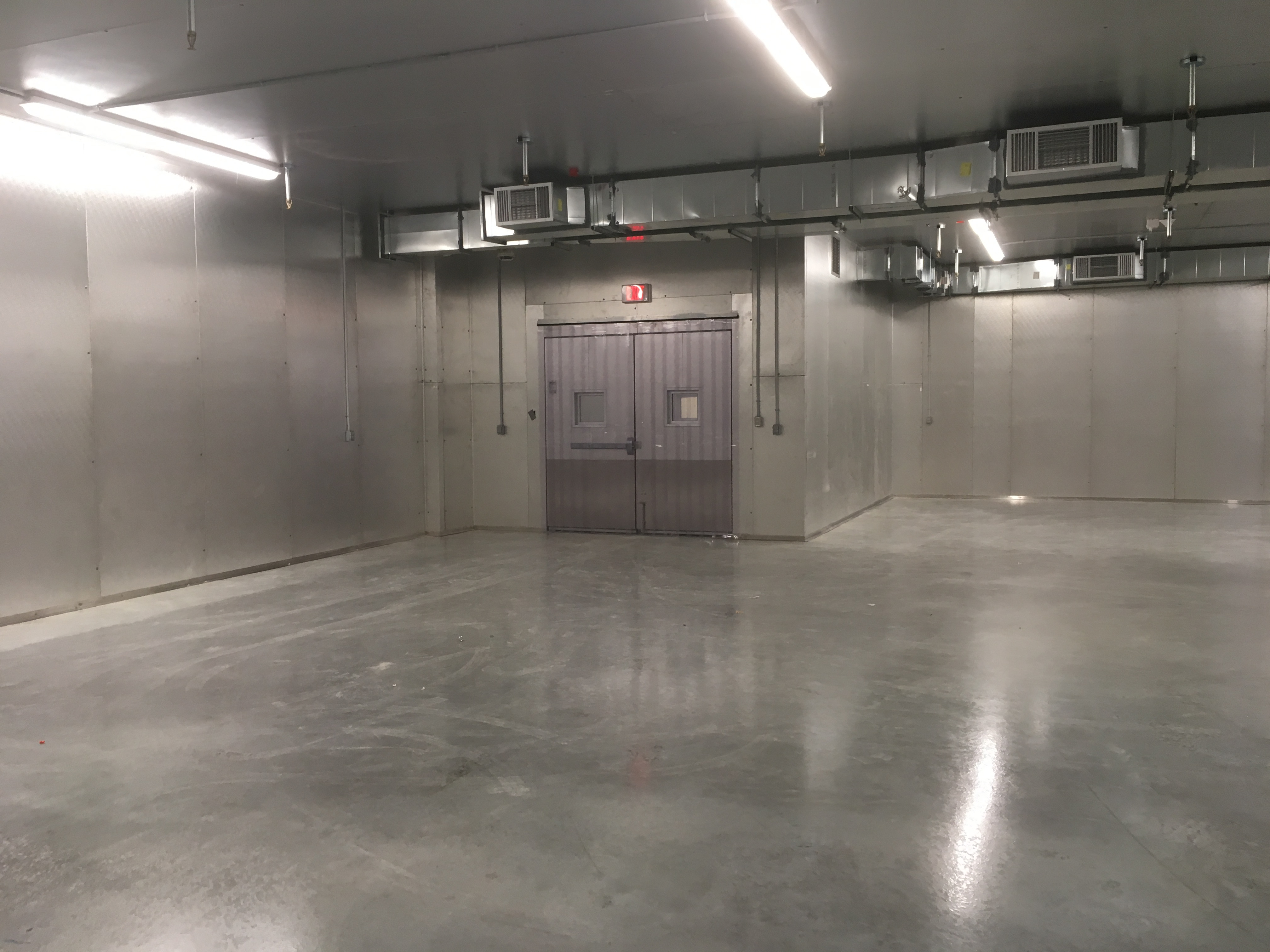
Coordination with the architect and program users from the outset was essential. Ideally, collection storage is isolated from water sources. However, when the sole purpose of the building is collection storage, the level directly below the roof is likely used for that purpose. Locating the roof drains and their associated piping away from the collections is the first step.
To do that, an iterative process of meeting programmatic storage quantity and layout requirements is coordinated across all disciplines, while considering viable pipe routing and placing roof drains, ensuring the roof design, pitch, slope and insulation thickness are accounted for.
When it is not possible to avoid the potential for water intrusion, a secondary line of defense is prudent. The most likely location for water intrusion is at the roof drains or along the piping routing. To safeguard against long-term damage, a 2-inch-high, stainless-steel drip pan was designed beneath the roof drains and associated piping. At the low point of the drip pan, a point-type leak detector was located.
As an extra level of precaution, even the piping above the walking aisles was provided with drip pans and low-point leak detection devices. These strategies also offer future flexibility when storage needs change.
Comprehensive leak detection deployment
A network of drain pans was installed under each pipe in critical areas to capture any leakage. To alert facility staff to the impending emergency, leak-detection sensors were also installed in each pan. Two complementary sensor types were provided: a tape-style sensor and a single-point sensor.
Tape sensors were provided along the entire length of the drain pan using self-adhesive sensor tape with copper fiber electrodes. In areas where this was impractical, single-point or spot water detectors were provided at the lowest point in the drain pan. Combined, the sensors were wired to the BAS and continuously monitored, ensuring that even small amounts of water trigger an alarm before they can spread.
These sensors even include a self-check feature that continuously verifies the sensor’s operation and triggers an alarm if the tape is unplugged, broken or cut.
Drainage strategy: Primary and secondary storm drainage
The Dulles Collection Center’s drainage strategy further demonstrates smart plumbing design through systems that support its primary and secondary storm drainage. The facility’s primary storm drainage uses internal rain leaders that collect runoff and route it to the site’s stormwater system.
Secondary overflow drainage provides backup protection, a code requirement for flat roofs, which is especially important when protecting the building’s irreplaceable collections.
Water quality for specialized systems
The Dulles Collection Center’s reverse osmosis (RO) system produces ultra-pure water for the building’s humidification equipment, which is critical because aerospace artifacts, particularly those with metallic components or organic materials, such as fabric or wood, require precise humidity control to prevent deterioration.
The building’s RO system includes carbon filtration, feed filtration, the RO unit itself, ultraviolet sterilization, an RO storage tank and dedicated distribution pumps. This level of water treatment ensures that minerals and contaminants don’t accumulate in humidification equipment or, more importantly, are not distributed into collection spaces, where they could settle on artifacts.
Pod 6: An advanced protection system
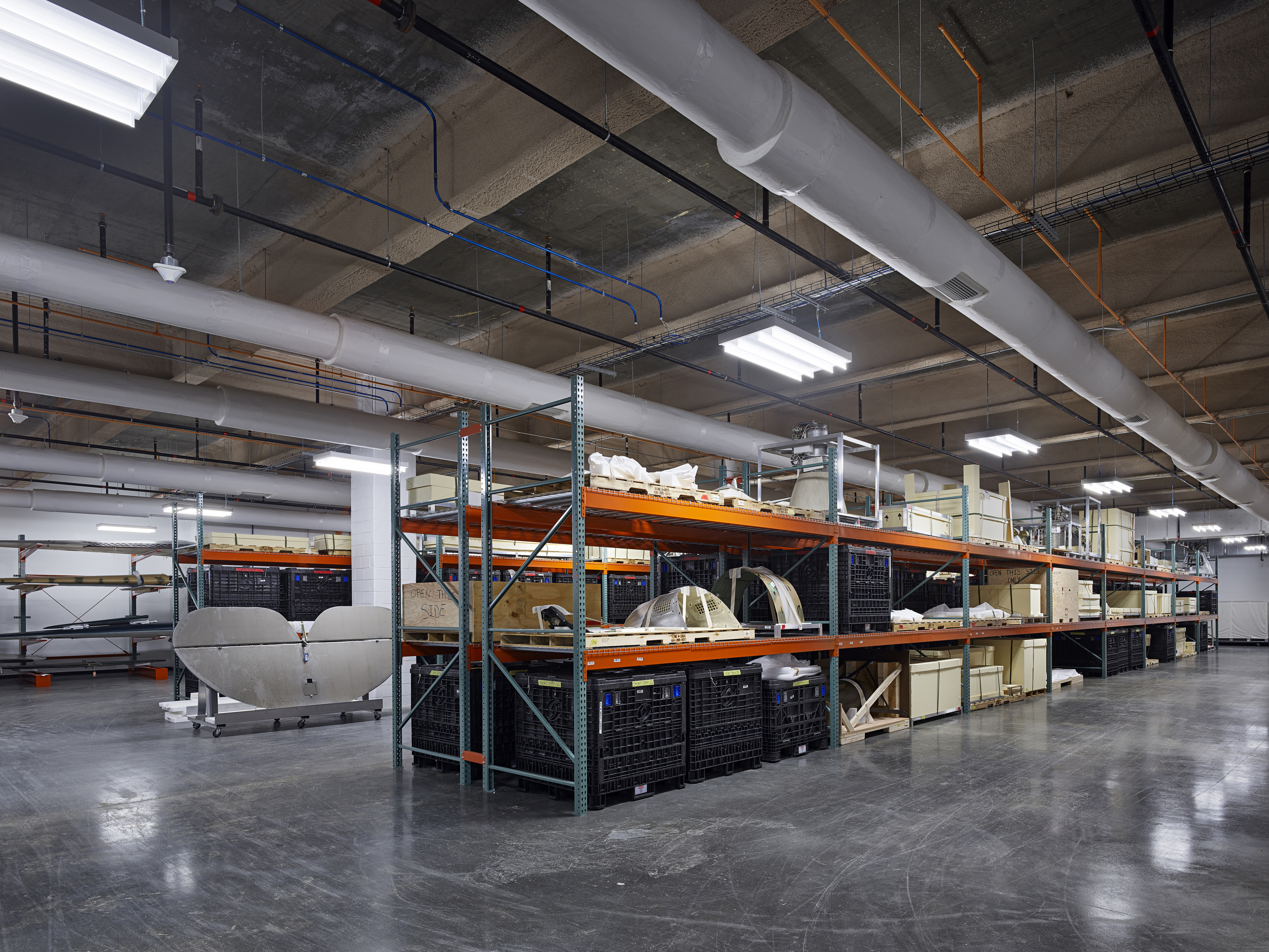
The Pod 6 facility at the Smithsonian’s Suitland Collections Center showcases another example of smart plumbing design, also designed by Ayers Saint Gross, with mechanical, electrical and plumbing engineering by Mueller Associates.
This 190,000-square-foot, three-story addition to the Smithsonian’s Museum Support Center, in the District of Columbia suburbs of Maryland, serves a dual mission: providing storage for the collections of various Smithsonian Institution museums and the National Gallery of Art (NGA) and addressing critical problems — especially flooding — that have plagued these cultural institutions for decades.
The project’s genesis underscores its significance. Both the Smithsonian and NGA needed to accomplish the following goals:
Relocate collections from basement storage in buildings on the National Mall that have historically been susceptible to flooding;
Terminate costly lease agreements for off-site storage;
Provide critical swing space to house collections during major building renovations.
For the Smithsonian, this meant supporting buildings, such as the Hirshhorn Museum, the National Museum of Natural History, the National Museum of American History and the National Postal Museum. For NGA, this meant returning gallery space currently used for storage to public exhibition use.
Double-wall piping: Detection at the source
Mueller’s team took several lessons learned from the Dulles Collections Center project and incorporated them into the design of Pod 6. For instance, the stainless-steel drain pans in Pod 6 were large and required additional sprinkler protection below them, where the width exceeded 48 inches, obstructing sprinkler discharge. Their long lengths also limited access to ceiling-mounted components.
Once again, early coordination across disciplines guided the design choices in conjunction with value-engineering proposals. Limiting the amount of interior horizontal storm water piping provided a twofold benefit: cost savings and reduced exposure to unanticipated water leakage. To do so, the architect and structural engineer worked out the details of a single ridge in the roof system and the slope to the roof drains, which are located only at the north and south perimeters.
Pod 6’s defining smart plumbing feature is its use of double-wall stormwater piping with moisture sensors located between the two walls in all collection storage spaces. This type of leak-detection design detects failures in the pipe wall before any water reaches the collections.
Mueller’s plumbing engineering team minimized water piping over the collections by strategically routing it. Where piping above storage areas was unavoidable, particularly for stormwater drainage from the building’s upper floors, the team’s engineers specified double-wall protection.
Stormwater piping running through collection storage areas consists of two concentric pipes with an air gap between them. Moisture sensors continuously monitor this interstitial space. If the inner pipe develops even a pinhole leak into the annular space, the sensor triggers and alerts the facility’s staff via the BAS before a single drop reaches the collections.
This technology provides something that traditional leak mitigation designs cannot: advanced warning before damage occurs. External sensors can only detect water after it escapes the piping system. Floor drains catch water after it spreads. Double-wall piping with interstitial sensors stops the threat at its source — within the piping system.
Secondary drainage protection
Pod 6’s flat roofs include dedicated secondary overflow protection with drainage that spills to grade — visible evidence of system activation that alerts the facility’s staff to primary drainage problems before water can pond on the roof and potentially infiltrate the building’s envelope.
The secondary stormwater piping system was treated in the same manner as the primary system. Even though water flowing within the secondary stormwater system should occur only in emergencies when the primary roof drain is blocked or overwhelmed, the risk of a leak in that system is equally consequential.
Lessons from three project approaches
These three projects — spanning a historic renovation and new construction for special collections — demonstrate how smart plumbing design adapts to different contexts while maintaining these four core principles:
Leak prevention through strategic plumbing design;
Early detection when prevention fails;
System redundancy to maintain climate control;
Water-quality protection to prevent contamination.
At NMWA, the challenge was integrating modern protection into a historic building with aging infrastructure. Mueller’s plumbing design emphasized strategic valve placement for system isolation and acoustic protection.
The Dulles Collections Center project demonstrates what’s possible with new construction and purpose-driven design for special collections storage — comprehensive leak detection with tape-and-point sensors throughout the building, and ultra-pure water for humidification systems.
Pod 6 represents a more advanced approach: double-wall piping with interstitial moisture sensors in all storage areas; strategic pipe routing to minimize water intrusion; and comprehensive floor drainage to anticipate every possible water source.
The future of special collections protection
As museums worldwide grapple with aging infrastructure, expanding collections and the need to consolidate off-site storage, these smart plumbing strategies offer a roadmap. Today, technology exists to provide museum-quality protection. What’s required is the will to specify these systems and the understanding that the initial investment in advanced plumbing protection is insignificant compared to the value of the collections being protected.
A single artifact lost to water damage represents an irreplaceable loss to our collective heritage.
Mueller Associates’ work on these projects demonstrates that smart plumbing design is not necessarily about flashy technology or complex systems. It’s about thoughtful engineering that anticipates failure modes, provides multiple layers of protection, and integrates monitoring and notification, so facility staff can respond before damage occurs.
It’s about understanding that in museum work, the plumbing engineer’s job is not only to move water reliably; it’s to ensure that water never reaches the irreplaceable treasures these buildings exist to protect and preserve.
The invisible guardians of museum collections are the engineered systems that work silently, continuously and reliably to manage the element that poses the greatest threat to our cultural heritage. These projects illustrate that when plumbing engineering is executed at the highest, most sophisticated level, water becomes not a threat but a safely managed resource, allowing museums and special collections facilities to focus on their true mission: preserving and sharing humanity’s cultural legacy.
Karen Schulte, PE, CPD, LEED AP BD+C, is a project manager and associate at Mueller Associates, with 19 years of experience as a mechanical and plumbing engineer. She is an active leader in the American Society of Plumbing Engineers and volunteers with the Baltimore Chapter’s Women of ASPE.