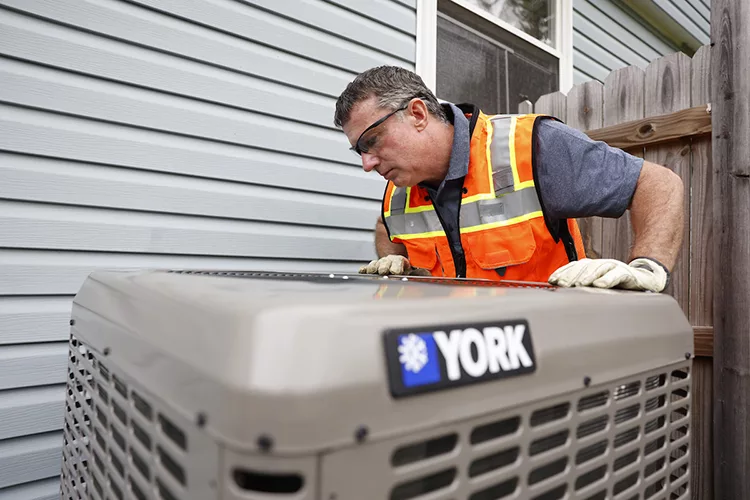
The U.S. Energy Information Administration estimates that HVAC operation accounts for more than half of the energy used in most home. As many homeowners seek solutions to lower their living expenses, switching to an energy-efficient electric heat pump can significantly reduce utility bills. In many applications, heat pumps can reduce heating-related electricity use by as much as 75%, when compared to older electric resistance heating.
For some homeowners, combining a heat pump with their gas furnace can deliver the cost-savings of electrification while maintaining the flexibility to switch to fuel-sourced heating when outdoor conditions are very cold.
Exploring dual fuel systems
Dual fuel systems combine electric and gas energy sources into a single home comfort solution.
A gas furnace is installed inside the home and paired with an air handler and evaporator coil. An electric heat pump is installed outdoors, replacing a conventional AC model. Low voltage wiring connects the two units and synchronizes operation.
The demand for heat will first go to the heat pump but if outdoor conditions drop below the unit’s operating range or the homeowners’ preferences, the system will seamlessly transition to the furnace to maintain efficiency and comfort.
Today’s heat pumps can deliver more heating capacity in lower ambient temperatures. Using variable speed drive technologies, the compressor can run at a lower, more efficient speed while continuously modulating its output. In colder conditions, this extended heating cycle allows the heat pump to more effectively extract heat from the ambient air and pull it inside the home.
Capacity and efficiency can vary by model so selecting ENERGY STAR-certified units provides a reliable baseline to ensure efficient operation within colder regions. To meet the criteria, heat pumps must maintain a minimum 70% heating capacity at 5 degrees.
When transitioning to a dual fuel system, the existing furnace can be maintained if it is still in good working order and delivering the level of efficiency the homeowner desires. In most applications, the existing duct work can also be used, however it is important to evaluate all duct work to ensure it is compatible with both systems’ airflow requirements.
Delivering dual fuel excellence
Start-up and commissioning are vital to ensuring successful dual fuel installation and operation, especially within colder climates. The Department of Energy estimates that upwards of 70% of installed residential heat pump systems incur at least one performance-compromising fault that could have been avoided with proper commissioning.
The Air Conditioning Contractors of American Quality Installation Specification guide, ANSI/ACCA 5 QI – 2015 details the minimum requirements for quality HVAC system design, installation and testing. Load sizing, ductwork quality, proper airflow and wiring are all key factors that can impact performance. Accurate Manual J calculations will ensure each unit is sized to adequately meet the heating and cooling loads of the home.
Proper airflow is also essential for efficient heating operation. Duct work should be thoroughly inspected to ensure it is properly sized and in good condition. High-pressure switch faults are often an indication of a duct system problem.
Wiring and thermostat configuration will ensure communication between both components and allow reliable changeover between energy sources. Homeowners’ comfort preferences, efficiency and ambient temperatures all play a role in determining the ideal changeover setpoint.
Digital tools such as the Go Temp Pro app can help to streamline installation and commissioning processes to reduce time while improving accuracy. The app provides instant access to unique product information and resources including installation manuals, training materials, commissioning documents and start-up guides. Contractors can access dynamic, question-based start-up sheets that are tailored by equipment so they can go directly to the information they need. Each sheet is designed to guide the technician through commissioning while allowing them to record critical start-up data.
Building homeowner confidence
By combining an energy-efficient heat pump with the performance of a gas furnace, homeowners can lower their utility bills while enhancing year-round home comfort.
However, some homeowners may have experiences with older heat pumps and have lingering skepticism about their ability to perform within colder conditions.
This presents an opportunity for contractors to highlight the remarkable innovations behind today’s heat pump technology to dispel these misconceptions. Additionally, taking a few moments to explain how today’s heat pumps operate and what can be expected can help to build confidence in their new system. For example, some homeowners may notice a cooler feeling from electric heat compared to a furnace. Or some may be unaware of common heat pump defrosting cycles and feel concerned if they notice frost on the unit.
After installation, following up with customers to ensure the system’s set point is aligned with their utility goals and meeting their comfort preferences is equally important. Adjusting the setpoint is a simple task that can drive satisfaction. If the system is connected to a communicating thermostat, adjustments can even be made remotely.
With flexible financing plans and numerous incentive programs, premium heat pumps are increasingly more affordable, allowing more homeowners to reap these benefits. Combined with contractors’ guidance and expertise, dual fuel systems are a compelling solution for many homeowners – even those located within colder regions.
Tom Tasker is a senior product manager at Bosch Home Comfort Group. He has been part of the residential team for 13 years as a controls engineer and product manager.



