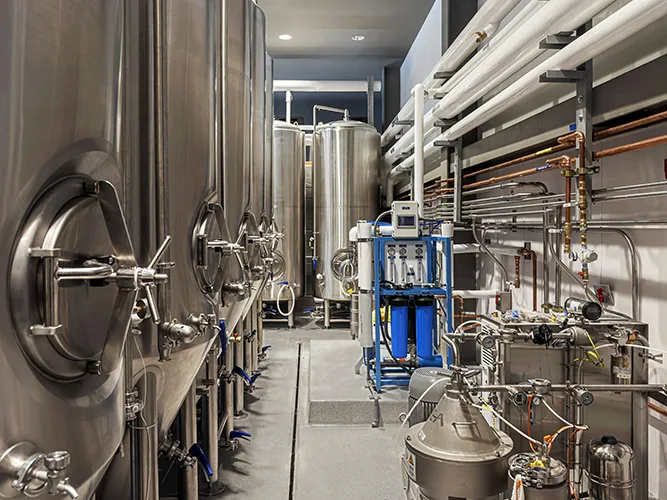
There is a certain alchemy that happens when you mix malt, hops, water and yeast to create beer — from the lightest American lagers to the darkest, heaviest pastry stouts with bitter West Coast India Pale Ales (IPAs) and hazy Northeast IPAs in between. I am a homebrewer. In many ways, brewing is easy as the sticky sweet wort wants to become beer. Mastering this and creating something people actually want to drink is the trick. As an engineer and a self-professed nerd about beer and brewing, the rewards are great when you can sit down with friends and colleagues, share something you produce and tell the story behind it.
For me, brewing ticks all the right boxes. Building the ideal brewing system with temperature controls and data collection keeps the gear hound in me going, while developing a beer recipe is an art that intrigues me. At the end of the process, I get to have fun naming my beer and making labels for my bottles.
So, imagine my excitement when I worked on my first brewery project! At Millies Engineering Group, the MEP design consultancy where I work, designing brewpubs fits right into our repertoire, which includes restaurant, education, municipal and industrial projects. However, it was something similar yet new and different.
The 4 ingredients
In 1516, Bavaria adopted a law, commonly called the Reinheitsgebot, limiting the ingredients used for beer to barley, hops and water. A fourth ingredient, notably absent, is yeast. Yeast’s role in fermentation was not understood until the 1850s, due to the work of Louis Pasteur.
Knowing these ingredients and how they are used guides one through the brewery design process. Following is a simplified description of brewing from a commercial level. There are many variations to what I describe below, but this gives one a good start as to what is needed in a brewery.
1. Barley
Barley provides three very important components to brewing: sugar, flavor and color. To start, the barley is processed by malting. This is where the freshly harvested barley is sprayed with water to start sprouting. Then it is quickly dried. Malt can be gently dried to heavily roasted. Gently dried malts make up the base of what is used in beer and add light, bready, caramelly flavors. Darker roasts can be used to add dark color and chocolate to coffee-like flavors to the beer.
When the barley arrives at the brewery, it is typically stored on pallets and shelves. Usually, the grains are used quickly enough that special storage is unnecessary; however, for longer term storage, they should be kept in a cool, dry area. This is where the HVAC designer may need to come in to ensure good storage conditions are maintained.
Before the grains can be used in brewing, they need to be milled, which can produce dust. It’s important to review the conditions where the mill is being used. At a minimum, an exhaust fan should be provided in this area. In the brewery projects I have worked on, the operations were small enough that explosion-proofing around the milling operation was not required. Keep this in mind as you design your brewery systems.
Once milled, the grains are transferred into a vessel called the mash tun. In the mash tun the grains are soaked in warm water (typically about 150 F) and the starches in the grains are converted to sugar.
After about an hour, the warm sugary liquid known as wort is drained from the grains and transferred to the boil kettle, where it is typically boiled for 60 minutes. At this time, the hops can be added.
2. Hops
Hops traditionally were used for bitterness and preservation; the hops’ bitterness counteracts the sweetness of the wort and the antimicrobial properties prevent spoilage.
In addition to these properties, hops also add flavor and aroma to the beer. This all depends on when the hops are added in the process. When added at the very beginning of the boil, hops add bitterness. In the middle of the boil, they add flavor. At the end of the boil, hops add aroma.
Probably the biggest concern about hops and a brewing facility is storage. Since hops contain many volatile organics, keeping them preserved in a cool dry place until use is key. A brewery will have a corner of their walk-in cooler set aside for this.
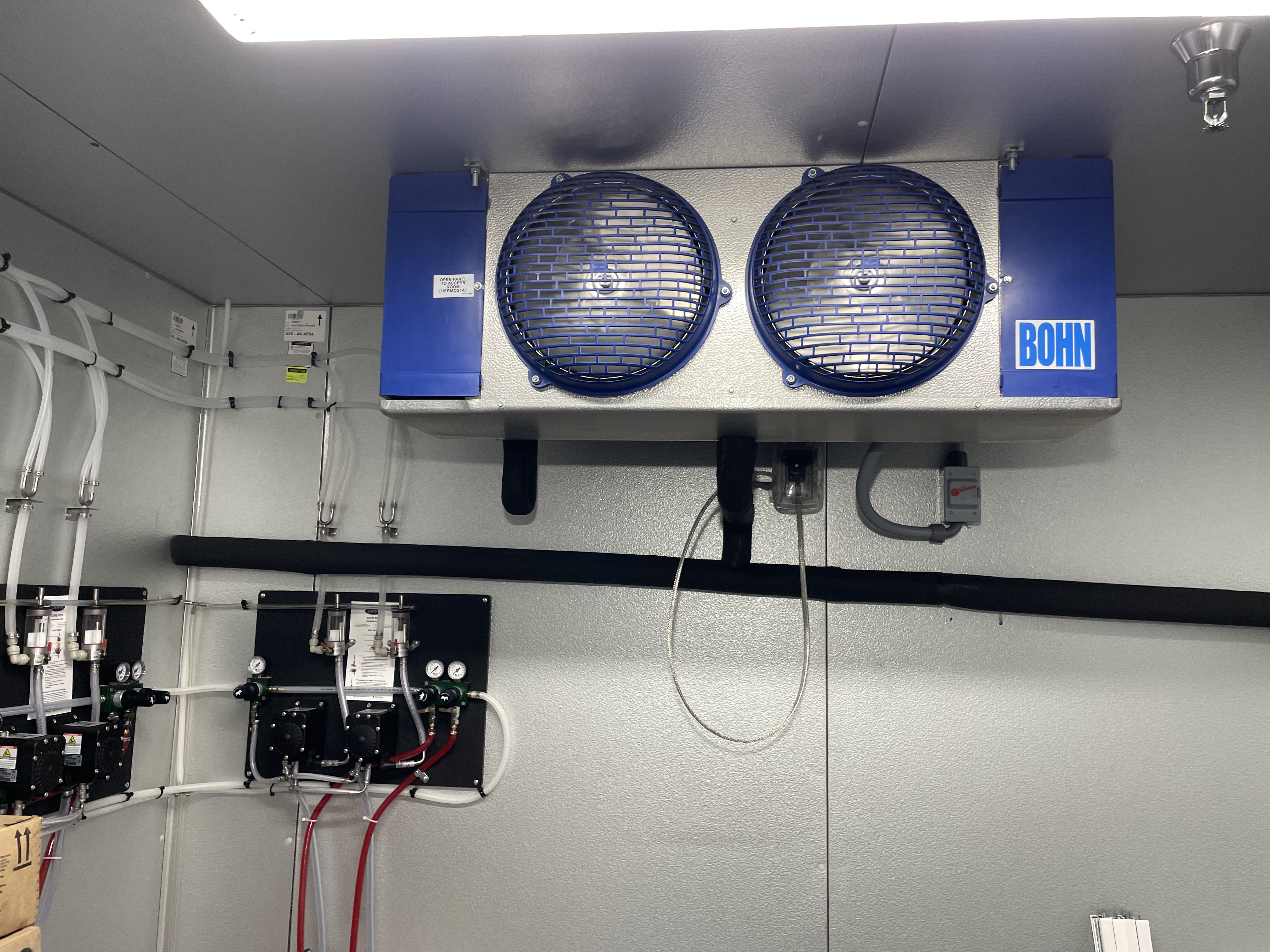
From an MEP engineering perspective, walk-in coolers are typically provided by others. The cooler, however, will require infrastructure: power connections, drains for condensate and equipment rails on the roof for the cooler condensers.
Keep in mind the plumber will need to pipe up the condensate drains from the evaporators to a drain near the walk-in cooler. This condensate piping will need heat trace to prevent freezing.
3. Water
Water is a hugely important ingredient in beer, making up 85% to 95% of its volume. Bad water quality will lead to bad product. Water is not a passive participant in the brewing process. Minerals affect flavor. pH levels affect flavor. Water quality affects the process and sugar extraction from the grains.
Some breweries are perfectly situated and have great water quality from the local municipal water supply. For example, many breweries in the Lake Michigan area, including those in Chicago, Northwest Indiana and Western Michigan, do little to treat their water.
Other breweries strip everything out of their water using reverse osmosis (RO) filters and then rebuild the water profile with their own mineral additions.
As a homebrewer, this is what I do. I’ll buy a few gallons of RO water at the grocery store and add gypsum, calcium chloride and baking soda to add back mineral content. These additions vary depending on the style of beer I’m brewing.
For the plumbing engineer, it’s important to understand the brewer’s needs for their process. Do they want minimal treatment or an RO system? For basic treatment, breweries at a minimum will need carbon filtration to strip out the municipally added chlorine, which causes off flavors in beer often described as band-aid-like.
If RO water is desired, reach out to a local water treatment vendor for the best system set-up for local water conditions. With an RO system, water production is very slow so a storage system is required to collect enough water for each batch of beer. Remember, piping downstream of the RO filter should not be copper.
It is important to note that the owner may hire a brewery consultant to specify the water treatment system. As a result, the MEP engineer’s responsibility may stop at supplying the water to the brewery package.
Drainage is another important aspect of the brewing area, which is generally wet from spills and cleaning. Commonly, stainless steel trench drains are used. Brewers LOVE stainless; however, a more economical choice may be a high-density polyethylene or polymer concrete trench system with stainless steel grates.
Here are three important points to note when specifying trench drains:
Load class. Will the drains be supporting heavy loads like forklifts carrying around grain and equipment?
Temperature. Will the drains be exposed to boiling hot liquids?
Chemical compatibility. Brewers often use caustics for cleaning out equipment.
Slot drains are another option. These can be provided with a paddle that can be inserted into the slot for sweeping grains and other solids downstream. It is also a good idea to specify a catch basin with a strainer at the end of the trench or slot runs.
As brewing is an industrial process, it’s important to review sanitary effluent requirements set by the local wastewater reclamation district. Should the wastewater be treated for pH? Careful review of the contributions of the beer waste and cleaning agents may make for drastically varying pH levels. Will they require a solids interceptor? A sampling port on the main building drain may also be required for periodically testing the effluent.
Because of the caustic cleaning agents, emergency showers with eyewash should be provided. Location and water supply should follow the recommendations of ANSI Z358.1. Shower locations must be coordinated with the brewery layout to ensure travel distances from hazards do not exceed 55 feet.
Water temperature should be controlled by an ANSI Z358.1 compliant mixing valve. The standard calls for tepid water between 60 F and 100 F. Best practice is to provide about 70 F water. If the water is too cold, people won’t shower long enough; if too hot, it will exacerbate chemical burns.
4. Yeast
Yeast takes the sugars from the wort and converts it to alcohol and CO2 and comes in many varieties. For example, the Germans and Czechs have special strains for their lagers and the English have special strains for their ales. Some breweries buy yeast from suppliers, while others maintain their own in-house yeast.
From an MEP perspective, sanitary design in a brewery is driven by yeast, which naturally occurs everywhere. In brewing, the key is ensuring that the desired yeast gets into the beer. If sanitation is not maintained, wild yeasts or even bacteria may infect the beer and produce wildy varying results.
Bonus: heating
Just reviewing the four basic components of beer misses an essential requirement: heat. When brewing, the mash requires maintaining a steady 150 F temperature, while boiling the wort requires a heat source to elevate temperatures. Heat can be supplied in several ways. The three typical means are electric resistance, direct-fired gas and steam.
Gas-fired and electric brewing systems are straightforward to design for. These will need a properly-sized gas or electrical connection and some work with venting for gas-fired systems.
Steam is another level. Brewers love steam because of its even heat and rapid response. Unfortunately, while steam is still used at an industrial scale, it’s becoming a lost art at the commercial scale where a small brewery operation will land. As seasoned HVAC engineers with deep expertise in steam system design retire, they are leaving behind an experience vacuum.
Asking questions is paramount when designing a brewery’s steam system. In my experience, a brewery design consultant provides the hot side brewery equipment from the hot liquor tank, mash tun and boil kettle. They also furnish the boiler and the control valves that modulate the amount of steam supplied.
Engineers provide the brewery consultant with proper sizing, route the steam and condensate piping from the boiler plant to the brewery equipment, and specify accessories such as steam traps and isolation valves. Ideally the brewery consultant provides a process diagram that clearly denotes what they provide and the steam system connections required from engineers.
Bonus: cooling
Cooling is another very important element to the brewing process. Two of the biggest uses of cooling are wort cooling and fermentation temperature control.
The first is to cool down the boiling hot wort to a temperature more agreeable to the yeast. Typically, a flat plate heat exchanger is used for this as the wort is transferred to the fermentation tank. The hot wort is piped to one side of the heat exchanger and cold water is piped to the other side.
The second element of cooling is for the fermentation process. As the yeast works to convert the sugar in the wort to alcohol and CO2, a byproduct is heat. Typically, the fermentation tank will have a chilled water jacket to help lower the temperature.
Maintaining consistent temperatures during fermentation is important since the wrong temperature can generate off flavors and fusel alcohols. The chilled water system also rapidly cools down the final product in the fermenter.
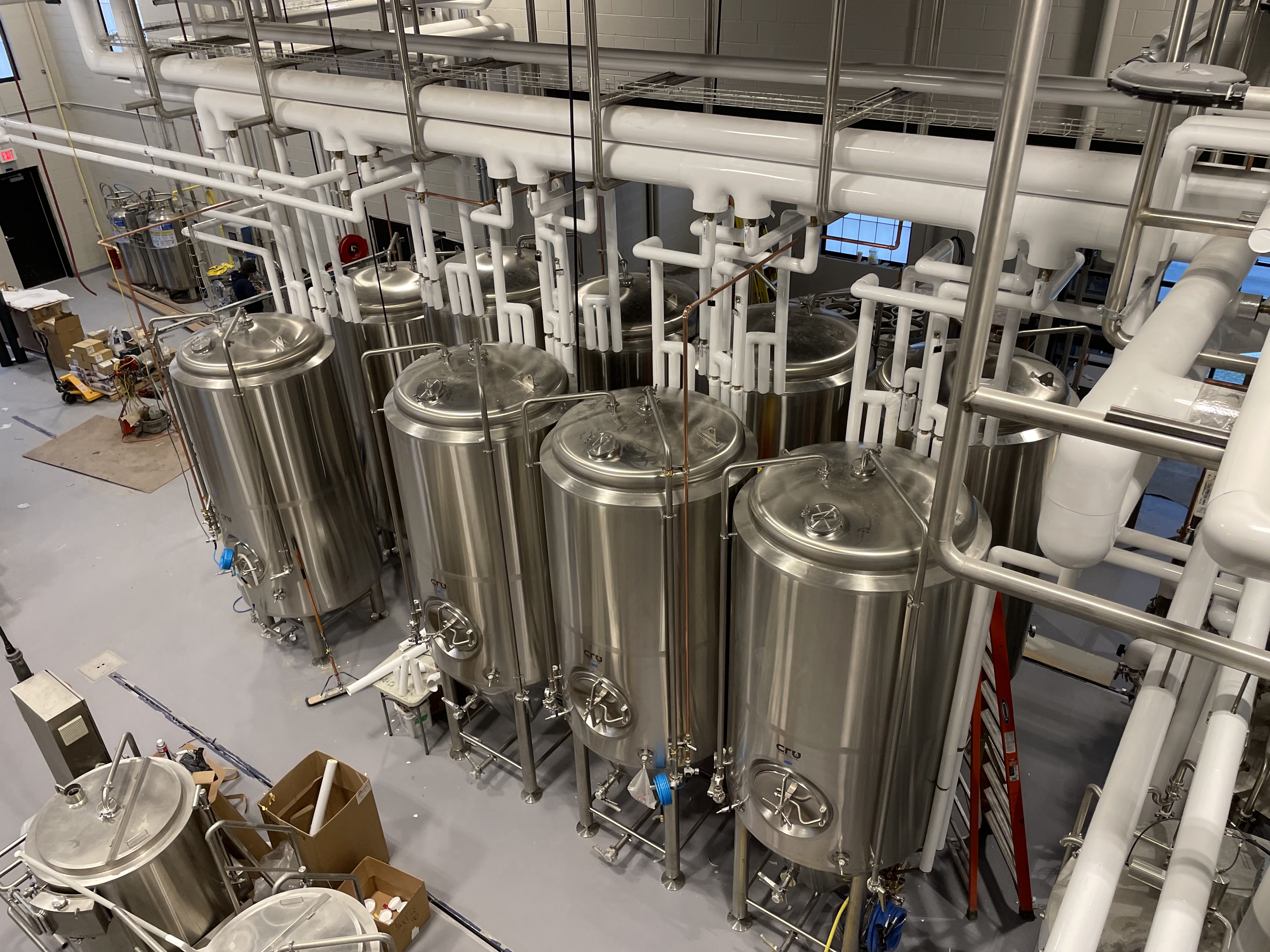
Typically, a brewery consultant sizes the chiller, though I have sized and provided a chiller. The chiller size will depend on the expected heat generation of the fermentation process and, more critically, rapidly dropping the temperature of fermenter. You will need to look at the size of the fermenter and how quickly the brewer wishes to change the temperature of this volume of liquid.
Brewing requires colder chilled water temperatures, so food-grade glycol is typically added to chilled water systems. This approach also supports year-round operation with roof- or grade-mounted air-cooled chillers.
Malt, hops, water, yeast, heating and cooling. These are the essential ingredients to beer. Understanding them and how they fit into a brewery will lead you to a successful project. Homebrewing has been very rewarding, giving me a deeper understanding of the professional brewer’s needs in their breweries. I hope this high-level overview of brewery design and how it intersects with the key ingredients inspires you to do the same.
Louis van Belle is a senior project engineer at Millies Engineering Group and has worked there since 2004. He earned his engineering degree at Dordt University, Sioux Center, Iowa, and his master’s in mechanical engineering at the University of Washington in Seattle and is licensed in the state of Indiana. He specializes in building mechanical and plumbing systems, load calculations, energy code compliance and restaurant projects. He is married and has three kids. His hobbies include learning guitar and homebrewing.