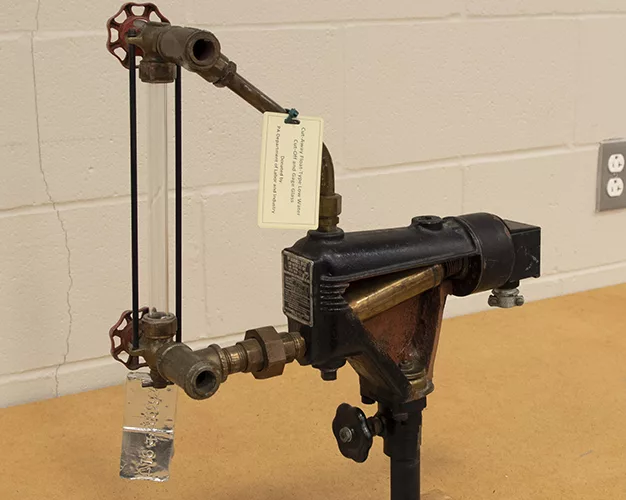
When I ask this question in my classes, most attendees nod their heads before I even finish the sentence. I always reply with the same line I’ve used for 30 years: “Yes, boilers can be dangerous, but only with human help.” At one point in history, boilers were extremely perilous. Mark Twain wrote in his book, “Life on the Mississippi,” that there was a 50/50 chance of a boiler explosion while riding on a steam riverboat. Between 1879 and 1891, the United States had 2,139 boiler explosions or one every 48 hours, resulting in more than 3,000 deaths. This was attributed to two causes: the safety controls were not particularly good, and the boilers were operating at 50 to 75 psig. We now have better controls and much lower operating pressures.
If you Google boiler accidents, your screen fills with jaw-dropping photos: buildings launched into orbit, roofs peeled back like sardine cans and brick walls scattered across parking lots. Those images stick.
What doesn’t stick is the truth — 99% of those catastrophes were 100% preventable.
Perspective check
According to the National Board of Boiler and Pressure Vessel Inspectors, an average of only 1.3 fatalities per year (2020–2024) in the United States are directly related to boiler failures. That’s about one or two souls a year.
For comparison, here are far more common ways humans meet their end each year:
• Hippos in Africa: more than 500.
• Falling out of bed: 450.
• Selfie-related deaths: 250.
• Lawn-mower accidents: 90.
• Lightning strikes: 27.
• Shark attacks: 4.
If you’re keeping score, that’s one boiler death for every 500 caused by hippos.
A properly maintained boiler will provide you with 20 to 40 years of quiet, safe and reliable service.
The keywords: properly maintained.
Where things go wrong
So, if boilers are so safe, why do we still see accidents?
Simple. Most are caused by what doesn’t happen: maintenance.
The breakdown of boiler accident causes looks like this:
• 46% — No maintenance or improper maintenance;
• 33% — Low-water cut-off failure (almost always because it was never blown down);
• 21% — Everything else: faulty installation, limit controls, burner issues, botched repairs, relief valves never tested, and so on.
That 46% number keeps me awake at night because it’s not mechanical failures; it’s human failures.
The $100,000 lesson
One Saturday evening in November, I was eating dinner with my family when my phone buzzed.
A contractor friend texted a photo of a float low-water cut-off (LWCO) float buried in chocolate-brown mud.
“This is what I’m working on tonight,” he wrote.
Nine months earlier, that same boiler had cracked nearly every cast-iron section because an LWCO was plugged solid with mud. The insurance company paid $88,000 for the replacement.
No one tested the controls before the next heating season. The custodian didn’t blow it down because, as he said, “It’s messy.”
Nine months later, the new boiler failed for the same reason — mud inside the LWCO. This time, the bill topped $100,000.
The insurance adjuster laughed when he saw the mud-cake float. Coverage denied.
The cost for the second replacement was split between the installer, manufacturer and owner.
The custodian who “didn’t want to make a mess” still works there.
The building owner was lucky. I know what you’re thinking: How could spending $100,000 be lucky? Because when a boiler continues to fire with no water, the metal turns cherry red. Add cold makeup water to that red-hot metal, and you’ve got the ingredients for a catastrophic explosion.
“Those who cannot remember the past are condemned to repeat it.”
— George Santayana
How a low-water cut-off works
An LWCO is the boiler’s lifeguard. Its job is simple: stop the burner when water levels drop too low.
There are two types: float and probe.
• Float LWCO: A small brass float filled with air rises and falls with the water level. If the boiler water drops, so does the float, which shuts off the burner.
Over time, dirt and mud build up inside the control housing, preventing the float from moving freely. The boiler “thinks” it’s full of water when it’s actually empty — a recipe for disaster.
The float control should be opened and cleaned yearly. During the heating season, it should be blown down weekly while the burner is firing. The burner must shut off when the water level drops.
• Probe LWCO: A metal probe sends a tiny electrical current through the water. If water surrounds the probe, the current flows and the burner runs. When the water level drops, the current stops — and so does the burner.
Commercial boilers have two low-water cut-offs for redundancy — a primary (automatic reset) and an auxiliary (manual reset).
The 60-second weekly ritual
Every Monday morning — or Friday, pick a day and stick with it — someone needs to perform this one-minute, four-step safety check:
1. Open the blowdown valve at the bottom of the LWCO for 5 to 10 seconds (or press the test button for probe types) while the burner is running.
2. Watch the water drop in the sight glass.
3. Verify that the burner shuts down when the water disappears.
4. Close the valve and confirm that water returns and the burner relights.
That’s it. Sixty seconds.
I’ve had building owners tell me, “Ray, we’re too busy.”
“You’re not too busy to have a building with no roof,” I respond.
At least once a year, ideally twice, the boiler’s safety controls should be checked by someone knowledgeable on boilers. I suggest having a staff member present to learn what regular operation sounds like and which noises should raise a red flag.
Maintain that low-water cutoff, and you’ve reduced the chance of a boiler accident by a third.
The bottom line is that boilers aren’t dangerous; people are — when they skip maintenance.
That one-minute ritual may seem small, but it’s what stands between a warm, comfortable building and a viral explosion video.