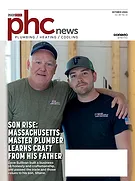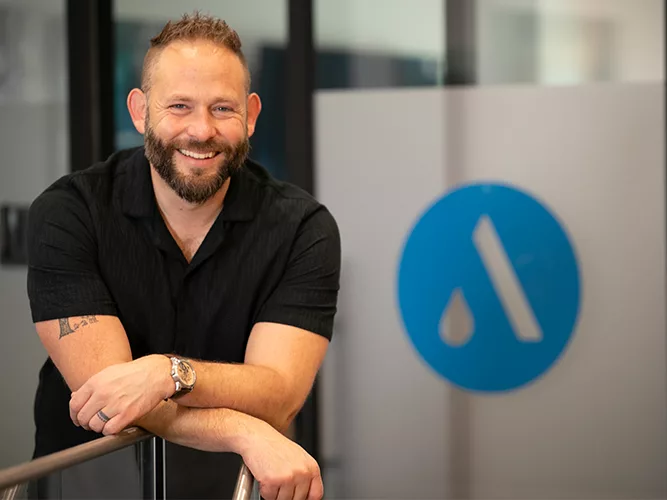
Business was booming, yet Nate Agentis was more miserable than ever.
In 2012, he had taken over the family company, Agentis Plumbing, after his mother was tragically diagnosed with Stage 4 pancreatic cancer. His parents understandably decided to step away from the business, and the then-30-year-old was thrust into a leadership role he wasn’t necessarily seeking out.
Nevertheless, just 12 years later, Nate had tripled the growth of his small family operation to a $13 million organization with 75 employees. Unfortunately, building something so special so quickly came at a cost to himself.
“I went to a pretty dark place for a period of time just questioning my values and my morals,” Nate says. “Like, ‘What do I really want? What do I care about in life? Maybe I don’t really care about any of it anymore.’”
Yet, through his journey with grief and the pressure of running a legacy company, Nate ultimately found a new purpose: helping others in the trades build not only stronger businesses, but healthier, happier lives.
Born and Raised in the Business
Growing up in Bethlehem, Pennsylvania — home of the now-dormant steel stacks — Nate learned early on what perseverance and hard work looked like. His parents, barely out of their teens, bought a house, gave birth to Nate, and took over Agentis Plumbing from his grandfather all within the same year.
“I grew up in that environment with the business in my home. I have memories of playing Nintendo on the couch with the technicians who would come in and out of the house,” Nate laughs.
With his mother running the entire office side of the business from their domicile and his father going out on calls at night while Nate and his brother went to bed, the line between work and home became increasingly blurred for Nate even at a young age.
“If we were all around the dinner table — which was rare — it was work time,” Nate says. “It was just this lifestyle of Dad constantly trying to build something from nothing, and Mom trying to love and support him as much as she could. It was a huge sacrifice that most tradespeople make, especially within their generation.”
Despite their tireless efforts, Nate says his family was still poor for most of his childhood. (Unable to afford steak, his father hunted deer every fall just so the family could have some type of red meat to eat.)
His grandfather had declared bankruptcy just prior to his parents taking over Agentis Plumbing, so it was safe to say the business was not a money-making machine right off the bat. It ultimately took about 15 years for Nate’s parents to move past their debt woes.
“The IRS actually put a notice on our door at one point,” Nate says. “It was a pretty scary time for us worrying about losing our home from back taxes. With a lot of prayer and the right couple of jobs, they got just enough money to pay their bills. It essentially was a miracle.”
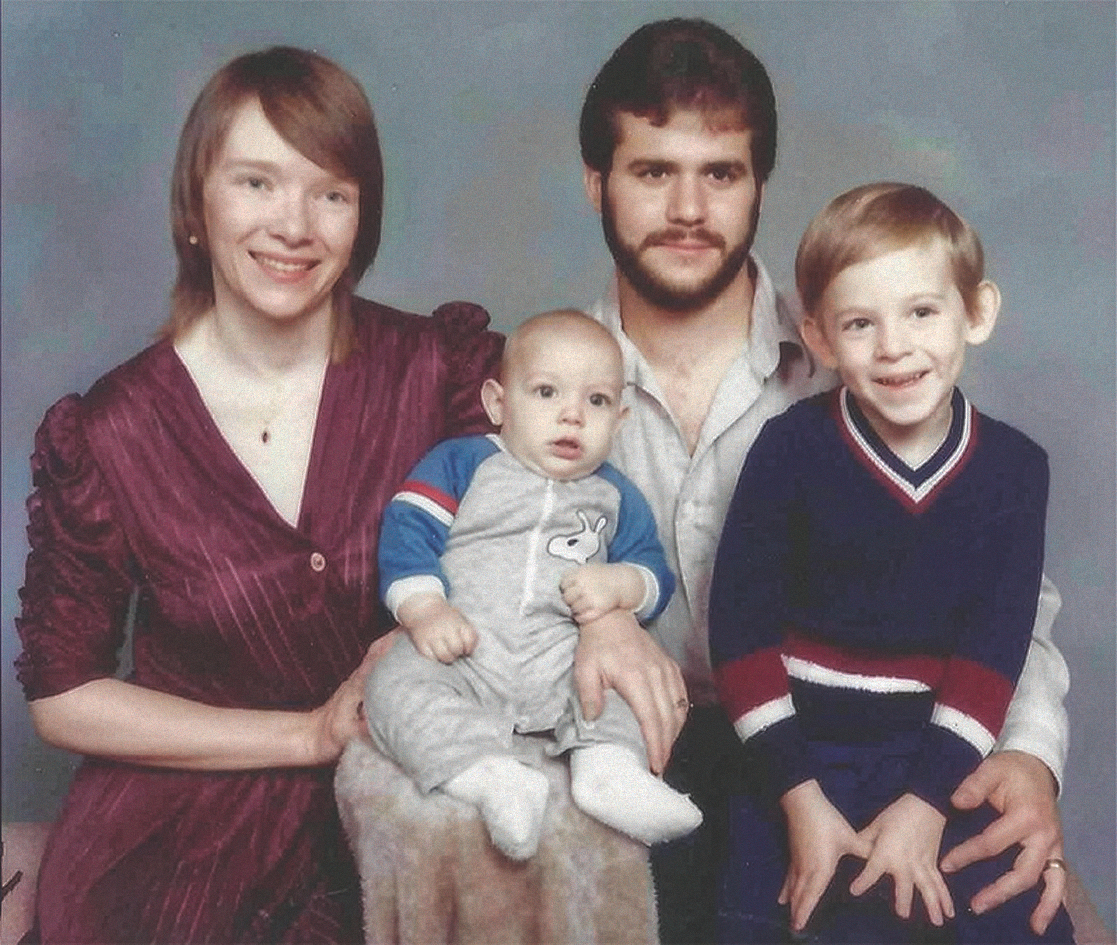 Nate as a child with his parents, Debbie and Stephen, and younger brother, Joshua.
 Working with Family
Throughout his teenage years, Nate would regularly work for the family business in a truck after school or on the weekends. He quickly realized that although he had a love for the trades, he wanted to be the first member of his family to go to college.
“I was always wondering whether there was something more for me in the trades than wrench turning,” Nate says. “There was just something missing.”
While he liked the people he met during his work and the moments he got to help teach others, Nate ultimately determined that the “missing” element was sharing ideas with large groups of people rather than the one-on-one interactions he often experienced in the field. He felt that pursuing a degree in business, management and marketing would help him carve out a career where he could do just that.
After graduating from local school Moravian University, Nate decided to return to the family business in a marketing capacity — however, doing so as an adult led to a new dynamic between him and his parents.
“There’s something sweet about building a company with your family where everybody has the same vision,” Nate says. “You get upset about the same things; you’re passionate about the same things — it’s just in your nature as a family. There’s a lot of unity in that.
“But, it’s also exhausting. There’s a little bit of a fear factor, because if it doesn’t go smoothly…well, this is all we do. The thought of losing your house never goes away. So, with that pressure, you tend to lose the specialness of the family unit — of ‘Mom and Dad’ just being ‘Mom and Dad.’ I had to call my dad ‘Steve’ at work, which was weird,” Nate laughs.
While most family relationships come naturally, Nate says he and his parents had to work a little harder to keep theirs special since work trumped most of their lives. At the end of the day, his parents provided him with invaluable lessons in both life and business. He particularly credits them with helping him delve further into the company’s finances, gaining bookkeeping experience with his mother and learning how to price jobs from his father.
“They got me exposed to profitability and learning the ins and outs of the business,” Nate says. “Obviously, when I became the owner of the company, that really paid off.”
A Tough Transition
When the time did arrive for Nate to take over Agentis Plumbing, the transition was brutal. The shocking news of what Nate describes as his mother’s “death sentence” shadowed over the family and the company.
"Mom and Dad started dating when they were 13 and 15,” Nate says. “Obviously we were all devastated but having spent 24/7 of their life living and working together, they were extremely so.
“It’s so different when you know that there’s an end — when a line gets drawn in the sand and you’re told this is when your time is running out,” Nate continues. “Mom and Dad saw that line and decided to leave the company.”
While there was always the shared thought amongst his family that he might own the business one day, a formal succession plan had never been put in place. Suddenly, Nate was the only Agentis left at Agentis Plumbing, diving headfirst into new roles and responsibilities. These varied from tidying up loose ends (his mother had not been healthy enough to complete the previous year’s taxes, which Nate had to tackle along with balancing the company’s checkbook) to creating the overall vision of the business moving forward.
No longer sitting down by the dispatchers, Nate moved upstairs and got to work. On top of everything else he was dealing with, the company’s culture was taking a massive hit as well.
“I was now the boss of people who had babysat me,” Nate says. “Some were accepting, but there was a lot of betrayal, a lot of calling my dad with concerns behind my back. Everyone was asking, ‘Are we going to stay afloat? Is this good? Who's this kid leading us?’”
That time period was a “very long season” for Nate, and while the company did lose some employees during the leadership transition, by 2015, things were looking brighter. Nate had hired his best friend, Luke Humberd, who came from the corporate data world and brought along organization charts, systems and processes, and metrics reporting that Agentis Plumbing desperately needed.
“He took my family-business-trade-brain and combined it with his corporate brain, and we were able to really start building something,” Nate says. “I believe 2015 was the beginning of the business healing.”
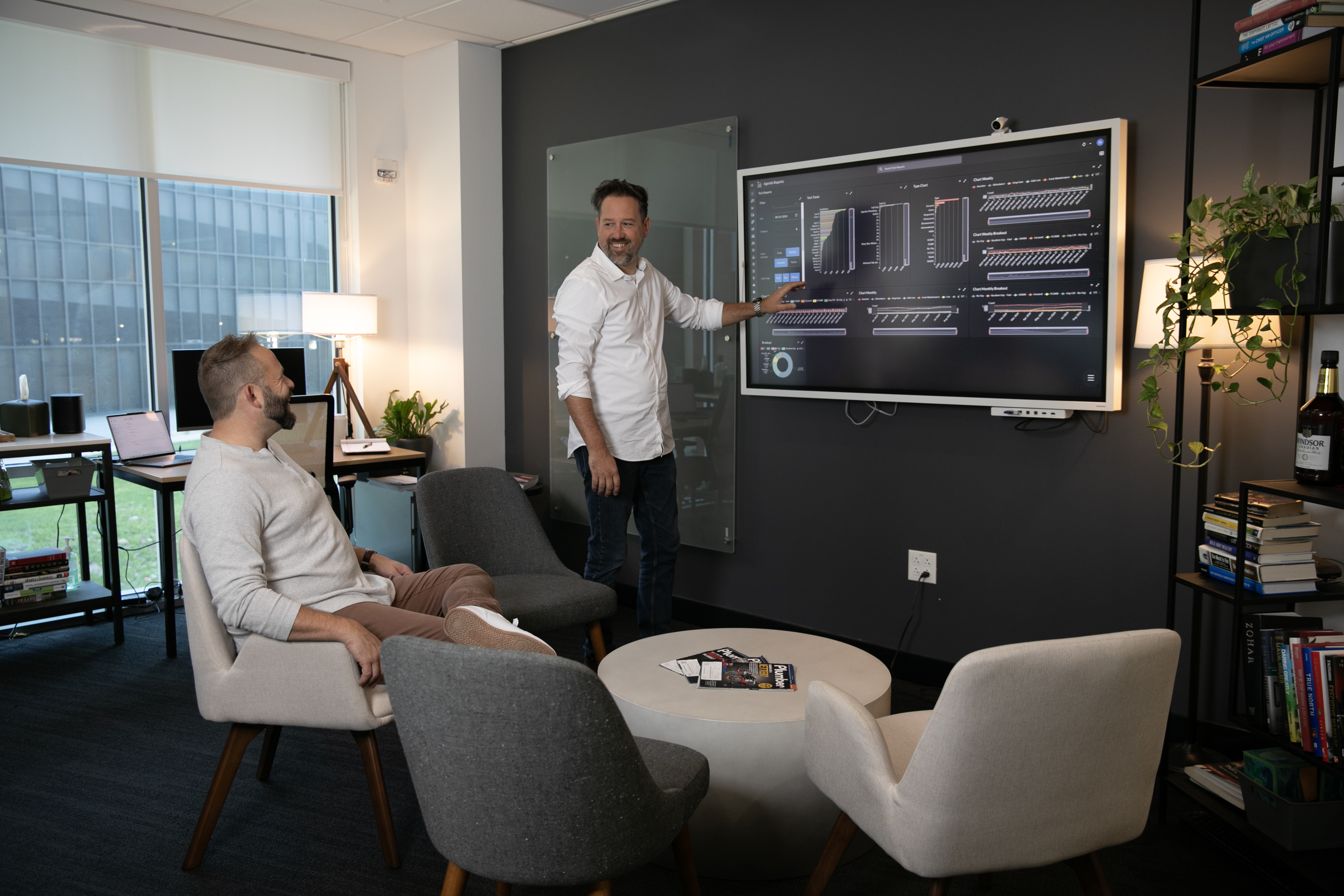 Nate with his best friend, Luke Humberd, who joined Agentis Plumbing as COO in 2015 and helped transform the business with data and new systems and processes.
Unpacking the Layers
While the business may have been healing, Nate was not. He was frequently stressed and angry, once chucking his phone across the room in front of several dispatchers. He realized he needed to be a stronger leader to keep culture healthy, even if it was just on an external level.
“Leaders have to outwardly express how they want their people to look, how they want their people to lead, and how they want their people to act,” Nate says. “Because of the pace of things — and the trauma I was dealing with from losing my mom who had passed at that point — I created some false fronts to keep things together and keep growing. That was good for the business, but inside, I was dying a little bit.”
After a few more years as owner under his belt, Nate did eventually feel more at peace running Agentis Plumbing. At the end of 2019, he remembers celebrating a successful year with Luke over a steak dinner. Then, COVID hit.
Much of Agentis Plumbing’s commercial clientele was now on lockdown (comprising 50% of the company’s business), and coupled with having to manage employee and customer safety concerns, the pandemic was enough to push Nate back over the edge.
“It was the first time I realized what burnout was,” he says. “Just this anxiety and emotional strain that breaks you internally.”
Nate knew that what he was feeling wasn’t normal. Although the stressors stemming from running his business and COVID were obvious, he decided he truly needed to get to the bottom of why he was so burned out.
Once he did so, everything started to add up for him — the father who was away on the job most of his childhood, the home he almost lost, the blurred boundaries between work and family, the death of his mother, the choppy leadership transition, the animosity he received once he became boss. Nate had never really examined how these experiences had affected his mental health.
“As I unpacked those layers, I could start trying to heal,” he says. “I started creating new rhythms and balances to help protect myself and notice the warning signs of burnout sooner.”
Nate credits counseling, prayer and talking to his close friends and wife, Melanie, for helping him achieve this. At this point, he and Melanie had also been building a family of their own for years, which was another aspect of Nate’s life that he needed to evaluate with more care. He particularly remembers one key metaphor a counselor shared that helped make things really click for him.
“He said Melanie and I were a well-built engine firing on all cylinders — building companies, raising kids and flying through life,” Nate says. “It was just that somewhere along the line, the ‘check engine’ light came on and nobody paid attention to it.”
Selling the Business
One way Nate dealt with his ‘check engine’ light was to begin a new activity that brought him joy. He started speaking at trade shows and conventions, which eventually led to coaching other business owners.
“It was a really exciting time that birthed a deep passion deep within me,” Nate says. “I remember thinking, ‘Wow. I really love this. I could do more of this in life.’”
He continued to build his consulting business, and by 2024, he found himself in a situation where both he and his companies were blossoming. In fact, Agentis Plumbing (which had survived the pandemic and just crossed that $13 million mark) was doing so well that somebody was interested in buying it.
After several conversations with his team and family to make sure everyone was in support of the decision, Nate sold Agentis Plumbing.
“The sale empowered me to say to myself, ‘Go live your life. If you love speaking, if you love consulting, if you love helping tradespeople — go live that,’” Nate says. “It was just a great opportunity to move into change.”
Finding Hope
Since making this change, over the past year, Nate published a book, “Get Shit Done: How to Build a Strong Team, a Profitable Business, and a Lasting Legacy,” and has continued to grow his consulting business, Plumbing CEO. The company, which was recently acquired by Business Development Resources (BDR), teaches other plumbing business owners how to escape the daily grind, scale their operations, and achieve seven-figure status through comprehensive tech training and leadership coaching.
Nate continues to regularly speak at industry events as well, such as the Water & Wastewater Equipment, Treatment & Transport (WWETT) Show, Plumbing-Heating-Cooling Contractors—National Association (PHCC) CONNECT, and Service Expo, covering topics like preventing burnout in a reactive business, training and retaining technicians, and developing a healthy business culture. He has even made appearances on national television, including The Drew Barrymore Show.
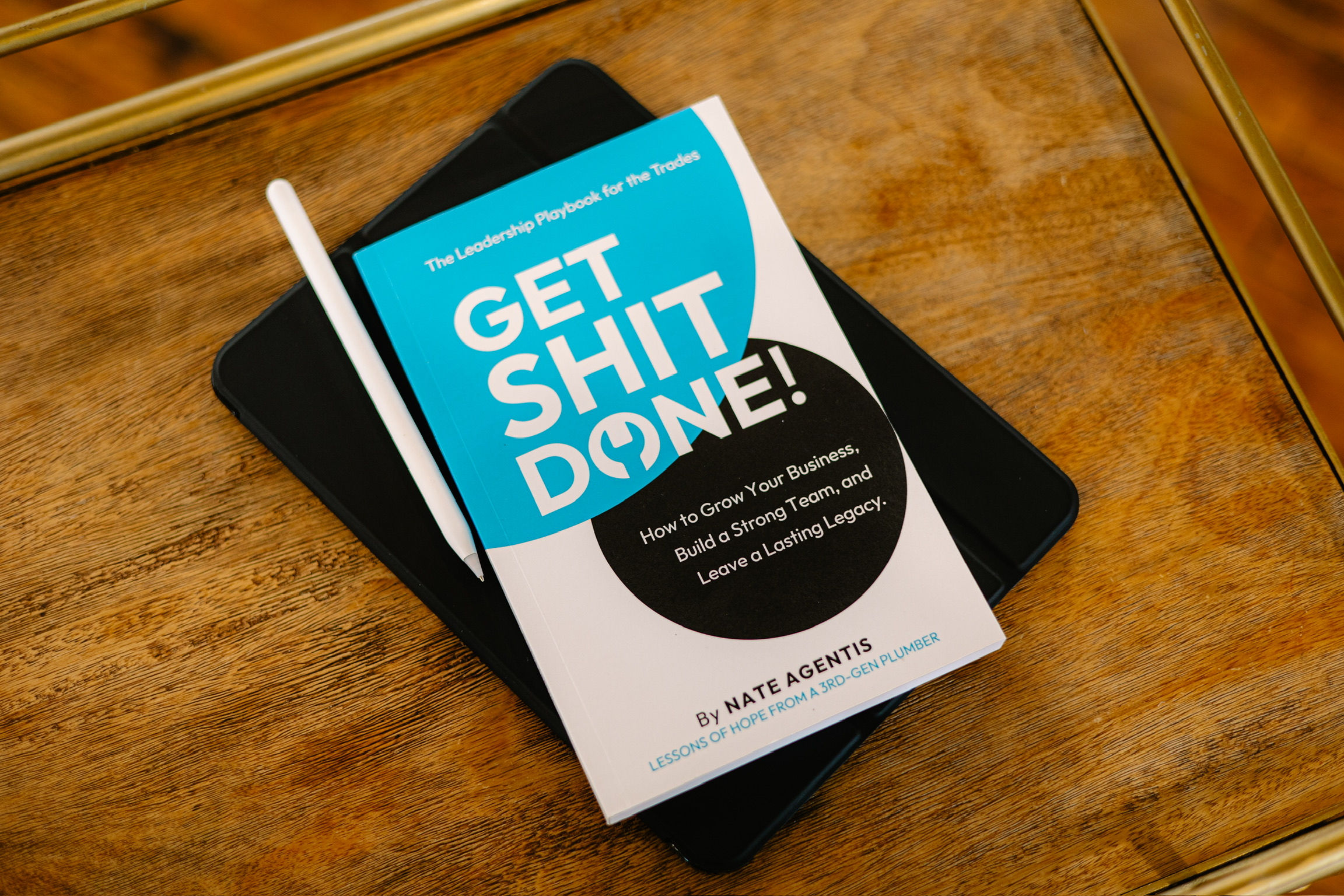 In his book, “Get Shit Done: How to Build a Strong Team, a Profitable Business, and a Lasting Legacy,” Nate shares how tradespeople can build profitable business without sacrificing their sanity.
While he still loves speaking and coaching, Nate believes his “future joy” will come from his recently launched nonprofit, Hope for the Trades. Dedicated to the mental, emotional, spiritual, and professional well-being of tradespeople, business owners, and their families, the organization has three core values: Lead with Purpose, Live with Passion, and Give with Impact.
To help members ‘Lead with Purpose’ the organization connects them with resources such as books, videos and online curriculum focused on leadership and technician training.
Regarding ‘Live with Passion,’ Nate says it’s all about answering a simple question: “Your business might be healthy, but are you healthy?” Through workshops, retreats, counseling, and recovery support, the organization aims to help trades professionals and their families find balance, healing, and renewal beyond the jobsite.
Finally, members can ‘Give with Impact’ by participating in one of Hope for the Trades’ humanitarian trips. Partnering with organizations like Samaritan’s Purse, Feed the Hungry and RINO Foundation, Hope for the Trades assists with infrastructure, plumbing, disaster relief, and community rebuilding both domestically and internationally.
“When you sign up for another association, you may get a discount on the van you buy or access to a cool conference, which is all great and important,” Nate says. “But, we bring opportunities directly to members. If you need counseling, there’s a spot for you. If you want to go help with a flood in Texas, we’ve already got a team going with the right partners in place — you just need to show up.”
The organization is currently working toward building its membership. The bigger it becomes, the more it plans to give back to the trades community in other ways as well, such as investing in the next generation of trades professionals through scholarships. Nate’s “audacious dream” is to one day reach a million contractors.
“Hope for the Trades is not trying to reinvent the wheel,” he says.” All we're trying to do is say, ‘This is what wholeness and health look like for a tradesperson. We want to connect you to the right people. And if you can't afford it, we want to help offset some of that cost.’”
 Hope for the Trades has held humanitarian trips in locations such as Nicaragua and Honduras.
 Breaking the Cycle
Nate feels there are so many in the trades who need mental health and wellness support because they have similar stories to himself.
“Many of those stories are more broken than mine, too,” he says. “Rarely somebody becomes a plumber, welder, or carpenter because they grew up in a perfectly wonderful home where Dad and Grandpa were healthy and happy tradesmen who passed on their skills. There are some of those stories, but there’s also a lot of abuse, abandonment, and alcoholism.”
“You’re serving everyone else’s crises all the time and often forget to serve yourself,” Nate continues. “People my age come from an era where there’s still a lot of shame if you need counseling or have a vice or an addiction. But if we heal, we can be a better person to our community and our home.”
Nate says many tradespeople also have a drive within them to grow a business from the bottom up, neglecting themselves in the process just as he did.
“You make $10 million, well guess what? You could make $ 20 million if you just keep going, keep grinding and putting your head down,” Nate says. “When does that end? It just doesn't. I was in my business when it was small. I was in my business when it was medium-sized. I was in my business when it was large. That pressure never stops, no matter what.
“We forget in all stages of ‘the grind’ that we need to be healthy,” he continues. “It’s OK if you have to step out of it and get help. It’s OK if you need to rebuild and change the rhythms and patterns in your life. That's some of the conversation that we're missing in the contracting world.”
Now that Nate has changed the rhythms and patterns in his own life, his work-life balance has immensely improved.
“In the mornings, I don't get up as early anymore,” he says. “I can now have coffee with my wife, and I think that's one of the greatest joys that I've experienced. We talk about the day; we talk about our plan. We try to find joy together in that, and she’s taught me how to be more present.
“I can't tell you how many years there were of waking up in the dark, getting dressed, sneaking out of the house while she and the kids were asleep, coming back at dinner time, and maybe doing something quick with the kids before going back to work and then bed and then repeating the whole process,” Nate continues. “That is a very dangerous cycle.”
Although Nate’s kids — Nati (25), Lola (20), Logan (18), Riley (17), Mayzee (12), and August (10) — are older and more spread out around the country now, he is more intentional with creating space in his schedule to travel and spend time with each.
“Anything I can do to make a healthier Nate — to be a good leader at work and an even better leader at home — is the goal that I'm shooting for,” he says.