Starting a new construction project as a plumbing designer allows me to create the initial plumbing systems for the building’s life: utilities, equipment and piping routes. Designing the concept of a new building allows me to spread my wings with my drafting skills, but retrofit projects can be challenging.
Plumbing engineers lack the luxury of a blank slate when designing for retrofits — the building is already there, with a slew of components living in the plenum and underground that need to be coordinated around. Instead of having free rein, retrofits demand that designers take extra steps. They call for evaluating the existing drawings and building conditions, and considering the new scope. Existing, demolished and new components blend.
It can be overwhelming to keep track, which is why I collect an abundance of information before opening Revit.
Where to start?
Evaluating existing conditions from the client is the most important step in any building renovation project. How are the existing plumbing systems used? How do they work? What upgrades will be required to ensure the system runs seamlessly and fulfills the new demands of the building?
Obtaining existing construction documents from the client is the best place to start. As-built documents provide the most up-to-date information, which can be used as a reference for drafting existing systems and current component selections.
However, it is still important to visit the site in person to verify that the documents reflect the system accurately. Small repairs and alterations could have been made that deviate from the drawings. Reviewing the system layouts allows the engineer to identify areas to inspect in person, such as specialty areas (i.e., kitchens or labs) and water/mechanical rooms.
The existing plans can contain fixture counts and water pressure calculations if these were required during plan review. These numbers help determine how much capacity remains in the existing systems, and what water pressure to expect near the property. Engineers should not rely solely on these numbers but can use them as a reference. I often calculate the capacity of the old system myself, especially if I am looking to tie into the old system and not completely replace it.
New scope
After reviewing the existing scope, it is time to ask questions about new systems. Is the plumbing scope minimal, with only fixture updates? Is the layout of the building being readjusted? Is the building occupancy changing? Are there areas that the client wishes to keep untouched? Understanding these factors can be helpful during the site visit in identifying what parts of the existing system can be reused.
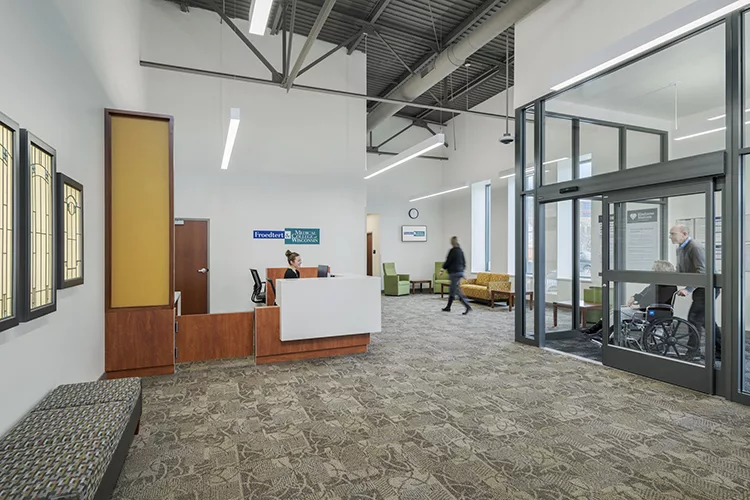
I recently wrote the basis of design for an existing two-tenant building: an office and a CrossFit gym, which would become the Froedtert Health Lafayette Clinic in Milwaukee. Understanding that the use change would require a complete plumbing system overhaul allowed me to focus on identifying possible areas for a new water room, since the existing water service entered the building in a small, exposed corner of the gym.
The site visit
Now that the existing conditions have been reviewed and the new systems have been considered, it is time to perform the site visit. In-person site visits are important to verify that the construction documents reflect the system accurately. No matter how much a design makes sense on paper, physically seeing the system will always give an engineer a better perspective. Design challenges stemming from existing conditions can be addressed then, rather than during construction through a request for information.
I start by taking pictures of all the existing fixtures and noting their manufacturers. I also record if faucets and flushometers are sensor-operated and whether they are hardwired or battery-powered. Making these notes allows me to source the same fixtures as the existing system, which makes maintenance easier, as maintenance staff often have spare parts and specific tools for the existing fixtures.
I then look at how fixtures are installed. Are the toilets floor-mounted or wall-mounted? Are the sinks drop-in or undermount? Identifying installation requirements during the site visit will help determine the project’s budget. I have experienced a simple one-to-one fixture replacement evolving into a more expensive renovation because we had to replace floor-mounted fixtures with wall-mounted ones, and vice versa.
Typically, fixture replacements require minor saw cutting of walls and floors. Still, new fixture spacing and updated building code may require the installation of new sanitary and domestic water stubs.
Once I identify the fixtures and expected scope for their installation, I look at the equipment and overall function of the existing building. Identifying equipment is necessary to determine if I can tie into the existing systems with no issue, or if I will need to pull new utilities and upsize/replace equipment. Equipment may not have all the data on its labels nor reveal the exact parameters it operates under, so I measure dimensions to narrow down the piece’s model. The facilities staff is the best source for identifying existing equipment.
Meet the facilities staff
The facilities staff has the best understanding of how the building operates. Engineers should make every effort to include them in the site visit. Staff can bring insight into issues the existing system has been experiencing that an engineer cannot physically see and may be unable to identify during the design process.
While performing a facility assessment for the Kewaunee High School in Kewaunee, Wisconsin, the staff mentioned issues with the sanitary line backing up because inattentive students poured grease down the sinks. I concluded that the student cooking lab would benefit from a grease interceptor that serves the student stations.
Discussing the system’s operation with the end-users, such as maintenance staff, may bring forth recurring issues with how the building is currently functioning, which can then be addressed with the new project.
Budgeting
After reviewing the existing construction and design documents, considering the new scope and conducting a site visit, what do you do with all the information? How do you use these findings to justify the new design?
Start with what typically drives a project’s design — the budget. The goal for budgeting early is to prevent blindsiding clients by unexpected costs later in the project. There are many factors to consider. On a new construction project, the ideal piping routing is simple: the shortest and most efficient route using the least materials while adequately serving the fixtures.
With an existing building, however, the client and contractor may oppose unnecessary demolition just so the piping looks more uniform. There may also be finishes the client wants to preserve.
While avoiding unexpected costs in the budget is ideal, it is also important to consider the upfront costs versus operational costs and the owner’s priorities. Our job as plumbing engineers is to present the benefits and setbacks of the design to the client and allow them to make an informed decision.
For example, if the equipment is nearing the end of its operational lifespan, I will recommend that it be replaced. Clients hesitate, but I explain that the equipment is either replaced now with the project or replaced in the next few years when it eventually deteriorates and causes a system failure. I try to help clients understand that it is much easier to make a planned equipment replacement than an unanticipated one that may affect the operation of the building.
Code considerations
Engineers must also consider the costs associated with meeting building codes. Retrofits can trigger requirements to bring existing system components up to current code. The Wisconsin and international plumbing codes have similar requirements for additions, alterations and renovations. Thankfully, only the new plumbing on a project needs to conform to the present code.
The 2021 International Plumbing Code, Section 102.4 states:
“Additions, alterations, renovations or repairs to any plumbing system shall conform to that required for a new plumbing system without requiring the existing plumbing system to comply with all the requirements of this code.”
However, items in the present code for new plumbing can increase the anticipated scope of a project. For example, I have worked on many projects that appeared to be simple fixture replacements but became more involved because the existing systems in the building did not recirculate the hot water close enough to handwashing fixtures to satisfy the current code.
The 2015 International Energy Conservation Code, Table C404.5.1, lists allowable maximum distances for fixtures with hot water connections from an active hot water loop:
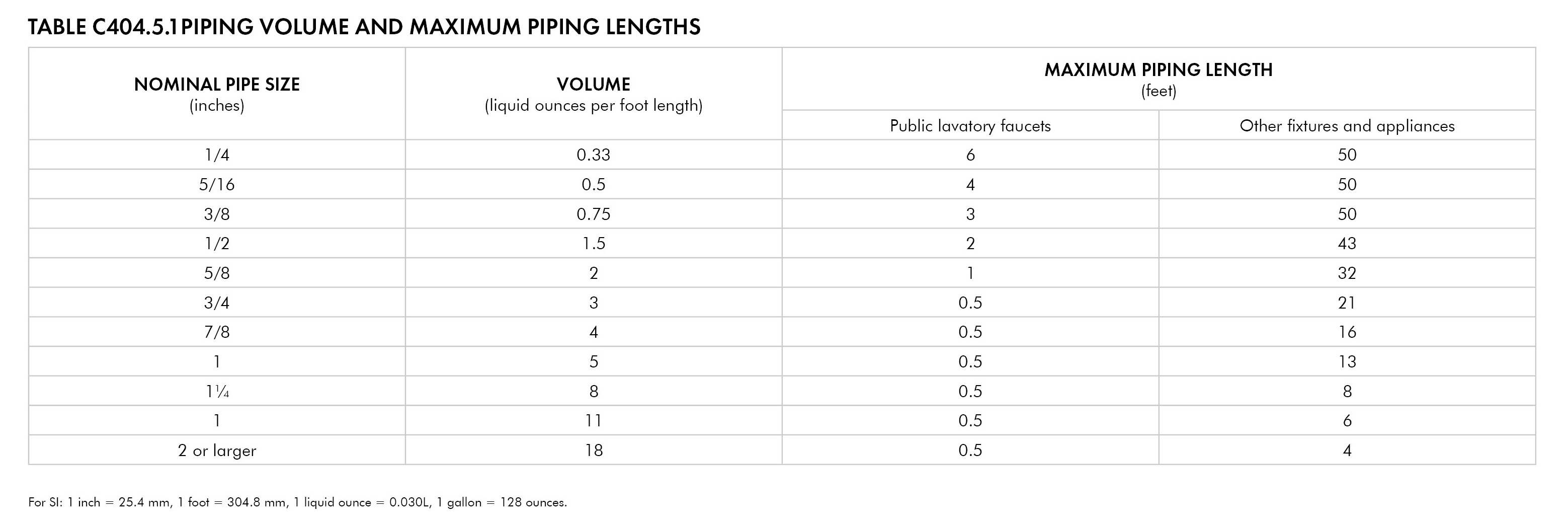
One solution would be to provide instantaneous water heaters for all the new and existing handwashing fixtures or to heat-trace the hot water system. However, suppose the building is expected to undergo alterations in the future? In that case, installing a hot water recirculation system may be in the client’s best interest.
Don’t work in a vacuum
Many systems will change in a building alteration, not only plumbing, so staying in touch with other engineering disciplines during the design process is critical. In addition to fitting within the existing conditions, the plumbing engineer must accommodate the other trades’ new components or, in some cases, situations where existing components are removed.
I once worked on a small office renovation where the plumbing and HVAC ducts were routed under the building in a crawl space. As this was the historical location of the plumbing piping, I laid out the new piping in the same crawlspace.
I did not consider that the HVAC system would be removed from the crawlspace, transforming what used to act as the heated plenum into an outdoor space. As a result, my domestic water piping had to be heat-traced to ensure the piping did not freeze during the cold season — a cost that could have been avoided had I consulted the HVAC engineer.
Adding to the slate
Constraints in design will always be present. Plumbing codes and standards are examples I consult every day. Existing conditions are simply another constraint to work with.
The catch is that we must be diligent about our process, from evaluating existing conditions to crunching the project numbers. I’ll leave you with these tips:
• Document everything on a site visit and take photos for reference later when designing. Use other imaging tools such as Matterport if available.
• Take dimensions of the equipment if the labels do not state the model number.
• Perform calculations to determine a system’s remaining capacity; justify using existing utilities when appropriate (but sometimes, new utilities will make more sense).
• Gain perspective from the whole team: occupants, facilities, client, architect and other MEP engineers to provide a holistic, seamless design.
The luxury of a blank slate does have its shine, but the challenge of renovations continuously pushes me to become a more conscious designer.
Nora Ureche is a plumbing engineer in training at EUA, based in Milwaukee. She holds a master’s degree in architectural engineering from the Milwaukee School of Engineering and is a member of the American Society of Plumbing Engineers.