In 2023, the National Fire Protection Association (NFPA) reported that fires caused more than $18 billion in property damage and claimed more than 3,500 lives across the United States. Many of these losses could have been mitigated by one vital measure: rigorous inspections of water-based fire protection systems, such as sprinklers, standpipes and fire pumps.
These systems are the first line of defense in countless buildings, and fire protection inspectors, with their specialized skills in fire life safety codes, attention to detail and technical proficiency, ensure they function when lives are on the line. From a different perspective than the fire sprinkler system installers, who focus on building these systems, inspectors bring a unique analytical expertise to identify deficiencies that could spell disaster.
This column explores the importance of inspections for water-based fire protection systems and the indispensable role of inspectors in safeguarding communities.
The vital role of water-based fire protection systems and their inspections
Water-based fire protection systems are the backbone of fire suppression in the United States, installed in commercial buildings, residential high-rises, schools, hospitals and industrial facilities. Sprinkler systems, which douse fires with pressurized water, are the most common, controlling 96% of fires where they operate correctly, according to NFPA data. Standpipes provide water for firefighters in high-rise buildings, while fire pumps ensure adequate water pressure.
These systems must comply with standards such as NFPA 13, Standard for the Installation of Sprinkler Systems; NFPA 20, Standard for Installation of Stationary Pumps for Fire Pumps; and NFPA 25, Standard for the Inspection, Testing, and Maintenance of Water-Based Fire Protection Systems.
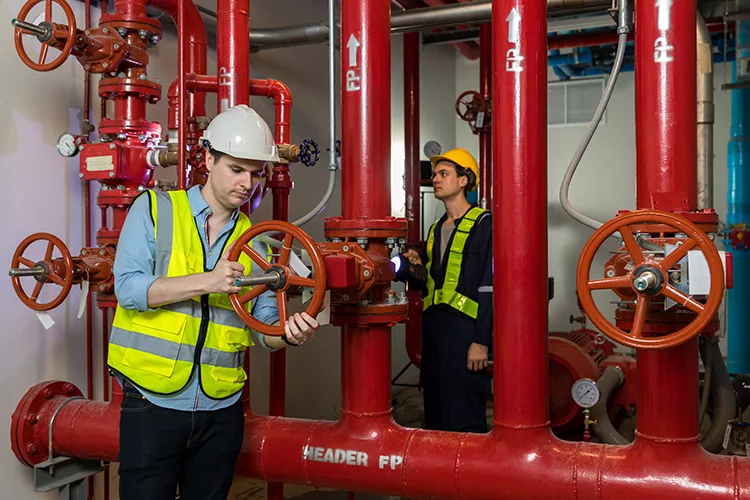
Inspections ensure these systems are ready to perform. Fire protection inspectors check sprinkler heads for obstructions, verify valve accessibility, test fire pump performance and confirm water supply reliability. They also assess maintenance records to ensure systems are inspected, tested and maintained regularly.
Without inspections, a closed valve, a clogged sprinkler or a faulty pump could fail during a fire, leading to catastrophic losses. For example, a 2010 apartment fire in a northeastern U.S. city spread rapidly because a sprinkler system was disabled due to uninspected maintenance issues — a lack of inspection, testing and maintenance — displacing dozens of residents. Regular required inspections prevent such failures, saving lives and billions in damages.
The unique expertise of fire protection inspectors
Fire protection inspectors possess a skill set distinct from that of installers, who assemble water-based systems. Installers focus on technical tasks such as installing piping, valve installation, and system commissioning to specifications provided by the water-based systems layout technician, ensuring that components and systems are physically sound and will operate as intended, if needed.
Inspectors, however, evaluate the system’s overall functionality, compliance and integration with a building’s fire safety plan. Think of it as an inspector at the facility to verify the wear and tear of the installed and approved fire protection system: Will it work if called upon? His work requires a deep understanding of NFPA standards, analytical problem-solving skills and meticulous attention to detail.
For instance, an installer might connect a sprinkler system to a water supply and complete acceptance testing; an inspector assesses and ensures the system’s water supply continues to meet its intended functional requirements long after the initial installation. The inspector checks for corrosion that could impair performance and verifies that ancillary equipment, such as a nitrogen generator, is maintained and in good working order.
Inspectors may also assess environmental factors, such as freezing risks in unheated areas, which could change during the facility’s life after installation. This holistic approach demands skills in code interpretation, risk assessment and communication to convey critical findings to building owners.
Certifications such as the International Code Council (ICC) Fire Inspector I or National Institute for Certification in Engineering Technologies (NICET) Level II in Inspection and Testing of Water-Based Systems are common, reflecting the specialized training inspectors undergo. These credentials equip them to navigate complex regulations and apply them to diverse scenarios, setting them apart from the installation folks, whose expertise is to install a quality fire life safety system that will be maintained by the owner post-installation.
A day in the life: Inspecting water-based fire protection systems
Picture a fire protection inspector arriving at a large retail warehouse for a scheduled inspection. With NFPA 25 as the guide, he begins by examining the sprinkler system, checking for blocked heads caused by stacked inventory, a common issue in warehouses. Then he tests the main control valve, ensuring it opens fully. The inspector may move on to inspect the fire pump (when installed), running a flow test to confirm adequate pressure.
Contrasting an installer who works with brand new equipment, today’s inspector evaluates its current state, noting minor corrosion on the fire pump piping that could worsen without maintenance.
Spotting a recent renovation that added shelving, our inspector identifies a section where sprinkler coverage may now be inadequate. While this may be a significant fire protection concern, it is not something the inspector can find a citation for in the NFPA 25 standard he carries, so he notes it on an observation report for the building owner to be evaluated further by a qualified party at a later date.
At the end of the inspector’s day, he will meet with the warehouse manager to explain any issues identified and noted during the “wear and tear” review. The inspector may even recommend deficiency repair considerations to restore the effectiveness of the life safety system and ensure the facility is meeting its Authorities Having Jurisdiction requirements. The inspector’s ability to connect system performance with building conditions showcases the analytical and communicative skills that make inspectors essential to fire safety.
During the most common type of water-based inspection, a wet pipe sprinkler system inspection, water-based fire protection inspectors frequently encounter deficiencies that, if unaddressed, could compromise a building’s safety. Common issues include inadequate water pressure or clogged piping, perhaps due to corrosion, which can reduce flow rates below needed water levels.
In another instance, an inspector might discover that a school’s wet sprinkler system has “loaded” sprinklers due to paint overspray during renovations, a violation of NFPA 25’s requirement for sprinkler heads to be as clean and operable as the day they were installed. Other typical findings include inoperative control valves, leaking fittings from improper maintenance, possibly damaged sprinkler heads or incorrect orientation, such as a pendant style being installed as a sidewall.
Real-world impact: Inspections save lives
The power of inspections is clear in real-world outcomes. In 2021, a fire broke out in a southern U.S. hospital’s kitchen. Thanks to a recent inspection, the sprinkler system was fully operational, with sprinklers at the ready and a functional fire pump supporting the water supply. The sprinklers contained the fire within minutes, allowing safe evacuation and minimal overall damage. The inspector’s prior identification of a partially closed valve, corrected before the incident, was pivotal to the system’s success.
In contrast, a 2018 factory fire in a West Coast location highlighted the cost of neglected inspections. An unmaintained sprinkler system failed due to clogged heads and a malfunctioning pump, leading to $10 million in damages. An inspector could have flagged these issues, underscoring his role in preventing disasters. These cases illustrate how inspectors’ expertise in evaluating water-based systems ensures they perform when needed most.
Challenges in inspecting water-based systems
Inspectors can face unique challenges when evaluating water-based fire protection systems. For instance, an older building might have had adequate water supply pressures when the system was installed; however, with the city’s growth, the previous water supply may no longer be sufficient, requiring creative compliance and life safety solutions.
Building owners may resist costly repairs, such as replacing corroded piping, testing inspectors’ communication skills to advocate for life and property safety. Resource constraints, such as limited access to areas within the building being inspected, can also complicate inspections in many areas.
Inspectors are often well-versed in expressing the liability concerns a property owner may face with a poorly maintained fire protection system.
Training and qualifications
Becoming a fire protection inspector for water-based systems requires specialized training. Many inspectors begin with a background in fire protection system installation, often in conjunction with fire science or mechanical engineering, although some transition from the fire service or outside the industry altogether.
Certifications such as NICET Water-Based Systems Inspection or NFPA Certified Fire Inspector are common, involving coursework on the various fire protection systems installed worldwide. The inspector will also need to be well-versed in NFPA standards and inspection protocols. On-the-job experience, such as shadowing senior inspectors, develops practical skills, including flow testing and resetting complex equipment, such as dry systems or pre-action valves.
This training equips inspectors to analyze system performance and apply current or recently updated regulations where appropriate, unlike installers, who focus on installing new fire protection systems that have been highly engineered, approved and now in use. The rigor of this preparation ensures inspectors can handle the complexities of water-based systems, from high-rise standpipes to industrial sprinklers, with confidence and precision.
Societal benefits of inspections
Inspections of water-based fire protection systems yield far-reaching benefits. By ensuring sprinklers and stationary fire pumps function properly, they prevent billions of dollars in fire-related damages annually, according to NFPA estimates. Compliant systems lower insurance premiums, as insurers recognize reduced risk. Communities gain safer schools, workplaces and homes, fostering public trust.
Inspectors’ expertise in code compliance and system analysis drives these outcomes, making them vital to a resilient society.
These inspections are a cornerstone of fire life safety in the United States, preventing tragedies through the skilled work of fire protection inspectors. These professionals, with their deep knowledge of NFPA standards, analytical prowess and ability to communicate risks, ensure sprinklers, standpipes and pumps are ready to protect property and lives.
Installers focus on installing a well-engineered and compliant fire protection system to assist building owners in creating a safe environment for their employees and possibly even the public at large. The evaluation skills and continued maintenance after a fire protection system has earned its Certificate of Occupancy make them uniquely suited to this critical task.
Building owners must prioritize regular and required inspections, scheduling them to maintain system reliability. Policymakers should support inspector training programs to meet the growing demand, especially as buildings age. By valuing the specialized role of fire protection inspectors, we can ensure water-based systems stand ready to combat fires, creating safer communities for all. Let’s champion these guardians of safety and their mission to protect our future.
Jack Coffelt is the vice president of inspections for VSC Fire & Security. He brings more than 35 years of experience in fire and life safety, in a multitude of capacities. A U.S. Navy veteran, Coffelt has worked with systems ranging from fire sprinkler, fire alarm and suppression to access controls and CCTV. His career spans roles at Honeywell, Simplex-Grinnell, Siemens, and others, covering design, installation, inspection, sales, software and management.