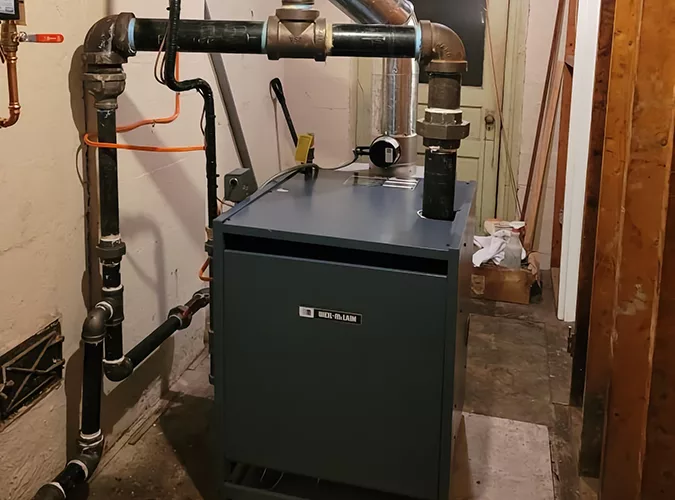
Replacing a steam boiler is not like swapping out a furnace or hydronic boiler. Steam systems have different rules. If the installer uses the same mindset used for other HVAC equipment, he will discover afterward that the building heats unevenly, the new boiler surges or bangs, or the customer complains that rooms once heated are now cold.
Steam behaves differently and demands a different approach. The boiler is only one component in a carefully balanced and orchestrated system of pipes, vents, traps and radiators. If you understand that relationship before sizing and installing the replacement boiler, you’ll save yourself and your customer a lot of frustration.
The most important step: Sizing it correctly
In forced-air and hydronic heating, replacement sizing starts with a heat-loss calculation. This method does not work for steam. If you size a steam boiler using heat loss, you will undersize it, sometimes severely.
Steam boilers must be sized to the connected load, including all the radiators and coils attached to the system. Each radiator has an Equivalent Direct Radiation value, and the sum of all radiators determines how much steam the boiler must produce.
From there, you add a 15% pickup factor for the piping. This extra capacity is important during a cold start, when steam can prematurely condense on cold pipe and may never reach the far radiators without the additional margin.
A common question from owners is whether new windows or added insulation allow for a smaller boiler. The answer is no. Insulation or new windows reduce the structure’s heat loss but do not change the boiler size.
Commercial steam systems are more challenging due to the quantity and type of heat emitters. On commercial systems with two or more boilers, I ask the customer if one boiler can heat the building. This helps verify the sizing.
Insulation on steam mains. Uninsulated steam piping loses five times as much heat as insulated pipe, stealing steam from the rest of the building. In addition to lower efficiency, it could lead to banging pipe and overloaded steam traps. Be sure to explain the importance of insulation to the customer and include insulating the piping in your proposal.
Inspect near-boiler piping and assume it’s wrong
This may sound harsh, but my experience proves it true. Always assume the existing near-boiler piping is wrong. The near-boiler piping is integral to providing dry, efficient steam to the system. Older steam boilers provided 98% dry steam by using large internal steam chests. Now, smaller steam boilers rely on the near-boiler piping to dry the steam.
Be sure to have a page from the new boiler installation manual showing the manufacturer’s required piping. In most cases, it’s easier to remove the old and replace it with new.
Poor near-boiler piping is one of the biggest contributors to callbacks and customer dissatisfaction. Redoing the header may add upfront cost, but it eliminates surging, water hammer and wet steam.
Find out why the old boiler failed
If you don’t identify the reason the old boiler died, the new one may follow the same path.
Common failure causes include:
Excessive makeup water from system leaks;
Low pH or untreated water, which corrodes cast iron or steel;
Poor near-boiler piping, causing surging and damaging the boiler internally;
Short-cycling from undersized vents or bad traps.
Before installing the new boiler, inspect the wet returns, condensate piping and main vents. Test the water quality. Look for evidence of leaks, rust trails near valves or corroded pipe nipples. A makeup water meter on the feed water pipe can help identify trouble later.
The A dimension. This is the distance between the boiler’s normal water line and the lowest horizontal steam-carrying pipe. You need at least 28 inches of pipe to allow the water to return to the boiler in a gravity-return system. Less than that can cause low-water cut-offs to trip or water hammer.
Evaluate steam traps and condensate handling equipment
Many boiler replacement projects overlook the condition of the system’s steam traps. Bad traps waste fuel and cause uneven heat. When replacing a boiler, strongly recommend replacing or rebuilding the traps.
Steam traps have an estimated lifespan of about 10 years. I would wager that most of the traps in the building you’re looking at are original. Customers will thank you later for the increased comfort, reduced noise and lower heating costs. For commercial systems with two or more boilers, high-level spill traps are required to prevent one boiler from flooding the other.
For commercial systems with a mechanical condensate return, you will probably need a boiler feed system. The boiler feed tank is usually four to five times larger than a condensate tank and provides several advantages. It allows the makeup water to be pretreated and heated before entering the boiler, reducing the chance of thermal shock. The water level in the boiler is better controlled because the feedwater pump is operated by a control located on the boiler.
Upgrade venting and replace dirty, wet returns
Steam systems “breathe.” Air must escape quickly at startup or the steam can’t reach all radiators. In a correctly installed residential system, steam should reach the radiators within a minute of the steam starting. Main air vents should be located at the ends of the steam mains, at least 15 inches before the turn, and be at least 6 to 10 inches high. Undersized vents slow heat delivery.
Wet returns, particularly near the floor, often fill with mud and scale over the course of decades. Replacing at least the first 10 feet near the boiler prevents blockages, improves water quality and helps your new boiler live a long life.
Lastly, don’t forget to clean the boiler to remove dirt and oil from inside. This eliminates bouncing water lines and nuisance low-water cut-off controls tripping.
Replacing a steam boiler is far more than setting a new unit on the pad and connecting it to the piping. It’s an opportunity to correct decades of neglect, improve system efficiency and deliver comfort the building may not have felt in years. When you size the boiler by the connected load, inspect the traps, replace bad returns, upgrade venting and repipe the header correctly, you’ll produce a system that runs quietly, efficiently and reliably for decades.