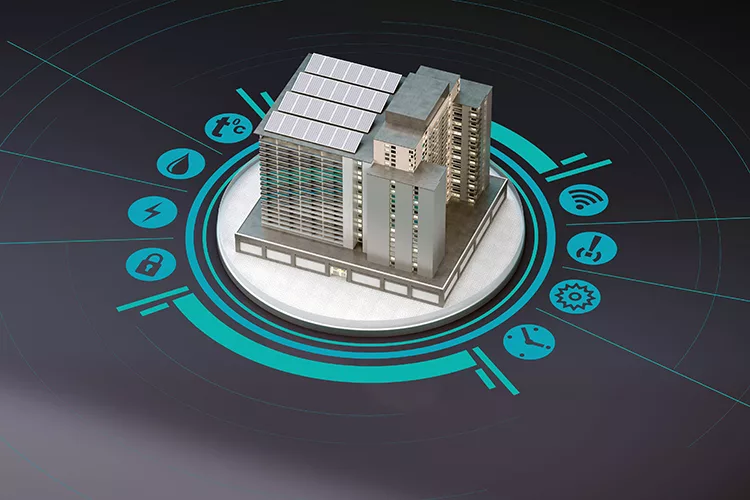
What exactly is integrated automation (IA)? It’s a system of interconnected components enabling building systems to work together and communicate with each other. In essence, it creates a fully unified automation platform that allows equipment and devices to communicate and provide real-time insight into system operation and performance.
In plumbing systems, integration allows building engineers and owners to monitor conditions, track usage, adjust remotely and receive immediate notifications when problems or system failures occur. Integrated automation significantly improves reliability, efficiency and operational control.
Plumbing engineers and designers have historically focused little on building or equipment controls. When specifying a booster pump, sump pump, water heater or recirculation pump, the equipment typically arrives as a self-contained package with its own control panel and a simple option to hardwire a single alarm into the building automation system (BAS).
As a result, our attention was primarily directed toward system layout, fixtures, and the design of waste, water, gas, pumps, and water-heating systems rather than the digital control strategies behind the equipment.
That began to shift in the early 2000s, when plumbing equipment moved away from simple, stand-alone mechanical setups and into the world of digital controls. Manufacturers started adding programmable logic controller-based control panels, standard communication protocols such as BACnet and Modbus, and built-in alarm and monitoring capabilities.
For the first time, pumps, water heaters, and level systems could communicate directly with the BAS rather than operate independently. This change opened the door to system visibility, centralized monitoring and proactive maintenance, things our industry had rarely experienced before. These advancements ultimately laid the groundwork for today’s integrated automation environments, where plumbing systems are expected to communicate, optimize and coordinate with the entire building.
For a long time, plumbing engineers also relied heavily on the HVAC team to handle anything related to building controls. If a system needed BAS integration, the expectation was that the mechanical designer would incorporate it into control drawings and specifications. The plumbing engineer’s scope rarely included writing control sequences or identifying a specific points list for the BAS. We focused on the plumbing equipment itself, and the HVAC controls designer figured out how to bring it into the automation system and connect it.
That approach worked when plumbing equipment had minimal control requirements, but as our systems became more digital and more interconnected, it became clear that relying solely on HVAC to define plumbing controls left gaps, inconsistencies and missed opportunities for true integrated automation.
 Market trends
Integrated automation in plumbing systems is being driven less by new technology and more by owner responsibility, code compliance and risk management. ASHRAE Standard 188, Legionellosis: Risk Management for Building Water Systems, places clear accountability on building owners to implement and verify water management programs to reduce Legionella risk, which requires documented control measures, monitoring and response.
Those requirements cannot be met consistently if plumbing controls are treated as an afterthought or assumed to be covered under Division 23. Continuous temperature monitoring, flow verification and automated flushing all originate with plumbing equipment and fixtures, and they must be defined as part of the plumbing scope.
As building owners continue to demand greater visibility into water usage, system performance and alarms, and as plumbing equipment increasingly ships with native BACnet or Modbus capability, Division 22 must take a more active role in documenting BAS integration expectations. Integrated automation is no longer optional plumbing coordination; it is a core design responsibility.
Common components
As plumbing systems evolve into fully connected parts of a building’s automation system, a standard set of components has emerged to support monitoring, control, data exchange and overall system optimization. While it’s not a complete list, this is the most common group of elements that can be found in today’s market of integrated automation systems for plumbing fixtures, systems and equipment:
1. Digital controllers. These are the brains of plumbing equipment that can manage sequencing, setpoints and alarms.
• Packaged pump controllers;
• Digital mixing valve controllers;
• Water heater control modules;
• Controller boards for flushing, metering and sensor-operated fixtures.
2. Communication protocol interfaces. This is the process by which equipment communicates with the BAS.
• BACnet MS/TP or BACnet/IP;
• Modbus RTU or Modbus TCP;
• IoT-based protocols (Wi-Fi and cloud API’s).
3. Smart fixtures and end-user devices. These fixtures can connect to a BAS or network to report usage and other pertinent fixture data.
• Sensor faucets and flush valves;
• Filters on bottle fillers and drinking fountains;
• IoT-connected flushometers.
4. Sensors and monitoring devices. These components can provide real-time data inputs.
• Temperature sensors;
• Pressure transducers;
• Flow meters;
• Level sensors for sump pits and grease interceptors.
5. Actuated valves and control devices. These devices are used to change the system temperature and flow.
• Motorized isolation valves;
• Digital mixing valves;
• Motorized balancing valves;
• Automatic flush valves.
6. Alarm and event output. These signals notify staff of a system malfunction.
• High and low temperature;
• High-level overflow.
7. Data logging, trending and reporting features. This is data collection.
• Water usage and tracking reports;
• Temperature tracking and monitoring reports;
• Water quality tracking and monitoring reports.
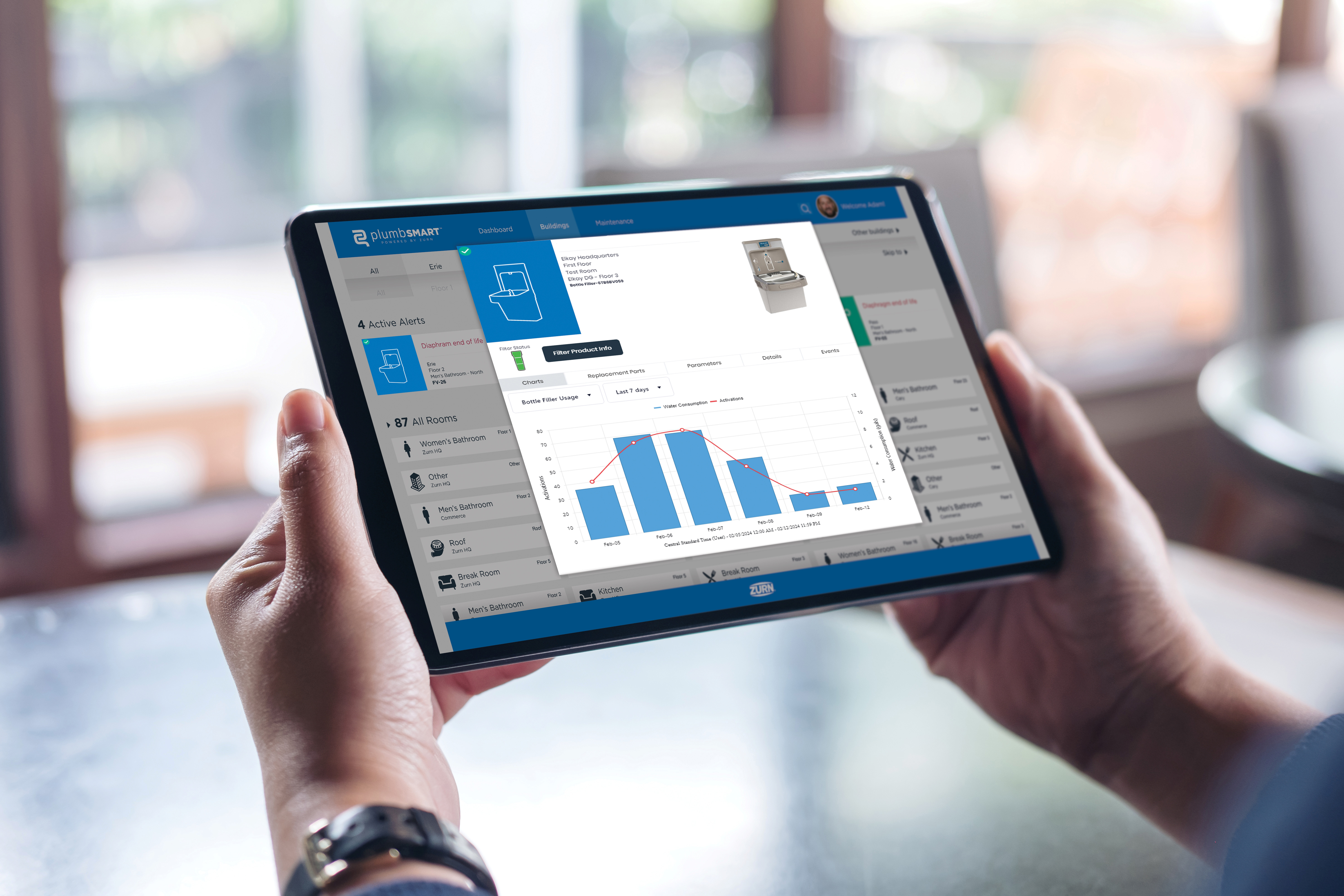
When all these components are connected, the owner ends up with a fully integrated plumbing system that communicates across all equipment, allows for system adjustments, provides real-time data and alerts staff to alarms, water usage trends and changes in system performance.
How it all ties together
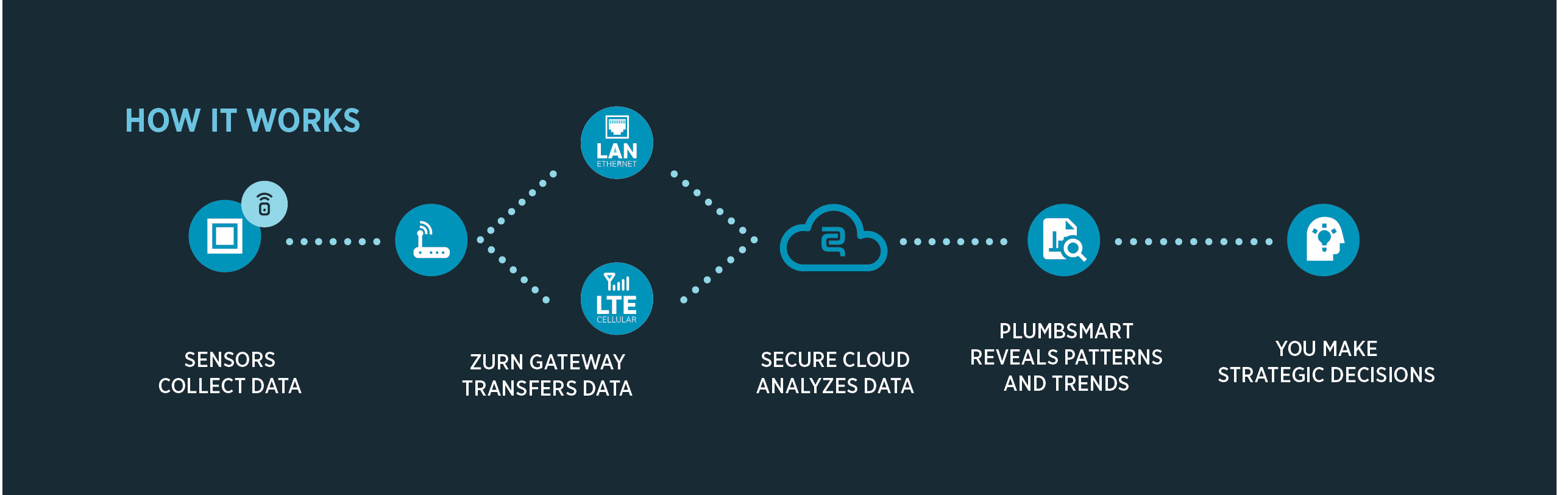
The plumbing automation components are connected through a mix of wiring, communication networks and the controls logic that ties everything together. At the equipment level, sensors feed live data — temperature, pressure, flow or tank level — back into the controller. The controller reads the information and decides what needs to happen next; maybe a valve needs to open, a pump needs to ramp up or an alarm needs to be triggered.
From there, the controller pushes this information to the BAS via BACnet, Modbus or whatever protocol the project requires. Once it hits the BAS, operators can see everything in one place: trends, alarms, performance data, and how the plumbing equipment interacts with the rest of the building.
In simple terms, the sensors report what’s happening, the controller reacts to it, the BAS collects it, and the whole system works together so the building can operate smarter and more efficiently.
Smart restrooms
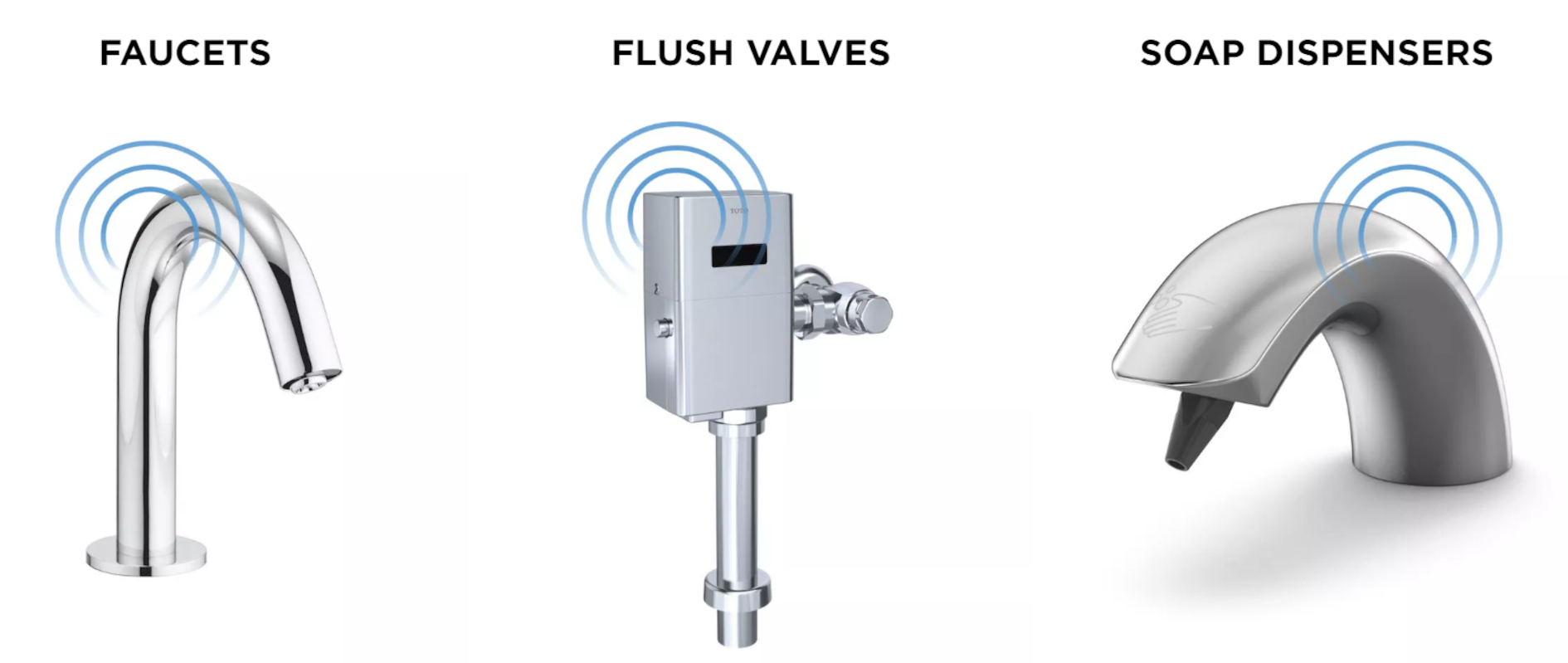
Smart restrooms are quickly becoming one of the biggest drivers of plumbing’s deeper integration with automation. Toto, Sloan, Kohler and Zurn are only a few of the manufacturers providing smart fixtures. These public fixtures generate a huge amount of real-time data — fixture usage, water consumption, leak events and occupancy trends. Owners are starting to realize how valuable that information is.
With connected flush valves, faucets and sensors, the BAS or cloud platform could automatically flush lines to prevent stagnation, flag fixtures wasting water, identify cleaning needs based on actual use instead of a fixed schedule, and even predict when parts are approaching failure.
For plumbing engineers, this means our designs can’t stop at piping layouts anymore. We now need to think about how these fixtures communicate, how they tie into the building network and how the data they produce supports overall building performance. Smart restrooms are becoming mini data hubs, and they play a major role in shaping future IA strategies.
Why plumbing controls get missed
Today, most controls contractors base their entire bid on what’s shown in Division 23, the mechanical points list, and the HVAC control narratives. If plumbing equipment isn’t clearly identified in that package, it usually doesn’t make it into the controls bid and can drive change orders for the owner.
This means items such as booster pumps, digital mixing valves, sump and ejector systems or smart restroom devices often get missed. Controls contractors bid exactly what’s written, so if Division 23 doesn’t call out plumbing controls, it will typically get missed. This is why plumbing-related BAS work ends up as a change order because the design intent wasn’t defined and the controls contractor never priced it.
As plumbing systems become smarter and more connected, this approach is starting to break down. The future of controls bidding will require contractors to review both Division 22 and Division 23, as plumbing fixtures and equipment now bring their own sets of control requirements, sequences and integration expectations. Digital fixtures, leak detection networks and cloud-enabled water heating systems all need defined points and communication pathways.
Controls contractors won’t be able to rely solely on Division 23 anymore; they’ll need to understand the plumbing control scope as clearly as HVAC. Because of this shift, plumbing is treated as a fully integrated building system and not an afterthought in the controls package.
Division 22 and controls documentation
To avoid the gaps we see today, plumbing engineers need to start documenting control expectations directly in Division 22 rather than assuming the mechanical controls contractor will pick them up. This means clearly calling out BAS integration requirements, listing points and defining high-level control logic for equipment such as digital mixing valves, booster pumps, sump and ejector systems and smart restroom devices.
Even a simple points table or sequence outline goes a long way toward eliminating confusion during bidding. When we define the intent up front rather than relying on Division 23 to interpret it, the controls contractor knows exactly what he’s responsible for and can price it correctly.
Just as important is coordinating that information with the mechanical team so there’s no overlap or contradictory requirements between Division 22 and Division 23. The goal is to make the controls package feel unified, not pieced together. A quick alignment meeting early in design to review plumbing control needs, decide which division owns what and confirm how the BAS will interact with plumbing equipment can prevent many downstream issues.
When both divisions are aligned and the documentation is consistent, the project team avoids scope gaps, the controls contractor bids the right work, and the owner ends up with a fully integrated automation system that performs the way it was intended.
Design approach
Integrated automation is changing the way we design and operate plumbing systems. What used to be a discipline focused mainly on piping layouts and equipment selection is now an integral part of a building’s overall automation strategy. As plumbing equipment becomes smarter and capable of communicating with the BAS, our role needs to grow with it. We must define how our systems interact with other building systems, how they share data and how they support the owner’s goals.
The industry is clearly moving toward Division 22, taking a larger role in documenting controls and outlining BAS integration. This creates better clarity in design, reduces change orders and positions plumbing as a key piece of the building’s intelligence. Smart restrooms, digital mixing valves, leak detection systems and cloud-enabled water-heating platforms are already pushing us in this direction.
As technology continues to advance, plumbing systems will be expected to deliver meaningful data, respond to real-time conditions and directly contribute to building efficiency, operational data and safety.
At this point, integrated automation isn’t optional; it’s the direction our industry is heading. The firms and engineers who embrace this shift will deliver stronger, more reliable and efficient plumbing systems. Owners will rely on plumbing automation more than ever. The future of commercial plumbing is connected, intelligent and integrated; our design approach needs to match it.