It is that time of year where I look into my crystal ball and take a look at what I see coming our way in the near future. I look at technologies, market forces and trends that affect our industry. I also reach out to industry friends and contacts for their unique insights into the forces affecting out industry.
Air-to-Water Heat Pumps
Heat pumps are nothing new and have been a recurring theme as electrification and decarbonization have increasingly affected our market. At the AHR show in Orlando, Florida this year, multiple manufacturers were rolling out their new lines of heat pumps.
Air-to-air heat pumps as well as ductless split heat pumps are commonplace. We have also seen an uptick in clients with gas or LP forced air furnaces request dual fuel systems: a heat pump with gas back-up as opposed to electric resistance back-up heat. An optimizer control built into the thermostat along with an outdoor temperature sensor controls the change-over point to fossil fuel, typically 25-35 F depending on climate.
Evan Trethewey, president and owner of RST Thermal, a manufacturer rep business located in Fall River, Massachusetts, which serves the New England region, represents a line of air-to-water heat pumps as well as a line of conventional VRF heat pumps.
Evan points out that the air-to-water are increasing in popularity and sales. These units come factory charged with A2L refrigerants with the refrigerant charge in the outdoor monobloc unit eliminating toxic or flammable refrigerants inside the home. The energy is transferred with a glycol solution through hydronic piping into the home.
Evan also referenced ASHRAE Standard 15, which limits the amount of A2L refrigerant in a commercial building. Monobloc air-to-water heat pumps can help a designer comply with the standard by containing all of the refrigerant in the outdoor unit.
R-454B Shortage
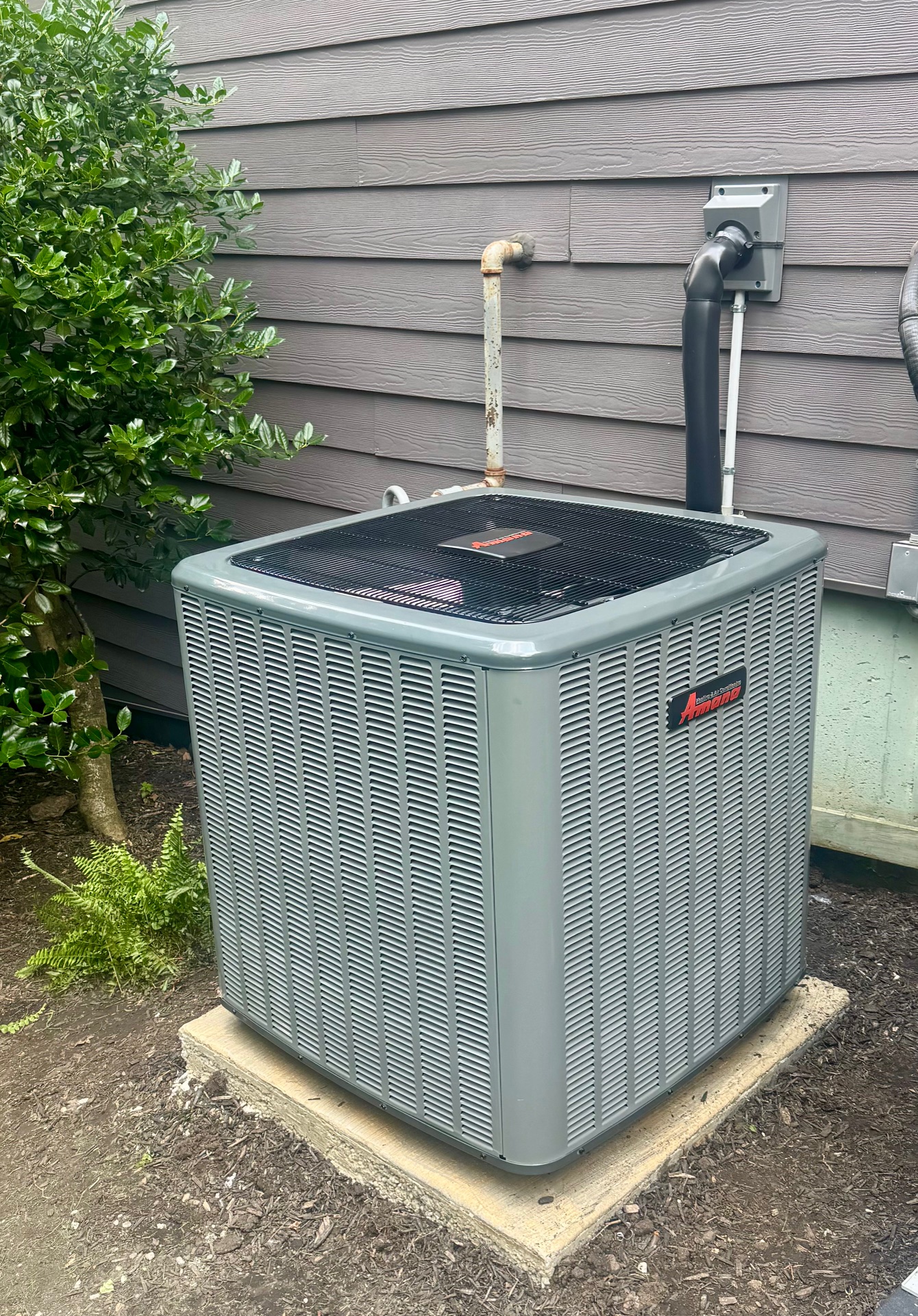
The transition to A2L refrigerants went into effect Jan. 1, 2025. Daikin, including their brands Amana and Goodman, chose to go with R-32. Carrier, Trane, Rheem/Ruud and just about everyone else went with R-454B. We found the transition to be relatively painless. The operating pressure for both are very close to the R-410A refrigerant it replaced. Piping, brazing and vacuum procedures are the same. Training sessions with our suppliers quickly brought us up to speed on the new refrigerants.
As A2L refrigerants are mildly toxic and/or flammable, manufacturers have taken steps to minimize risks. Indoor evaporator coils are equipped with leak sensors. If a refrigerant leak is detected by this sensor, it shuts down the system and operates the blower on low speed to dissipate any leaking refrigerant.
One issue I did not anticipate was the shortage and lack of availability of R-454B refrigerant. This caused some problems for us as we headed into the cooling season last spring. I once had to send my driver to Baltimore to pick up one jug of R-454B just so we could complete a job.
I am puzzled because we knew this transition was coming for years. How do manufacturers roll out a new line of equipment, but not provide access to the new refrigerant to properly install and service this equipment? This makes absolutely no sense.
I have heard several theories on the lack of availability of R-454B, ranging from supply chain issues to a shortage of cylinders required to safely store and transport the refrigerant. I have heard from suppliers that some contractors are hoarding whatever they can get their hands on making the supply even tighter. Whatever the cause, it is inexcusable for manufacturers to not forecast refrigerant demand and have a reasonable supply on hand.
Solar Thermal
While solar thermal has never been our core market, there was a time when we did six to eight systems annually. For us, that market has dried up. We did our last solar thermal installation over five years ago. I wondered why this market went away as the systems we installed worked well and were reliable. For answers I reached out to Bob “Hot Rod” Rohr, national training manager for Caleffi and expert on all things solar.
Hot Rod conceded that the contractor-installed solar thermal market is not what it was five to 10 years ago. In many areas, state and local incentives and tax credits have dried up. Solar PV has remained strong as it has come down in price and it is a more versatile energy source compared to solar thermal.
“Some market segments are still viable,” Hot Rod says. “The DIY solar thermal market has a solid base. Commercial projects such as car washes, laundromats and apartment buildings are also going strong. Some states, such as Hawaii, require solar thermal DHW in all new construction. But overall, the solar thermal market has dipped.”
There are still some exceptions. Hot Rod pointed out the mega-mansions going up in the ski areas of Colorado and Utah where solar thermal is being installed for tax credits and to offset fossil fuel boilers used for snowmelt and pool/spa heating.
My friend and mentor, Richard Trethewey of This Old House fame, once represented a line of solar thermal collectors.
“Fifteen years ago, we could not keep them in stock,” he says. “They were headed out the door as quickly as they came in. Domestic hot water production is the perfect application for solar thermal. Every house in America needs hot water.”
Like me, Richard wondered aloud why this market has dipped so drastically.
Business Climate
For independent plumbing, heating and cooling contractor owners, navigating the current business environment can be confusing and challenging. Equipment mandates, tariffs, evolving government policies, price escalation/inflation and private equity continue to change and adjust how we do business.
There is no one better than Matt Michel, speaker/author/rancher and founder/former CEO of Service Nation, to take the pulse of current business conditions.
“The effect of tariffs on our industry have been overblown,” Matt says. “Manufacturers and suppliers were quick to raise prices based on tariffs and the uncertainties they created. I see prices levelling off and possibly even dropping.”
Private equity and the effect it has on our industry is still at the forefront. He does not see the trend of acquisitions ending anytime soon.
“PE groups are still sitting on a pile of cash and are still looking to acquire companies,” Matt explains. “One primary difference is that interest rates have risen over the last several years. There is no longer ‘free’ money available to fund these acquisitions.”
I asked Matt about private equity and how small private enterprises can compete with these goliaths.
“You will not be able to compete on purchasing,” he says. “These behemoths had hammered out deals with manufacturers and suppliers for the lowest possible prices. That was low hanging fruit for them.”
Matt noted that the noncompete agreements (typically three to five years) from the first wave of acquisitions will be expiring soon. Many of these owners who sold are too young to retire. He sees these owners jumping back in the game and starting up new companies.
The difference is that they will not be starting from scratch. These owners have the knowledge base, equity, experience and contacts that will allow them to build and be successful quickly. These new companies will have the ability to grow in their former markets and compete successfully against larger private equity companies.
Matt summarized his final thoughts on private equity: “I think that private equity has been largely beneficial for the industry. It’s created more millionaire contractors than any time in history by giving a generation of contractors a lucrative exit strategy. Saleable companies are commanding prices two to three times what they could expect without private equity.
“Another benefit is they’ve raised the price ceiling. While I have my questions about how much is being charged, based on the consumer’s ability to pay, PE has made many contractors who underpriced realize they could charge enough to make a decent profit, reward their teams, invest in the future of their businesses, and reward owners for the risks they are taking.
“Is the industry better because outside money has created roughly a thousand multimillionaires? Yes. Absolutely.
“Is private equity making the industry more appealing to young people debating the trades or college? I don’t know, but have to think so.”
The Future
We must adapt and prepare for industry change in order to serve our clients and employees. Rather than complain and fight market trends and conditions beyond our control, embrace the changes and plan to adapt rather than react to these changes.
There is no better time to be in our industry. Accept the challenges and become the leader in your market. Our customers will always need heating, cooling, hot water and plumbing. That will never change. How we provide this service and the technologies we employ ill continue to evolve.