
In just a handful of years, Bring Back the Trades went from holding its first skilled trades event in the parking lot of an automotive shop to an event this Oct. 25 at no less than Gillette Stadium presented with the help of F.W. Webb, one of the largest PHCP wholesalers in the country.
The Bring Back the Trades Skills Expo at the Foxborough, Massachusetts home to the New England Patriots is expected to welcome more than 5,000 students, parents, educators and industry leaders. Attendees will engage with vendors representing a wide range of trade professions, experience hands-on exhibits, and learn about high-demand career paths.
And the organization didn’t do too badly last November either, when noted skilled trades job advocate Mike Rowe appeared at the sold-out Tradeapalooza Career Fair at the New Hampshire Technical Institute in Concord that attracted 4,500 people from 75 schools who got the opportunity to speak with more than 80 sponsor companies.
To find out more, we talked with Steve Turner, founder, and Shana Brunye, executive director, Bring Back the Trades.
“Well, it’s not just us two,” Turner says. “We are actually the two people behind the force that really makes it work, but we can't forget about how it started with a community effort. That effort makes this a huge organization.”
Turner, who runs a high-end upholstery shop in Rye, New Hampshire, catering to the automotive and marine markets, started the nonprofit organization in 2017 since he had a hard time finding skilled workers for his shop. By partnering with local educators, community leaders and trade businesses, Bring Back the Trades hosts a series of interactive Skills Expos and awards scholarships to reshape the perception of the trades within the educational system and highlight the immense value of these careers.
“Much like when you have parents who need help navigating their first-generation college student through that process, we help introduce families to careers in the trades that they may not necessarily have experience with,” Bruyne adds.
PHC News: What particularly drove you to start Bring Back the Trades and decide to make it for all skilled trades?
Turner: As a small business owner in the upholstery trade for more than 30 years, I saw firsthand how difficult it was to find young, skilled people to bring into the business. I realized it wasn’t just my industry — it was every skilled trade. There was a real stigma growing around the trades, and I wanted to be part of changing that. I started Bring Back the Trades to raise awareness, offer support to students, and highlight the dignity and opportunity in all skilled trades — not just one field, but the whole ecosystem that keeps our communities running.
I’ve got a great story about what I mean about ecosystems and communities. Early on, I had someone in the embroidery business make me a hat. All I wanted it to say was, “Bring Back The Trades.” He’s the one who put a wrench and a hammer on it. I’m wearing the hat in my shop a week later and one of my customers, a custom homebuilder, comes in and sees it and says he needs 12. He says he’s been talking about bringing back the trades forever. Then a week later his electrician comes in and wonders if he can get a hat, but with an electrical emblem on it.
At one point, we had 47 different hats we were selling and the proceeds from the hats is what helped us start our scholarship fund.
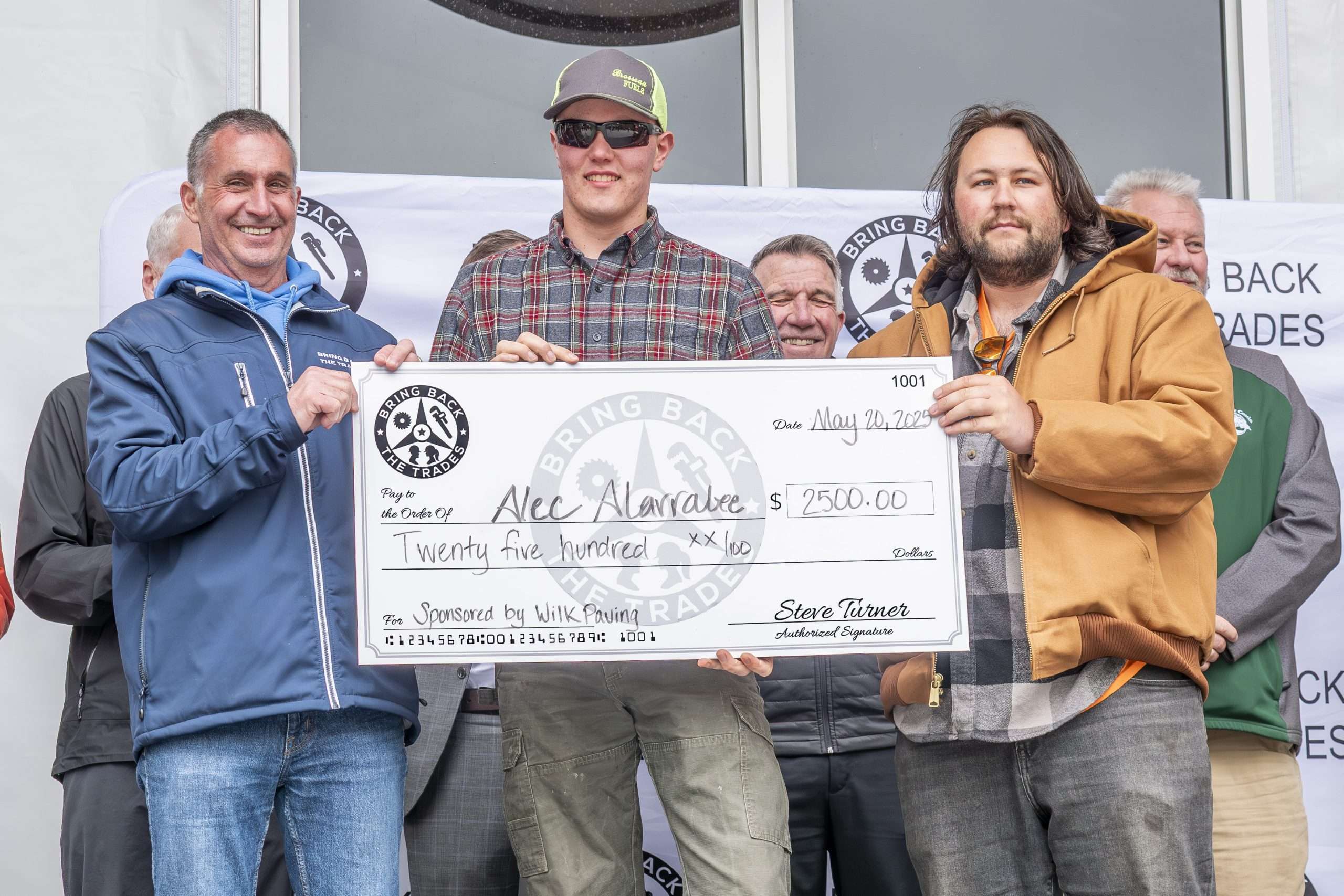
The scholarships were the very first formal thing we did. I wanted to directly support students entering the trades — not just talk about it, but put real money behind it. We started with a handful of scholarships and grew from there. Last year, we awarded more than $100,000 in scholarships. Students apply via our website with a short essay or video and proof of enrollment or commitment to a trade program. Our board reviews applications and selects based on passion need, and potential impact. We fundraise through merchandise, events, and sponsors like F.W. Webb, Casella Waste, and others who truly value the future of the trades.
PHC News: While we write primarily about contractors in the plumbing and heating trades, we’ll ask you the same question we often ask them: How did you get into the skilled trade of upholstery?
Turner: I got into upholstery when I was looking to get into a job related to cars. I was taking auto body classes in high school and there was an ad on the classroom wall looking for someone to clean floors and run around for the owner of an upholstery shop. While there, I learned the trade. I really enjoyed the hands-on work, the craftsmanship and the satisfaction of seeing a finished product that people valued. Over time, it became not just a job, but a lifelong passion. I opened Turner’s Upholstery when I was 19 years old, and it’s been a rewarding trade ever since.
PHC News: Shana, how did you get involved with Bring Back the Trades?
Brunye: I was inspired by the mission. I’ve spent much of my career helping businesses grow and strengthen their community impact, and Bring Back the Trades felt like a calling. I initially came on to help with some events and strategy, but the momentum of the movement and the heart behind it pulled me in full time. Now, as executive director, I work alongside Steve to grow our impact, manage operations, and lead our national expansion efforts.
PHC News: Tell us about the early days of the organization. What were your first trade expo events like?
Turner: We started small — tables at local events, school visits, handing out flyers and selling t-shirts, and just getting the message out. I’d travel around to speak at schools or anywhere I could talk about the trades. The first few events were grassroots, but the response was always strong. People knew there was a problem, and we gave them a voice and a way to do something about it.
Our first actual event was a couple of years ago and held outside in the parking lot of an auto body shop. I knew the owner from my upholstery business, and he was always saying he had a hard time hiring because people thought his business was dirty and dingy – and this couldn’t be any further from the truth. If only we could get people to come and see for themselves? So after talking it over while we were both attending a car show, 30 days later we had 500 people attend the event, which featured about 30 vendors.
Brunye: Our Skills Expos are a big part of what we do other than scholarships to promote a career in the skilled trades — bringing students and families face-to-face with real tradespeople, tools and local trades businesses. We also speak at schools, collaborate with educators, and engage in workforce development discussions with government and industry leaders. Everything we do is about breaking the stigma and building bridges into trades education and careers.
PHC News: How did you build up to events like the Oct. 25 event at Gillette Stadium?
Turner: It’s really been a mix of persistence and partnerships. As the message spread, more businesses, educators, and families came on board. Our events grew because we focused on quality experiences and genuine connection. The Gillette Stadium event wouldn’t have happened without the support of partners like F.W. Webb and the excitement of students who told us how much it meant to see their potential career paths up close. Word travels fast when you’re doing something people believe in.
[Editor’s Note: Tickets are currently on sale for the Oct. 25 at https://tinyurl.com/2trpuc65. PHC News readers can type in the promo code PHCP to get free general admission tickets.]
PHC News: How did your partnership with F.W. Webb begin?
Turner: They reached out after seeing what we were doing. It was clear from the start that we shared the same values and goals — getting more young people into the trades and supporting the future workforce. What started as a sponsorship quickly evolved into a partnership in the truest sense. They’ve been instrumental in helping us scale and professionalize our Expos, and they are supporting our research work, which is critical in supporting our communication efforts. With only two people coming into the trades for every five retiring, the need is critical.
PHC News: Tell us about the research project with F.W. Webb.?
Brunye: We’re launching a three-year initiative to dig into the data around the skilled labor gap — across the country, regionally and down to the state level. It’s about understanding where the largest gaps are projected to be, and how we can be part of long-term, sustainable solutions. Workforce development is gaining attention, and it’s our opportunity to raise awareness — and drive results.
One challenge is defining “skilled trade,” which can refer to a dizzyingly range of work that includes commercial drivers and diesel mechanics, boilermakers and bricklayers, carpenters and carpet installers, plumbers, and many more. Each job under the umbrella of “skilled trade” carries its own specific trends. That’s why Bring Back The Trades is partnering with F.W. Webb to conduct research to determine the key factors contributing to the growing skills gap in the trades, workforce trends and looming retirements within specific industries, strategies to promote the trades as career paths and to provide recommendations.
PHC News: You have a variety of companies taking part in your Skills Expos. What can you tell us about plumbing and heating companies at your events? What feedback do you hear?
Brunye: Plumbing and heating businesses are consistently some of the most active and excited participants at our events. They love having the chance to demonstrate their work to students in real, interactive ways. The feedback has been overwhelmingly positive — companies are making connections, building pipelines for apprenticeships, and in some cases, making hires right on the spot. The advantage of the plumbing industry is that many students have heard of it – there is more of a challenge around heating and cooling awareness. We work to help ensure students of all ages know about as many trades as possible so their consideration set is broader.
PHC News: What are you hearing from high school teachers and guidance counselors about trades vs. college?
Brunye: There’s a shift happening. Teachers and counselors are starting to recognize that college isn’t the only path, and for many students, it’s not even the best path. But there’s still a knowledge gap. That’s where we come in — to show what’s out there, what it pays, and how it leads to a meaningful, successful career. I’ve been impressed to see the increase in the number of guidance counselors who have reached out asking for our support in how to ensure all of their students are on successful paths after graduation. We need them onboard, and their performance metrics to reflect the variety of paths to success.
PHC News: What do you want parents to know about their kids going into the trades?
Turner: That it’s a smart move — not a fallback. The trades offer great pay, job security, and real fulfillment. There’s dignity in this work. If your child has a talent for working with their hands, solving problems, or building things — let them follow that. The trades can change their life.
PHC News: What makes you optimistic about the future of the trades?
Brunye: The students. Every Expo, every school visit — we meet young people who are excited, motivated, and ready to go. And we’re seeing more employers step up to invest in them. That’s a powerful combination. We’re building momentum, and we’re not slowing down.




